
Aké Archaeological Zone: Columns, Sacbé & Deep Maya History
What Makes This Special
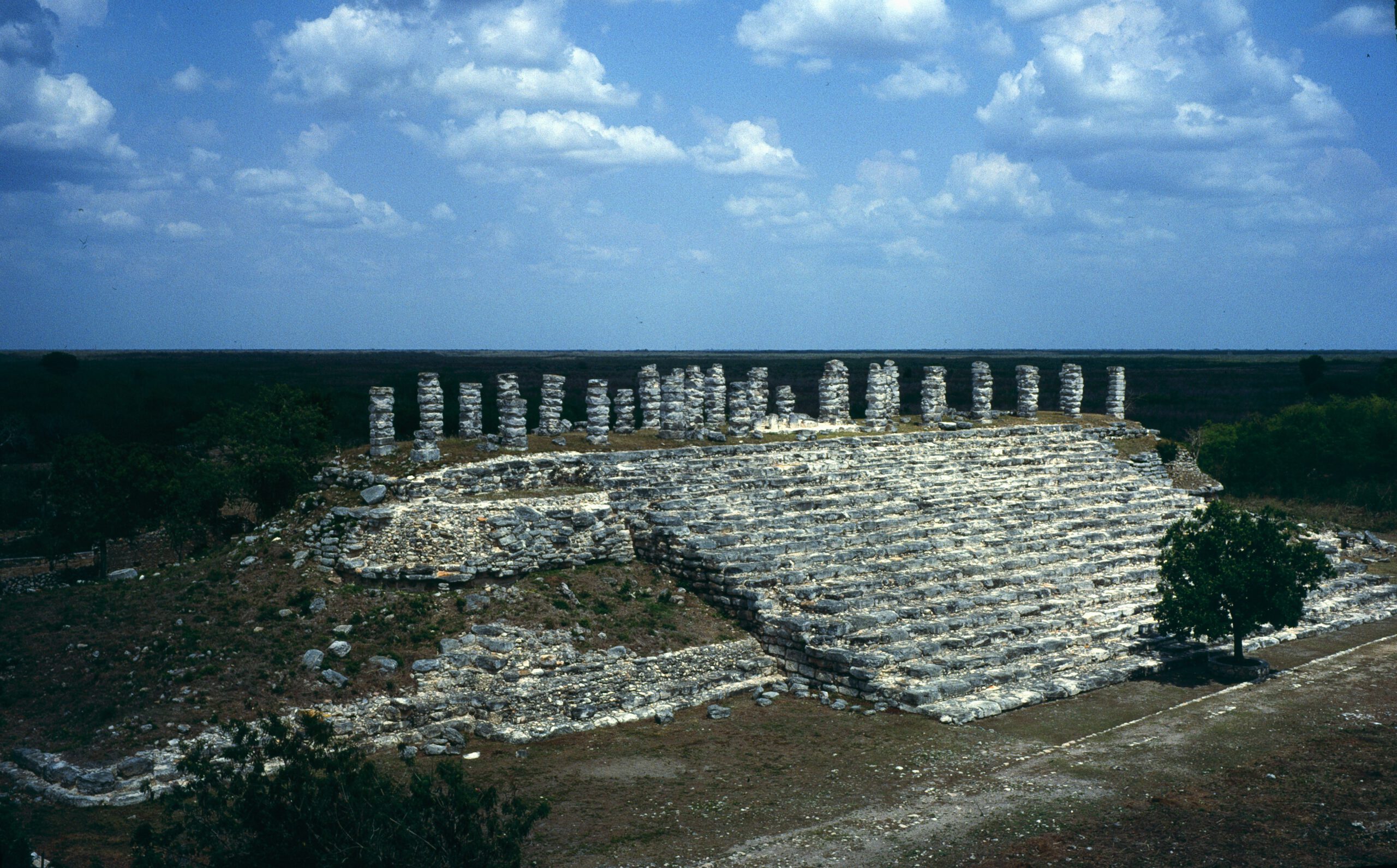
Aké is a compact, atmospheric Maya archaeological site wrapped by a 19th-century henequén (sisal) hacienda. What grabs you first is the unusual step-pyramid platform crowned by rows of stone columns—a striking silhouette that feels more like a colonnaded acropolis than a typical Yucatecan pyramid. Wander the broad, low-angle stairways and you’ll see why Aké is beloved by photographers and architecture nerds: the megalithic blocks, rounded corners, and recessed wall panels catch light beautifully throughout the day.
Equally special is Aké’s place in the peninsula’s ancient road network. A sacbé (raised white limestone causeway) once linked Aké with the pilgrimage city of Izamal, spanning roughly 30 km. Standing in Aké’s central plaza and imagining processions moving along that bright roadway gives you a visceral sense of how connected these cities were. Add in the on-site Hacienda San Lorenzo Aké—with century-old fiber machines and a living link to Yucatán’s “green gold” era—and you have a site where deep time stacks: Preclassic foundations, Early Classic architecture, colonial-era industry, and a present-day Maya community.
History
Archaeological evidence places Aké’s earliest occupation in the Late Preclassic, with major construction flourishing in the Early Classic (c. AD 250–550). The hallmark style here uses massive, roughly worked stone blocks finished with thick stucco. You’ll notice rounded building corners, gentle stairways of very broad treads, and superstructures that likely supported perishable roofs—hence the stone columns atop the principal platform often called the Palace or Structure 1. This combination of features ties Aké culturally to other northern lowland centers like Izamal and Ek Balam.
Aké was enclosed by defensive or delimiting walls and organized around a large quadrangular plaza. During the Classic and into the Postclassic, causeways (sacbeob) connected house groups within the site and linked Aké to neighboring centers. The most famous of these is the intersite sacbé running toward Izamal, a tangible reminder of political and ritual networks that stitched the northern plains together. In the 1800s and early 1900s, the surrounding lands were consolidated into Hacienda San Lorenzo Aké, a henequén estate whose stone buildings, rails, and machines still frame the ruins today. Visiting Aké lets you read these layers—from pre-Hispanic urbanism to the sisal boom—within a few steps.
Practical Information
- Hours: Daily, 8:00 AM – 5:00 PM (last entry typically 4:30 PM)
- Entry Fee: MXN $65 (Sundays free for Mexican residents with official ID; fees may change—bring cash)
- Recommended Visit Length: 1–2 hours for the ruins; add 60–90 minutes if you tour the hacienda grounds/fiber workshop (when open)
- Difficulty: Moderate — uneven limestone, some steep stair segments, minimal shade at midday
- Facilities: Basic restrooms near the entrance; no on-site museum
- Payments: Cash is safest; card facilities are unreliable in rural sites
- Accessibility: Central plaza is relatively flat but surfaced with uneven stone; structures require stair climbing; wheelchair access beyond entrance is limited
- Best Time: Early morning (8:00–10:00) or late afternoon (after 3:30) for cooler temps and softer light
What to Expect
Structure 1 (the Palace): A broad, terraced pyramid topped by multiple stone columns that once supported a thatched superstructure. The steps are unusually wide and shallow compared to many Maya sites, giving the whole platform a monumental yet approachable feel. From the upper platform, you’ll get a clean view across the plaza and over low jungle to the hacienda buildings.
Plaza Ensemble: Low pyramids flank the main platform, enclosing a large square. Look for traces of stucco floors at ground level and note how the stairs align to shape movement through the space—classic clues to how ceremonies may have unfolded.
Sacbé Remnants: Within the site you’ll see short raised causeway sections linking groups. Interpreting signs sometimes mention the long sacbé toward Izamal; while you won’t walk its full length here, even brief segments make the engineering obvious: elevated limestone fill faced with stone, built to stay dry and bright.
Henequén Hacienda Context: Aké’s ruins sit inside/alongside a historic estate. On some days, staff or local guides offer a look at fiber processing (desfibradoras), rails, and carts—an eye-opening contrast with the pre-Hispanic stonework. Even if tours aren’t running, the hacienda’s arched facades and chimneys create photogenic backdrops.
Atmosphere: Quiet and uncrowded. Birdsong, cactus gardens, and the occasional donkey cart set the pace. Expect limited shade in the plaza; trees gather around secondary mounds.
Getting There
From Mérida (≈35 km / 50–60 min): Drive east toward Tixkokob (Highway 80). In Tixkokob, follow signs northeast to Aké (San Lorenzo Aké). The entrance to the archaeological zone and hacienda sits at the edge of the village.
- Exit Mérida via Periférico to the eastbound road toward Tixkokob (MEX-80).
- Pass Tixkokob town center and continue following local signage to Aké.
- At the village, look for the hacienda gate/arch and small INAH booth for tickets.
Parking: Free, informal parking by the entrance/hacienda gate (space is limited—arrive early on weekends).
Without a Car: Taxis or colectivos from Mérida to Tixkokob are common; from Tixkokob, hire a local taxi or moto-taxi to Aké. Confirm the return ride in advance.
What to Bring
- Light, breathable clothing; sun hat and sunglasses
- High-SPF reef-safe/biodegradable sunscreen (sweat-resistant)
- 1–2 liters of water per person; electrolytes on hot days
- Sturdy walking shoes with good traction (limestone can be slick)
- Cash for entry, guiding, and snacks
- Camera/phone with wide-angle lens (columns and broad steps shine at sunrise/sunset)
- Insect repellent (especially after rains)
Tips & Safety
- Beat the heat: Aim for opening time (8:00 AM). Shade is limited in the plaza; take breaks by tree-covered mounds.
- Mind the stone: Wear proper footwear; limestone steps can be worn smooth. Descend slowly and avoid edges.
- Climbing rules: Obey all signage and staff instructions. Access can change due to conservation.
- Hydration & breaks: There are no vendors inside the ruins—carry your water. Snack outside the core zone to help keep the site clean.
- Photography: Early or late light grazes the column drums and step faces; bring a small cloth to keep lenses dust-free.
- Respect the sacbé: Don’t walk on fragile edges of raised causeways or remove stones; these features are archaeological treasures.
- Combine experiences: If available, ask about brief hacienda/fiber demonstrations—great context for Yucatán’s more recent history.
Nearby Attractions
- Izamal (“Yellow City”): Colonial-Maya town with monumental pyramids and convent; historically linked to Aké by a long sacbé.
- Tixkokob: Town famed for handmade hammocks—shop directly from artisans.
- Acanceh: Small site with a central-town pyramid and an extraordinary stucco frieze (Palace of the Stuccoes).
- Mayapán: Classic-style city with climbable viewpoints (policies vary) and sweeping panoramas.
- Haciendas henequeneras: Sotuta de Peón (guided tours, cenote swim) and other estates south of Mérida for in-depth sisal history.
Aké Archaeological Zone: Columns, Sacbé & Deep Maya History
On This Page
Explore Aké’s column-topped pyramid, ancient sacbé toward Izamal, and a historic henequén hacienda. Hours 8–5 daily; quiet, budget-friendly, and deeply atmospheric.
Our Take
"Aké feels raw and rewarding—the colonnaded palace, the sacbé slicing through jungle, and the working henequén hacienda next door make a sunrise visit worth every mosquito."
What Makes This Special
Aké is a compact, atmospheric Maya archaeological site wrapped by a 19th-century henequén (sisal) hacienda. What grabs you first is the unusual step-pyramid platform crowned by rows of stone columns—a striking silhouette that feels more like a colonnaded acropolis than a typical Yucatecan pyramid. Wander the broad, low-angle stairways and you’ll see why Aké is beloved by photographers and architecture nerds: the megalithic blocks, rounded corners, and recessed wall panels catch light beautifully throughout the day.
Equally special is Aké’s place in the peninsula’s ancient road network. A sacbé (raised white limestone causeway) once linked Aké with the pilgrimage city of Izamal, spanning roughly 30 km. Standing in Aké’s central plaza and imagining processions moving along that bright roadway gives you a visceral sense of how connected these cities were. Add in the on-site Hacienda San Lorenzo Aké—with century-old fiber machines and a living link to Yucatán’s “green gold” era—and you have a site where deep time stacks: Preclassic foundations, Early Classic architecture, colonial-era industry, and a present-day Maya community.
History
Archaeological evidence places Aké’s earliest occupation in the Late Preclassic, with major construction flourishing in the Early Classic (c. AD 250–550). The hallmark style here uses massive, roughly worked stone blocks finished with thick stucco. You’ll notice rounded building corners, gentle stairways of very broad treads, and superstructures that likely supported perishable roofs—hence the stone columns atop the principal platform often called the Palace or Structure 1. This combination of features ties Aké culturally to other northern lowland centers like Izamal and Ek Balam.
Aké was enclosed by defensive or delimiting walls and organized around a large quadrangular plaza. During the Classic and into the Postclassic, causeways (sacbeob) connected house groups within the site and linked Aké to neighboring centers. The most famous of these is the intersite sacbé running toward Izamal, a tangible reminder of political and ritual networks that stitched the northern plains together. In the 1800s and early 1900s, the surrounding lands were consolidated into Hacienda San Lorenzo Aké, a henequén estate whose stone buildings, rails, and machines still frame the ruins today. Visiting Aké lets you read these layers—from pre-Hispanic urbanism to the sisal boom—within a few steps.
Practical Information
- Hours: Daily, 8:00 AM – 5:00 PM (last entry typically 4:30 PM)
- Entry Fee: MXN $65 (Sundays free for Mexican residents with official ID; fees may change—bring cash)
- Recommended Visit Length: 1–2 hours for the ruins; add 60–90 minutes if you tour the hacienda grounds/fiber workshop (when open)
- Difficulty: Moderate — uneven limestone, some steep stair segments, minimal shade at midday
- Facilities: Basic restrooms near the entrance; no on-site museum
- Payments: Cash is safest; card facilities are unreliable in rural sites
- Accessibility: Central plaza is relatively flat but surfaced with uneven stone; structures require stair climbing; wheelchair access beyond entrance is limited
- Best Time: Early morning (8:00–10:00) or late afternoon (after 3:30) for cooler temps and softer light
What to Expect
Structure 1 (the Palace): A broad, terraced pyramid topped by multiple stone columns that once supported a thatched superstructure. The steps are unusually wide and shallow compared to many Maya sites, giving the whole platform a monumental yet approachable feel. From the upper platform, you’ll get a clean view across the plaza and over low jungle to the hacienda buildings.
Plaza Ensemble: Low pyramids flank the main platform, enclosing a large square. Look for traces of stucco floors at ground level and note how the stairs align to shape movement through the space—classic clues to how ceremonies may have unfolded.
Sacbé Remnants: Within the site you’ll see short raised causeway sections linking groups. Interpreting signs sometimes mention the long sacbé toward Izamal; while you won’t walk its full length here, even brief segments make the engineering obvious: elevated limestone fill faced with stone, built to stay dry and bright.
Henequén Hacienda Context: Aké’s ruins sit inside/alongside a historic estate. On some days, staff or local guides offer a look at fiber processing (desfibradoras), rails, and carts—an eye-opening contrast with the pre-Hispanic stonework. Even if tours aren’t running, the hacienda’s arched facades and chimneys create photogenic backdrops.
Atmosphere: Quiet and uncrowded. Birdsong, cactus gardens, and the occasional donkey cart set the pace. Expect limited shade in the plaza; trees gather around secondary mounds.
Getting There
From Mérida (≈35 km / 50–60 min): Drive east toward Tixkokob (Highway 80). In Tixkokob, follow signs northeast to Aké (San Lorenzo Aké). The entrance to the archaeological zone and hacienda sits at the edge of the village.
- Exit Mérida via Periférico to the eastbound road toward Tixkokob (MEX-80).
- Pass Tixkokob town center and continue following local signage to Aké.
- At the village, look for the hacienda gate/arch and small INAH booth for tickets.
Parking: Free, informal parking by the entrance/hacienda gate (space is limited—arrive early on weekends).
Without a Car: Taxis or colectivos from Mérida to Tixkokob are common; from Tixkokob, hire a local taxi or moto-taxi to Aké. Confirm the return ride in advance.
What to Bring
- Light, breathable clothing; sun hat and sunglasses
- High-SPF reef-safe/biodegradable sunscreen (sweat-resistant)
- 1–2 liters of water per person; electrolytes on hot days
- Sturdy walking shoes with good traction (limestone can be slick)
- Cash for entry, guiding, and snacks
- Camera/phone with wide-angle lens (columns and broad steps shine at sunrise/sunset)
- Insect repellent (especially after rains)
Tips & Safety
- Beat the heat: Aim for opening time (8:00 AM). Shade is limited in the plaza; take breaks by tree-covered mounds.
- Mind the stone: Wear proper footwear; limestone steps can be worn smooth. Descend slowly and avoid edges.
- Climbing rules: Obey all signage and staff instructions. Access can change due to conservation.
- Hydration & breaks: There are no vendors inside the ruins—carry your water. Snack outside the core zone to help keep the site clean.
- Photography: Early or late light grazes the column drums and step faces; bring a small cloth to keep lenses dust-free.
- Respect the sacbé: Don’t walk on fragile edges of raised causeways or remove stones; these features are archaeological treasures.
- Combine experiences: If available, ask about brief hacienda/fiber demonstrations—great context for Yucatán’s more recent history.
Nearby Attractions
- Izamal (“Yellow City”): Colonial-Maya town with monumental pyramids and convent; historically linked to Aké by a long sacbé.
- Tixkokob: Town famed for handmade hammocks—shop directly from artisans.
- Acanceh: Small site with a central-town pyramid and an extraordinary stucco frieze (Palace of the Stuccoes).
- Mayapán: Classic-style city with climbable viewpoints (policies vary) and sweeping panoramas.
- Haciendas henequeneras: Sotuta de Peón (guided tours, cenote swim) and other estates south of Mérida for in-depth sisal history.
Location
Plan Your Visit
Hat, water, sunscreen, sturdy shoes, cash, insect repellent
Basic restrooms; no museum; occasional hacienda/fiber demos
Arrive at opening; bring cash; combine with Izamal; follow climbing restrictions