
Mirador de Muna Viewpoint Guide
What Makes This Special
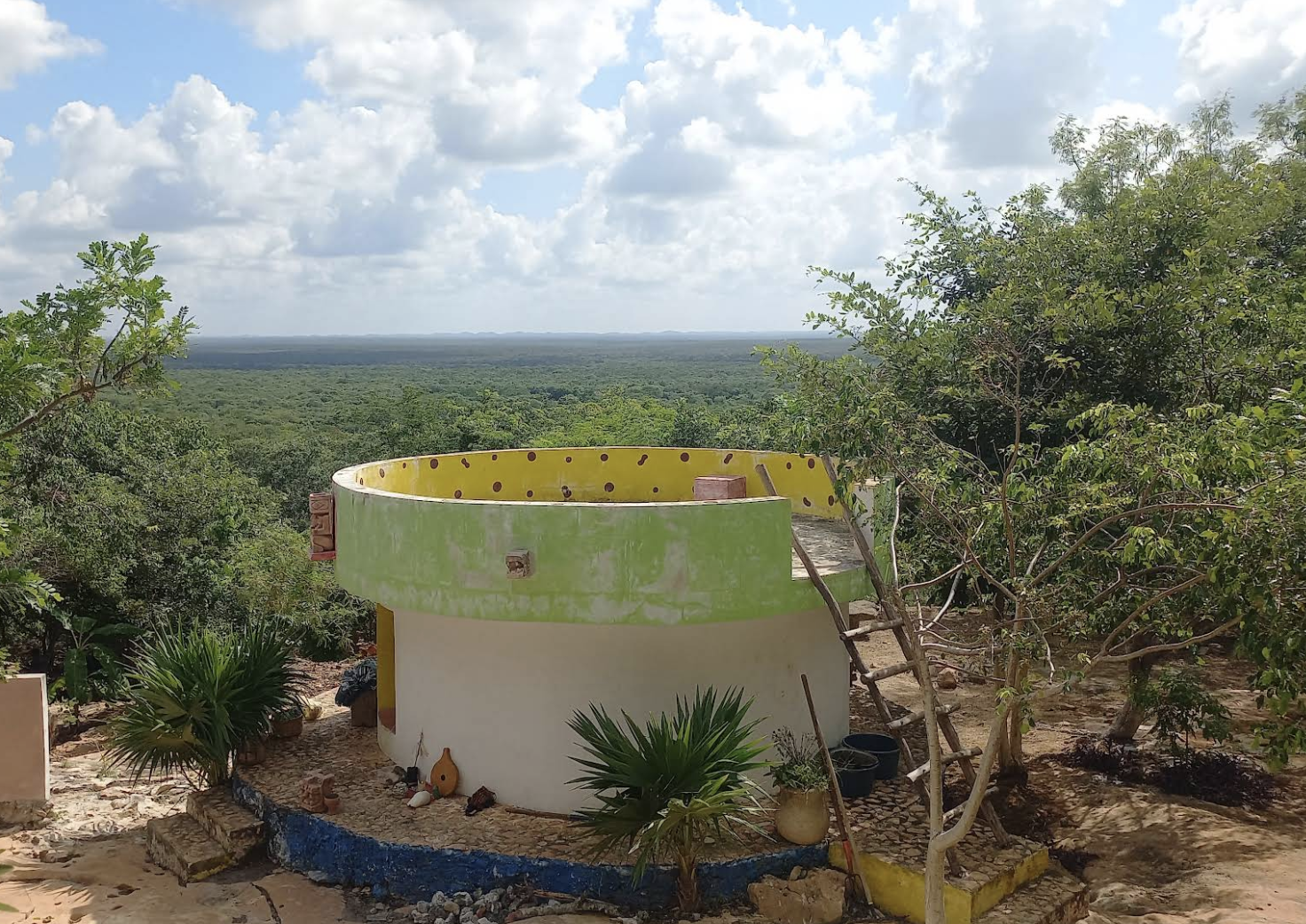
El Mirador de Muna is one of the most scenic viewpoints in Yucatán and a rare place where you can actually feel that the peninsula has hills. Perched on a rocky ridge just outside the town of Muna, the lookout faces an endless carpet of low jungle and, on clear days, you can pick out the silhouette of Uxmal’s Pyramid of the Magician far on the horizon. It is a perfect spot for sunrise, sunset, or a quiet pause on a Puuc Route road trip.
What makes this place more than just a photo stop is that it is also an ecotourism park. Beyond the main terrace you will find a network of trails with hanging viewpoints, a grotto, medicinal plant garden, Mayan-style sweat lodge (temazcal), camping area, and a small museum dedicated to traditional healers and shamans. Local artisans sell ceramics, carved wood, and masks, so your visit directly supports families in Muna and the surrounding communities.
This is also one of the highest road-accessible viewpoints in Yucatán. You can drive right up to the main terrace, which makes the spectacular view accessible to visitors who do not want or are not able to take on a long hike. If you do like to walk, the trails down the hillside turn a quick viewpoint stop into a half-day nature experience.
History
The Mirador sits on communal ejido land in the Puuc hills, a region that has been inhabited by Maya communities for centuries. While the site itself is not an ancient ruin, the landscape around you is deeply historical: the same low forest stretches toward Uxmal and other Puuc sites that once formed a dense network of Maya cities. The nearby town of Muna, whose name means place of soft or gentle water in Maya, grew around colonial chapels and an eighteenth-century convent that you can still visit today.
About a generation ago, a local resident, Pedro Ayuso, saw the potential of this natural overlook. With permission from the ejido, he began to clear paths through the thorny brush, arranging rocks and fallen branches to shape terraces, steps, and platforms. Rather than build something flashy, the project emphasized using existing stone and replanting trees to keep the look and feel close to the original hill.
Over time, the mirador evolved from a simple roadside viewpoint into a small ecotourism project. Trails were extended, ceremonial platforms were added for Mayan rituals, a temazcal structure was built, and a crafts shop and museum space were created to highlight local culture. The site has survived traffic changes, when a bypass highway diverted cars away from Muna, and the pandemic years, and today it is still run in a low-key, community-focused way.
Practical Information
- Entry Fee (day visit): Around $20 MXN per person for access to the main viewpoint and basic facilities. Special activities such as ceremonies or temazcal sessions have additional costs arranged on site.
- Camping: Approximately $150 MXN per person for camping; tent rental around $100 MXN per tent. Prices may change, so confirm on arrival.
- Hours: Roughly 7:00 AM – 7:00 PM daily. Sunrise and sunset visits are common; for very early or late access, coordinate directly with staff.
- Location: Hilltop on the old road between Muna and Uxmal, just outside the town limits of Muna, Yucatán.
- Facilities: Parking area, basic restrooms, shaded palapas and seating, picnic and camping areas, marked trails, main viewing terrace, small museum, handicrafts shop, and a traditional temazcal structure. On some days there is a simple kitchen offering home-style meals by prior arrangement.
- Services: Local guides for trail walks, cave visits, and Mayan ceremonies can usually be arranged on site. Group temazcal and spiritual ceremonies need to be reserved in advance.
- Payment: Cash is strongly recommended. Card payments are not guaranteed.
- Contact: Staff are reachable through the Mirador Muna Facebook page or by local phone; ask in Muna if you need up-to-date details before visiting.
- Ideal Visit Length: 1–2 hours for the main viewpoint and a short walk; 3 hours or more if you plan to hike all the trails, join a ceremony, or camp overnight.
What to Expect
When you arrive, you will park below or beside the main terrace and walk a short distance up to the viewpoint. The ground is uneven limestone but the approach is fairly short; most visitors of average mobility manage it without difficulty. At the top you step out onto a wide terrace with rustic railings, benches, and a few shaded spots. In front of you, the forest appears like a solid green sea, and the sky often feels larger than usual thanks to the open horizon.
The atmosphere is simple and relaxed. You are more likely to see families from Muna and small tour groups than large buses. It is a place to slow down: people sit on the benches sharing snacks, photographing the changing light, or simply leaning on the wall and letting the breeze do its work.
If you follow the paths leading away from the main terrace, you enter the ecopark side of the Mirador. Trails wind down the hill to different platforms with alternative angles on the landscape, some nestled under large ceiba and other native trees. Along the way you may pass a medicinal plant garden, rustic picnic areas, and a grotto associated with local alux legends and Mayan spiritual practices.
Those who arrange it in advance can take part in a temazcal session or a Mayan ceremony, typically led by a local healer or shaman. Incense, conch shells, and traditional songs create an intense, sensory experience that many visitors find moving. Whether or not you join a ceremony, it is important to remember that the site is considered spiritually significant by many locals, so quiet voices and respectful behavior are appreciated.
At the top or near the entrance there is usually a small shop or table with crafts from Muna and other Puuc communities: clay figures, carved wooden masks, musical instruments, and textiles. This is a good place to pick up a meaningful souvenir that is not mass-produced.
Getting There
From Mérida:
- Drive south from Mérida toward Campeche on Highway 180.
- After passing the town of Umán, follow the signed turn for Uxmal and the Puuc Route.
- Continue through the rolling hills until you reach the town of Muna (about 1–1.5 hours from Mérida, depending on traffic).
- Stay on the old road that passes through Muna rather than taking any bypass toward Uxmal.
- As you leave Muna heading toward Uxmal, look for the signed entrance to El Mirador de Muna on the hill to your left after a short distance.
From Uxmal:
- Take the main road from the archaeological zone toward Muna.
- Do not take the highway bypass; stay on the local road.
- Before you enter Muna proper, you will see the access to the Mirador on your right, climbing up the hill.
By Public Transport:
- Colectivos and second-class buses run between Mérida and Muna. From Mérida, they typically depart near the southwest bus terminals; ask for services toward Muna or Uxmal.
- From Muna’s center, you can take a taxi or mototaxi up to the Mirador, or walk if you are prepared for a hot, uphill hike of a couple of kilometers.
Parking: There is a small parking area at or very close to the entrance. Space is limited but usually sufficient. Drivers of larger vehicles should arrive earlier in the day.
What to Bring
- Essential:
- Comfortable closed-toe walking shoes or sturdy sandals; the ground is rocky and uneven.
- Hat, sunglasses, and lightweight sun-protective clothing.
- Biodegradable sunscreen and insect repellent suitable for jungle settings.
- Plenty of drinking water; there is limited or no guaranteed potable water on site.
- Cash in Mexican pesos for entry, tips, and any crafts or snacks.
- Recommended:
- Camera or phone with good low-light capability for sunrise and sunset shots.
- Small tripod if you plan photography at dawn, dusk, or at night when camping.
- Light jacket or shawl if you stay after sunset; breezes can feel cooler on the hill.
- Headlamp or flashlight if you intend to camp or walk the trails near dusk.
- Reusable container with snacks; pack out all your trash.
- If Camping or Joining a Ceremony:
- Tent, sleeping mat, and sleeping bag or blanket suited to warm nights that may cool slightly before dawn.
- Personal toiletries and quick-dry towel.
- Change of clothes for after a temazcal session.
Tips & Safety
Make the Most of Your Visit:
- For photography, plan to arrive around sunrise or an hour before sunset when the light and shadows over the jungle are at their best.
- If you want to walk the full network of trails, start earlier in the morning to avoid the peak heat of midday.
- Ask about guides at the entrance; a local guide can point out medicinal plants, explain the meaning of the platforms and altars, and help you reach the grotto safely.
- Combine your visit with time in Muna’s main square and church, or with an afternoon at Uxmal, for a richer Puuc Route experience.
Safety Considerations:
- Stay behind railings and away from cliff edges; the limestone can be crumbly, especially after rain.
- Watch your footing on the trails: roots, loose stones, and steep sections appear suddenly, and some parts can be slippery when wet.
- Supervise children closely at the viewpoint and on all paths.
- Wear insect repellent and check for bites in the evening, particularly in warmer months.
- During thunderstorms or heavy rain, avoid exposed viewpoints and steep, muddy trails.
- Respect any ceremonial areas, altars, and offerings you encounter. Ask before photographing people participating in ceremonies.
Nearby Attractions
- Uxmal Archaeological Site: One of the most important Mayan cities on the Puuc Route, about 15–20 minutes by car from the Mirador. Combine the two for a full day of culture and nature.
- Other Puuc Ruins: Kabah, Sayil, and Labná lie farther south along the Puuc Route and can be reached by continuing beyond Uxmal.
- Muna Town Center: Visit the main church and former convent, stroll through the plaza, and look for small eateries and artisans around the market.
- Hacienda San José Tip-Ceh: Historic henequen-era hacienda along the Muna–Ticul road, worth a stop for architecture and photos if access is available.
- Puuc Cycling and Running Routes: The roads around Muna and Uxmal are popular with cyclists and runners training on the hills. Even if you are driving, watch for them and consider planning your own ride or run if you are active.
- Other Nature and Culture Stops: Chocolate museums and interpretation centers near Uxmal, additional viewpoints along the hills, and nearby small towns each add a different angle to a day in the Puuc region.
Mirador de Muna Viewpoint Guide
On This Page
Take in sweeping jungle views from Mirador de Muna, one of Yucatán’s highest accessible points. Ecopark with trails, ceremonies, camping and handicrafts.
What Makes This Special
El Mirador de Muna is one of the most scenic viewpoints in Yucatán and a rare place where you can actually feel that the peninsula has hills. Perched on a rocky ridge just outside the town of Muna, the lookout faces an endless carpet of low jungle and, on clear days, you can pick out the silhouette of Uxmal’s Pyramid of the Magician far on the horizon. It is a perfect spot for sunrise, sunset, or a quiet pause on a Puuc Route road trip.
What makes this place more than just a photo stop is that it is also an ecotourism park. Beyond the main terrace you will find a network of trails with hanging viewpoints, a grotto, medicinal plant garden, Mayan-style sweat lodge (temazcal), camping area, and a small museum dedicated to traditional healers and shamans. Local artisans sell ceramics, carved wood, and masks, so your visit directly supports families in Muna and the surrounding communities.
This is also one of the highest road-accessible viewpoints in Yucatán. You can drive right up to the main terrace, which makes the spectacular view accessible to visitors who do not want or are not able to take on a long hike. If you do like to walk, the trails down the hillside turn a quick viewpoint stop into a half-day nature experience.
History
The Mirador sits on communal ejido land in the Puuc hills, a region that has been inhabited by Maya communities for centuries. While the site itself is not an ancient ruin, the landscape around you is deeply historical: the same low forest stretches toward Uxmal and other Puuc sites that once formed a dense network of Maya cities. The nearby town of Muna, whose name means place of soft or gentle water in Maya, grew around colonial chapels and an eighteenth-century convent that you can still visit today.
About a generation ago, a local resident, Pedro Ayuso, saw the potential of this natural overlook. With permission from the ejido, he began to clear paths through the thorny brush, arranging rocks and fallen branches to shape terraces, steps, and platforms. Rather than build something flashy, the project emphasized using existing stone and replanting trees to keep the look and feel close to the original hill.
Over time, the mirador evolved from a simple roadside viewpoint into a small ecotourism project. Trails were extended, ceremonial platforms were added for Mayan rituals, a temazcal structure was built, and a crafts shop and museum space were created to highlight local culture. The site has survived traffic changes, when a bypass highway diverted cars away from Muna, and the pandemic years, and today it is still run in a low-key, community-focused way.
Practical Information
- Entry Fee (day visit): Around $20 MXN per person for access to the main viewpoint and basic facilities. Special activities such as ceremonies or temazcal sessions have additional costs arranged on site.
- Camping: Approximately $150 MXN per person for camping; tent rental around $100 MXN per tent. Prices may change, so confirm on arrival.
- Hours: Roughly 7:00 AM – 7:00 PM daily. Sunrise and sunset visits are common; for very early or late access, coordinate directly with staff.
- Location: Hilltop on the old road between Muna and Uxmal, just outside the town limits of Muna, Yucatán.
- Facilities: Parking area, basic restrooms, shaded palapas and seating, picnic and camping areas, marked trails, main viewing terrace, small museum, handicrafts shop, and a traditional temazcal structure. On some days there is a simple kitchen offering home-style meals by prior arrangement.
- Services: Local guides for trail walks, cave visits, and Mayan ceremonies can usually be arranged on site. Group temazcal and spiritual ceremonies need to be reserved in advance.
- Payment: Cash is strongly recommended. Card payments are not guaranteed.
- Contact: Staff are reachable through the Mirador Muna Facebook page or by local phone; ask in Muna if you need up-to-date details before visiting.
- Ideal Visit Length: 1–2 hours for the main viewpoint and a short walk; 3 hours or more if you plan to hike all the trails, join a ceremony, or camp overnight.
What to Expect
When you arrive, you will park below or beside the main terrace and walk a short distance up to the viewpoint. The ground is uneven limestone but the approach is fairly short; most visitors of average mobility manage it without difficulty. At the top you step out onto a wide terrace with rustic railings, benches, and a few shaded spots. In front of you, the forest appears like a solid green sea, and the sky often feels larger than usual thanks to the open horizon.
The atmosphere is simple and relaxed. You are more likely to see families from Muna and small tour groups than large buses. It is a place to slow down: people sit on the benches sharing snacks, photographing the changing light, or simply leaning on the wall and letting the breeze do its work.
If you follow the paths leading away from the main terrace, you enter the ecopark side of the Mirador. Trails wind down the hill to different platforms with alternative angles on the landscape, some nestled under large ceiba and other native trees. Along the way you may pass a medicinal plant garden, rustic picnic areas, and a grotto associated with local alux legends and Mayan spiritual practices.
Those who arrange it in advance can take part in a temazcal session or a Mayan ceremony, typically led by a local healer or shaman. Incense, conch shells, and traditional songs create an intense, sensory experience that many visitors find moving. Whether or not you join a ceremony, it is important to remember that the site is considered spiritually significant by many locals, so quiet voices and respectful behavior are appreciated.
At the top or near the entrance there is usually a small shop or table with crafts from Muna and other Puuc communities: clay figures, carved wooden masks, musical instruments, and textiles. This is a good place to pick up a meaningful souvenir that is not mass-produced.
Getting There
From Mérida:
- Drive south from Mérida toward Campeche on Highway 180.
- After passing the town of Umán, follow the signed turn for Uxmal and the Puuc Route.
- Continue through the rolling hills until you reach the town of Muna (about 1–1.5 hours from Mérida, depending on traffic).
- Stay on the old road that passes through Muna rather than taking any bypass toward Uxmal.
- As you leave Muna heading toward Uxmal, look for the signed entrance to El Mirador de Muna on the hill to your left after a short distance.
From Uxmal:
- Take the main road from the archaeological zone toward Muna.
- Do not take the highway bypass; stay on the local road.
- Before you enter Muna proper, you will see the access to the Mirador on your right, climbing up the hill.
By Public Transport:
- Colectivos and second-class buses run between Mérida and Muna. From Mérida, they typically depart near the southwest bus terminals; ask for services toward Muna or Uxmal.
- From Muna’s center, you can take a taxi or mototaxi up to the Mirador, or walk if you are prepared for a hot, uphill hike of a couple of kilometers.
Parking: There is a small parking area at or very close to the entrance. Space is limited but usually sufficient. Drivers of larger vehicles should arrive earlier in the day.
What to Bring
- Essential:
- Comfortable closed-toe walking shoes or sturdy sandals; the ground is rocky and uneven.
- Hat, sunglasses, and lightweight sun-protective clothing.
- Biodegradable sunscreen and insect repellent suitable for jungle settings.
- Plenty of drinking water; there is limited or no guaranteed potable water on site.
- Cash in Mexican pesos for entry, tips, and any crafts or snacks.
- Recommended:
- Camera or phone with good low-light capability for sunrise and sunset shots.
- Small tripod if you plan photography at dawn, dusk, or at night when camping.
- Light jacket or shawl if you stay after sunset; breezes can feel cooler on the hill.
- Headlamp or flashlight if you intend to camp or walk the trails near dusk.
- Reusable container with snacks; pack out all your trash.
- If Camping or Joining a Ceremony:
- Tent, sleeping mat, and sleeping bag or blanket suited to warm nights that may cool slightly before dawn.
- Personal toiletries and quick-dry towel.
- Change of clothes for after a temazcal session.
Tips & Safety
Make the Most of Your Visit:
- For photography, plan to arrive around sunrise or an hour before sunset when the light and shadows over the jungle are at their best.
- If you want to walk the full network of trails, start earlier in the morning to avoid the peak heat of midday.
- Ask about guides at the entrance; a local guide can point out medicinal plants, explain the meaning of the platforms and altars, and help you reach the grotto safely.
- Combine your visit with time in Muna’s main square and church, or with an afternoon at Uxmal, for a richer Puuc Route experience.
Safety Considerations:
- Stay behind railings and away from cliff edges; the limestone can be crumbly, especially after rain.
- Watch your footing on the trails: roots, loose stones, and steep sections appear suddenly, and some parts can be slippery when wet.
- Supervise children closely at the viewpoint and on all paths.
- Wear insect repellent and check for bites in the evening, particularly in warmer months.
- During thunderstorms or heavy rain, avoid exposed viewpoints and steep, muddy trails.
- Respect any ceremonial areas, altars, and offerings you encounter. Ask before photographing people participating in ceremonies.
Nearby Attractions
- Uxmal Archaeological Site: One of the most important Mayan cities on the Puuc Route, about 15–20 minutes by car from the Mirador. Combine the two for a full day of culture and nature.
- Other Puuc Ruins: Kabah, Sayil, and Labná lie farther south along the Puuc Route and can be reached by continuing beyond Uxmal.
- Muna Town Center: Visit the main church and former convent, stroll through the plaza, and look for small eateries and artisans around the market.
- Hacienda San José Tip-Ceh: Historic henequen-era hacienda along the Muna–Ticul road, worth a stop for architecture and photos if access is available.
- Puuc Cycling and Running Routes: The roads around Muna and Uxmal are popular with cyclists and runners training on the hills. Even if you are driving, watch for them and consider planning your own ride or run if you are active.
- Other Nature and Culture Stops: Chocolate museums and interpretation centers near Uxmal, additional viewpoints along the hills, and nearby small towns each add a different angle to a day in the Puuc region.
Location
Plan Your Visit
Sturdy walking shoes, hat, biodegradable sunscreen, insect repellent, plenty of water, cash, headlamp if staying for sunset or camping
Restrooms, shaded palapas, picnic and camping areas, marked trails, viewing terrace, temazcal structure, small museum, handicrafts shop
Arrive for sunrise or sunset, bring cash, consider hiring a local guide, and combine with a visit to Uxmal or Muna’s historic center