
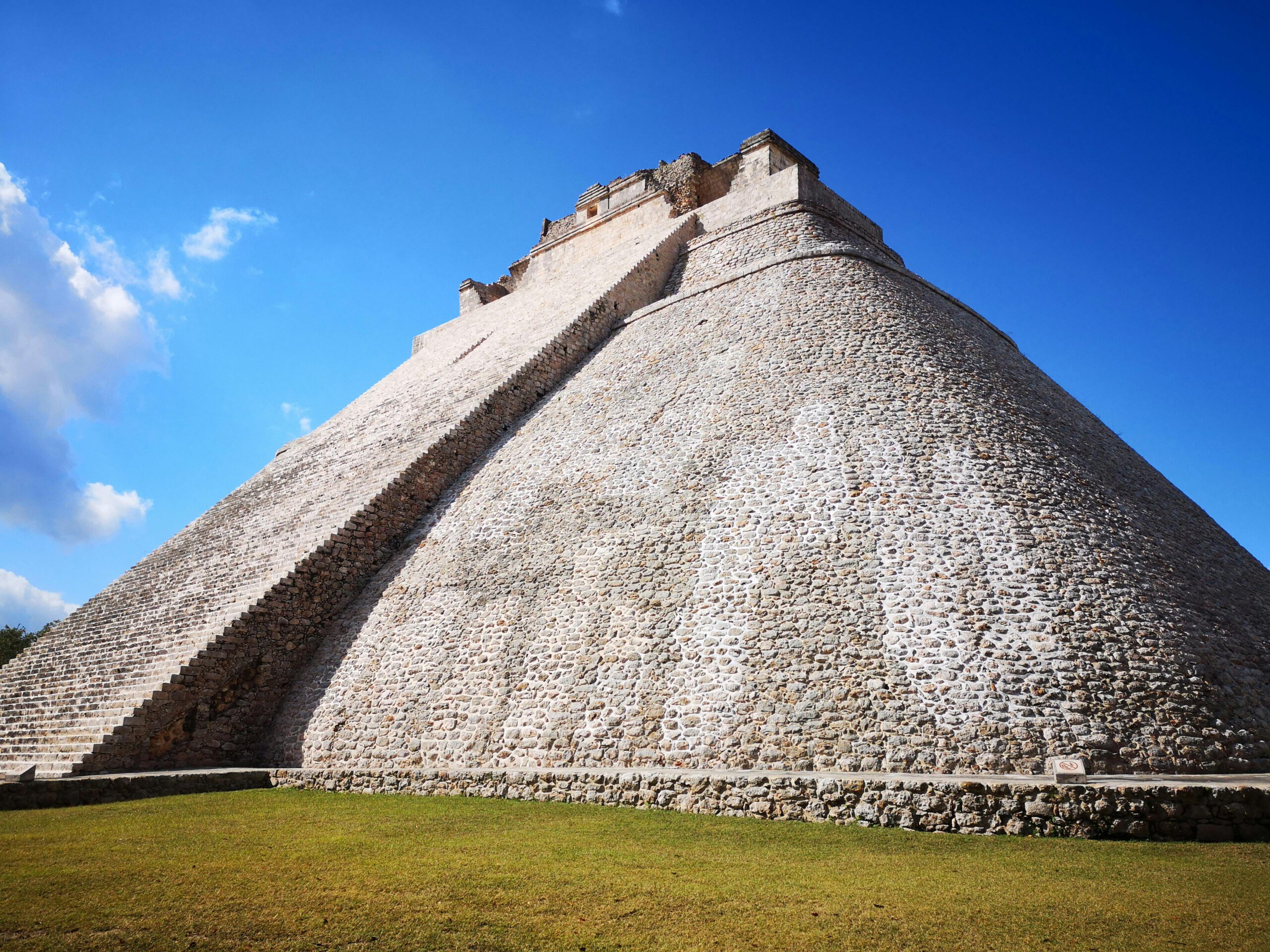
Exploring Uxmal: Ancient Maya City
The first time the Pyramid of the Magician rises out of the low jungle, it feels staged—like the Maya designed the reveal just for you. Heat shimmers, cicadas buzz, and those famous Puuc-style mosaics catch the sun. From Mérida, Uxmal is the day trip that turns curiosity into awe. Start here, then plug into our full Mérida Travel Guide for routes, eats, and where to crash after the ruins.
Key Takeaways
-
Why go: Uxmal is the Puuc masterpiece—intricate stone mosaics, serene plazas, fewer crowds than Chichén.
-
Timing: Be at the gate right at 8:00 am (or aim for late afternoon); shade is limited and midday heat is real.
-
Route: Magician → Nunnery Quadrangle → Ball Court → Governor’s Palace → House of the Turtles → Dovecote.
-
Tickets: Expect two charges (INAH + state/CULTUR). Bring cash or a card that works offline; keep both receipts.
-
Add-ons: Consider the evening light show and a side trip to Kabah or Labná on the Puuc Route.
What Makes Uxmal Special
Most Maya sites wow you with scale. Uxmal wins on craft. This is the capital of the Puuc hills, a landscape without surface rivers where the ancients engineered life around rain and stone. That environmental puzzle shaped an architecture that’s instantly recognizable:
-
Smooth lower walls with precise stonework, then
-
Mosaic-rich upper friezes: lattices, serpents, and—everywhere—Chaac, the rain god, peering down with hooked noses.
-
Harmony over bulk: buildings are low, elegant, and arranged to choreograph how you move and what you see.
UNESCO inscribed Uxmal for exactly this: the finesse. You’ll notice it in the crisp corners, the repeating patterns, the way doorways align along sacbeob (white causeways). Compared with Chichén Itzá, Uxmal feels calmer, more intimate. Fewer vendors, fewer megaphones—just the wind across a plaza and the soft echo of your footsteps on ancient stone.
What to look for as you walk
-
Chaac masks stacked like totems on corners—count how many “noses.”
-
Lattice panels (like stone fretwork) that shift shadows across the day.
-
Long façades (hello, Governor’s Palace) that read like a single sentence in stone.
History of Uxmal: Rise, Radiance, and Quiet Twilight
Origins (c. 600–750 CE):
Uxmal emerges on the Puuc hills, a stony, riverless ridge in today’s southwest Yucatán. Early builders solve the water problem with chultunes (cisterns) and begin experimenting with the elegant stone techniques that define the region. The city grows as a node in a Puuc network with nearby centers like Kabah, Sayil, Nohpat, and Labná.
Golden Age (c. 750–950 CE):
The city explodes in ambition. Master masons perfect the Puuc style—smooth lower walls topped by wild, lace-like friezes—and Uxmal becomes its showpiece. Most of what you see today—Pyramid of the Magician, Nunnery Quadrangle, Governor’s Palace, House of the Turtles—is planned and embellished in this era.
-
Politics & planning: Inscriptions are sparse, but architecture hints at an organized court orchestrating ceremony across plazas linked by sacbeob (causeways).
-
Religion & rain: With no surface rivers, Uxmal’s theology centers on Chaac, the rain god; corner masks multiply like prayers in stone.
Networks & Neighbors (Late/Terminal Classic):
Uxmal isn’t isolated—trade and ideas move along inland routes. You’ll feel echoes from and to other cities, but Uxmal’s identity stays distinctly Puuc: ornament-forward, human-scaled, refined rather than colossal.
Shifts & Slowdown (after c. 950 CE):
Across the peninsula, populations shift and power centers migrate. Uxmal’s monumental projects taper off. Some traditions continue, but the building frenzy fades. Later chronicles remember the Tutul Xiu dynasty as heirs of the region; by early colonial times, prestige and people concentrate around Maní while Uxmal lies mostly quiet.
Rediscovery & Preservation (19th–20th centuries):
In the 1830s–40s, travelers like John L. Stephens and Frederick Catherwood sketch Uxmal into fame—those engravings of the Nunnery and Governor’s Palace igniting global fascination. Through the 20th century, archaeologists consolidate walls, clear plazas, and restore key façades; Mexico’s heritage agencies formalize protection and visitor access.
World Heritage & Today (1990s–present):
Uxmal and the Puuc sites gain UNESCO World Heritage status (1996), recognizing the artistry you’ll see up close. Conservation is ongoing: stabilizing mosaics, managing visitor flow, and, in recent decades, using new tools—from LiDAR surveys to careful chemical treatments—to keep the limestone stories legible. The evening light-and-sound program brings those friezes to life after dark, while daytime visits still deliver what Uxmal has always offered: stone that thinks in patterns, plazas that breathe, and a city built to make you look twice.
Essential Highlights
Use this flow to keep your energy up and your photos clean. Aim to be at the gate at opening; the first hour is magic.
Pyramid of the Magician (Pirámide del Adivino)
Uxmal’s showstopper—an oval-based pyramid that looks different from every angle. Legends say it rose in a single night; archaeology says centuries. Climbing is typically not permitted; respect any roped areas.
Best moment: First light, when the façade blushes pink and the plaza is almost empty.
Photo tip: From the Nunnery Quadrangle doorway looking back—perfect frame.
Nunnery Quadrangle (Cuadrángulo de las Monjas)
Four palatial ranges around a broad courtyard, every side with a different iconography “dial.” Stand in the center and pivot; the north range is a textbook in Puuc geometric panels, the west teems with masks.
Why linger: The shade within the galleries; mosaics at eye level mean close-up details.
Pro move: Arrive before large tours (usually 9:30–10:30). Quiet mornings are contemplative.
Ball Court
Compact and atmospheric. Look for ring stones and think of the ritual drama—this wasn’t just sport.
Photo tip: Low angle across the alley to emphasize symmetry.
Governor’s Palace (Palacio del Gobernador)
A 120-meter composition lesson. The mosaic frieze—thousands of stones—reads like a long paragraph. From the terrace, you get the site’s best panorama.
Pause here: Water break, light snack. Shade is sparse; tuck along the base wall.
House of the Turtles (Casa de las Tortugas)
Delicate turtle figures decorate the cornice (turtles = rain lore). It’s a sweet counterpoint to the Governor’s Palace grandeur.
Mood: Quiet, great for detail photography.
Great Pyramid (Pirámide Mayor)
Policies change; climbs are often restricted. Even from below, the massing is powerful, and the surrounding vegetation frames it beautifully.
If open: Only climb if posted as permitted, and be cautious—steps are steep and uneven.
Dovecote / House of the Doves (Palomar)
A roofline of triangular niches gives this building its nickname—like dovecotes silhouetted against the sky.
Light: Lovely late afternoon when the triangles cast crisp shadows.
Optional add-on inside the zone
-
Small museum/interpretation areas near the entrance: quick context and occasional artifacts. Pop in on your way out when the heat peaks.
Practicalities: Hours, Tickets, Light Show
Hours & Last Entry
-
Daily: typically 08:00–17:00.
-
Last entry: often ~16:00. If you’re day-tripping from Mérida, arrive by 09:00 to beat heat and groups.
Ticketing (Two Charges)
Uxmal uses a two-ticket system:
-
Federal (INAH) archaeological zone fee, and
-
State/CULTUR fee (Yucatán’s cultural agency).
Expect a combined total in the MXN $500–600 range for foreign visitors. Keep both receipts—you may be asked to show them at checkpoints.
Money tips
-
Bring cash (MXN) in case a terminal is down.
-
If you’re a Mexican citizen or resident, Sunday daytime tickets often have benefits/discounts—bring official ID.
Evening Light & Sound (“Ecos de Uxmal”)
A projection-mapping show animates façades after dark on select nights.
-
Language: Narration is generally Spanish; visuals are universally compelling.
-
When: Usually several nights per week; verify the schedule and book online if possible.
-
Worth it? If you’re into atmosphere and night photography, yes—the plazas under the stars are unforgettable.
-
Bring: Light layer, bug spray, and a small flashlight/headlamp for safe walking.
What to Bring (All Seasons)
-
Sun armor: Wide-brim hat, high-SPF sunscreen, sunglasses.
-
Water: 2 liters per person (minimum); electrolytes help.
-
Shoes: Sturdy soles with grip; stones get slick with dust and sweat.
-
Small bills: Parking, tips, snacks.
-
Respect: No drones (permit-only), no climbing unless posted, no touching carvings.
Getting There from Mérida (DIY vs Tour)
By Car (Easiest & Most Flexible)
-
Route: Mérida → Hwy 261 south toward Muna/Santa Elena → Uxmal (well-signed).
-
Drive time: ~1 hr 15 min from Mérida centro in light traffic.
-
Parking: Large lot near the entrance; expect a modest fee. Park in partial shade if you can and crack the windows.
-
Why drive: Freedom to arrive at rope-drop, linger where you like, and add Kabah or Muna’s miradores on the way back.
Pro loop (Full Puuc Taster):
Mérida (06:30) → Uxmal (8:00–11:00) → Kabah (11:30–12:45) → Lunch in Santa Elena → Optional quick stop at the Chocolate Museum opposite Uxmal → Return via Muna scenic overlooks.
By Bus/Colectivo (Budget, Less Flexible)
-
Second-class buses and occasional colectivos serve the route but with fewer departures and slower travel. Good for overnighting nearby; tricky for a tight day trip unless you start early and accept a slower pace.
-
Expect to walk from the drop-off point to the entrance; carry water and confirm return times in advance.
Guided Day Tour (No-Stress + Context)
If you prefer someone else to drive, navigate, and interpret the site, a small-group or private tour can be ideal. It buys you:
-
Guaranteed timing (no missed last-entry drama),
-
Licensed guide explaining Puuc symbolism and Uxmal’s urban planning,
-
Smooth add-on to Kabah (and sometimes Sayil/Labná) without rental logistics.
Book via our vetted pick: Uxmal & Kabah Day Tour.
Which option is for you?
-
DIY driver: Photographers, detail-hunters, and early risers.
-
Tour: First-timers who want history brought to life and zero headaches with tickets/parking/timing.
-
Bus/colectivo: Backpackers with flexible itineraries and time to spare.
Beat the Heat: When to Go & Crowd Strategy
Best months:
-
Nov–Feb: Coolest, driest, soft light—prime time.
-
Mar–May: Hottest stretch; arrive at 8:00 am sharp.
-
Jun–Oct: Lush and green with occasional showers; dramatic skies for photos.
Time of day:
-
Rope-drop (8:00–9:30) gives you empty plazas and kinder temps.
-
Late afternoon (after 15:30) works if you can handle a shorter visit before last entry.
-
Midday is for shade breaks, the small museum, and snacks—avoid your longest walks then.
Flow that dodges crowds:
-
Magician Pyramid reveal → 2) Nunnery Quadrangle (before tours stack up) → 3) Ball Court → 4) Governor’s Palace terrace break → 5) House of the Turtles → 6) Great Pyramid (permitted areas only) → 7) Dovecote.
Build in micro-shade stops under galleries and wall shadows every 20–30 minutes.
Heat defense kit:
-
2L water + electrolytes, breathable clothing, brimmed hat, SPF 50, and a small towel.
-
Pace yourself: five minutes of shade for every twenty in sun.
On-Site Facilities & Accessibility
What you’ll find at the entrance:
-
Parking lot (bring small cash).
-
Ticket booths (two receipts: INAH + CULTUR—keep both).
-
Restrooms and bag/locker counter.
-
Snack bar / simple restaurant and souvenir kiosks.
-
Small interpretation space with context panels (good for midday).
Guides at the gate:
-
Licensed guides wait near the entrance. Ask to see their credential, confirm the duration (typically 60–90 min), the route, and the price before starting. Tipping for excellent tours is customary.
Accessibility notes (realistic):
-
Paths are uneven limestone and gravel with gentle inclines.
-
Wheelchair users can access the main plaza areas and vantage points near the entrance; deeper sections can be rough.
-
Seating is limited—use low platform edges and shaded gallery thresholds for rests.
-
Little natural shade: plan structured breaks (Nunnery galleries, Governor’s Palace base wall).
Understanding Uxmal: Stories in Stone
Puuc without rivers
Uxmal crowns the Puuc hills, a karst region with no surface rivers. The Maya responded with chultunes (cisterns) and a theology laser-focused on rain—hence the ubiquity of Chaac. Those long-nosed masks aren’t just decoration; they’re petitions in stone.
Architecture as language
-
Lower walls are smooth and disciplined; upper friezes erupt into mosaics—like a calm sentence with a lyrical flourish.
-
Corner masks stack like punctuation marks, guiding your eye around volumes.
-
Sacbeob (causeways) align viewpoints so plazas unfold as choreographed reveals—the Magician Pyramid being the masterclass.
Power and planning
The Governor’s Palace announces royal authority with its sheer length and meticulous frieze, while alignments hint at astronomical savvy. Uxmal reads like a city planned for spectacle, ceremony, and water wisdom—a place where engineering, religion, and aesthetics were inseparable.
Photography & Etiquette
Light play (best times):
-
Pyramid of the Magician: sunrise to mid-morning for gentle contrast; step back for the oval base silhouette.
-
Nunnery Quadrangle: late morning makes the lattice pop; galleries give you clean, shaded detail shots.
-
Governor’s Palace: late afternoon for side-lit relief across the frieze; climb (where allowed) to compress the long façade with a mild telephoto.
-
Dovecote: low sun throws triangular shadows—graphic and satisfying.
Compositions to try:
-
Doorway frames in the Nunnery looking back to the Magician.
-
Low-angle lines at the Ball Court to emphasize symmetry.
-
Detail grids: shoot Chaac noses as a repeating pattern set.
Etiquette (protect the site & your day):
-
No drones without an official permit.
-
Don’t climb unless signage clearly allows it (policies change).
-
Hands off carvings—skin oils damage limestone.
-
Pack in/pack out; keep voices low in enclosed galleries—sound carries.
Sample Day Trip Timeline (From Mérida)
06:30 Depart Mérida (coffee and a light bite in the car).
07:45 Park at Uxmal; hat, water, and tickets ready.
08:00–08:20 Entrance reveal → Pyramid of the Magician first, quick plaza panorama.
08:20–09:10 Nunnery Quadrangle: slow circuit, step into galleries, detail photos.
09:10–09:25 Ball Court and adjacent structures.
09:25–10:10 Governor’s Palace terrace: water + shade break, study the frieze; optional short video notes.
10:10–10:30 House of the Turtles and surrounding courtyards.
10:30–10:50 Great Pyramid (observe from below unless a climb is clearly permitted); Dovecote.
10:50–11:15 Quick pass through the interpretation area/museum near exit (A/C or shade).
11:15–12:15 Lunch: on-site restaurant or cross to Santa Elena for fonda-style Yucatecan plates.
12:30–13:30 Optional Kabah add-on (15–20 min drive).
14:00–15:00 Scenic pull-offs above Muna; back to Mérida for siesta.
Alt: If staying for the light show, book tickets in advance, break mid-afternoon at your hotel near Uxmal, then re-enter for evening ambience.
Extend Your Puuc Day: Kabah, Sayil, Labná (Ruta Puuc)
Kabah – Closest and easiest add-on
-
Why go: The Codz Poop (“Palace of the Masks”)—a façade carpeted in Chaac masks—makes the case for Puuc artistry in one jaw-drop.
-
Time needed: 60–90 minutes.
-
Tip: Walk the length of the façade twice—once for scale, once for details (you’ll catch hidden glyphs the second pass).
Sayil – The layered palace
-
Why go: The Great Palace steps across terraces with elegant rhythm; quieter than Uxmal.
-
Time needed: 45–60 minutes.
-
Tip: Mid-late afternoon gives sculptural shadows on terraces.
Labná – The photogenic arch
-
Why go: The iconic arch and a graceful sacbe create one of the region’s most photogenic scenes.
-
Time needed: 45–60 minutes.
-
Tip: Frame the arch dead-center first, then offset it to catch leading lines of the sacbe.
Plan it smart
-
If you’re chasing a “taster,” pair Uxmal + Kabah and call it a win.
-
For a full Puuc Route, do Uxmal → Kabah → Sayil → Labná and watch your daylight—roads are fine, but signage gets sparse.
-
Families/lighter days can swap Sayil/Labná for the Chocolate Museum (Choco-Story) across from Uxmal—kids love the cacao-to-chocolate story and the shaded paths.
Comparative note
Unlike Chichén Itzá, which is famed for Toltec-Maya grandeur and big-crowd energy, the Puuc sites deliver ornament, quiet, and close-up study. If your heart leans toward pattern and craftsmanship, this circuit is your happy place.
What to Pack for Uxmal
Sun + heat kit (non-negotiable):
-
Wide-brim hat, SPF 50+, sunglasses (high UV, little shade).
-
Water capacity ~2L/person (insulated bottle if possible) + electrolyte tabs.
-
Breathable clothing (linen/cotton), light scarf/bandana for neck.
-
Sturdy shoes with grip (dusty limestone can be slick).
Comfort + practicals:
-
Small bills (MXN) for parking, snacks, tips.
-
Quick-dry towel or microfiber cloth; hand sanitizer and tissues.
-
Lightweight rain shell (Jun–Oct pop-up showers).
-
Bug spray (especially if staying for the evening light show).
-
Phone power bank; camera with spare card/battery.
-
Tiny first-aid pouch: blister plasters, ibuprofen, antihistamine.
-
Respect gear: no drones (permit required), no tripods in tight spaces if they block flow, no touching carvings.
Optional nice-to-haves:
-
Polarizing filter (cuts glare on limestone).
-
Notebook/voice notes for glyph/architectural observations.
-
Binoculars (spot details on upper friezes without straining).
Where to Eat & Stay Nearby (If Not Returning to Mérida)
Food near Uxmal
-
On-site snack bar / simple restaurant: Solid for a cold drink, aguas frescas, and straightforward plates—handy in the heat window.
-
Santa Elena (10–15 min): Family-run fondas serve Yucatecan staples—sopa de lima, pollo pibil, frijol con puerco (Mondays), handmade tortillas. It’s the most convenient “real meal” option post-visit.
-
Muna (20–25 min): Small eateries plus scenic miradores above town—grab a late lunch, then stop at an overlook on the way back to Mérida.
Stay if you want the light show or a slower Puuc day
-
Hacienda-style stays and rustic lodges around Uxmal give you: short drives, evening cicadas, and first-in-line mornings.
-
What to look for: A/C (nights are warm), shaded pool, on-site dinner (rural roads after dark), and early breakfast hours.
-
Who it suits: Photographers chasing golden hour, families avoiding long day trips, and anyone planning a full Puuc circuit (Kabah, Sayil, Labná) without rushing.
Logistics tips
-
If you’re doing the evening light show, consider a siesta nearby from ~14:00–17:00, then return refreshed.
-
Call ahead in low season for restaurant hours; rural kitchens can close early if it’s quiet.
FAQs
Is Uxmal safe to visit?
Yes—this is one of Yucatán’s most visited archaeological zones. Standard precautions apply: hydrate, sun-protect, watch footing on uneven stone, and don’t leave valuables visible in cars.
Can you still climb anything at Uxmal?
Usually no. INAH policy generally restricts climbing at major structures (Magician, Governor’s Palace, etc.). Obey signage; if an area is open, climb with care—steps are steep and irregular.
How long do I need?
2.5–3 hours covers the highlights at an easy pace with photo stops. Add 1–1.5 hours if you pair Kabah the same day.
Is the light & sound show worth it if I don’t speak Spanish?
Yes—the visuals and night atmosphere are the draw. The narration is typically Spanish, but projection mapping on Puuc façades is impactful regardless of language.
Best time to visit to avoid heat/crowds?
Be at the gate 8:00–9:00. Late afternoon can also be pleasant, but remember last entry ~16:00 and closing at 17:00.
Can I do Uxmal without a car?
Yes, but it’s less flexible. Second-class buses/colectivos run infrequently; check return times. A guided day tour is the easiest no-car option and bundles history with logistics.
Are there guides at the site?
Yes—licensed guides wait near the entrance. Confirm price, duration, route, and language before starting; tipping for excellent service is customary.
What’s the deal with the two tickets?
Uxmal typically uses two charges: the federal INAH fee and a state CULTUR fee. Keep both receipts until you exit.
Is Sunday free?
For Mexican citizens and legal residents, daytime entry on Sundays often has benefits/discounts—bring official ID. (Doesn’t apply to the evening light show.)
What else should I pair with Uxmal?
Start with Kabah (closest), then Sayil and Labná if time allows. For a full overview, see our Puuc Route day trip guide. If you’re comparing sites, note that Chichén Itzá offers grand scale and crowds; Uxmal offers ornament, quiet, and close-up detail.
Exploring Uxmal: Ancient Maya City
On This Page
Plan a day at Uxmal with key highlights, ticket tips, Ruta Puuc add-ons, and practical advice for beating the heat.
Our Take
"Uxmal is the Puuc showstopper we recommend first—its mosaics read like sculpture, crowds stay manageable compared to Chichén, and every plaza rewards the sunrise start. Pack patience for the heat, but the site repays you in detail, atmosphere, and photo moments."
The first time the Pyramid of the Magician rises out of the low jungle, it feels staged—like the Maya designed the reveal just for you. Heat shimmers, cicadas buzz, and those famous Puuc-style mosaics catch the sun. From Mérida, Uxmal is the day trip that turns curiosity into awe. Start here, then plug into our full Mérida Travel Guide for routes, eats, and where to crash after the ruins.
Key Takeaways
-
Why go: Uxmal is the Puuc masterpiece—intricate stone mosaics, serene plazas, fewer crowds than Chichén.
-
Timing: Be at the gate right at 8:00 am (or aim for late afternoon); shade is limited and midday heat is real.
-
Route: Magician → Nunnery Quadrangle → Ball Court → Governor’s Palace → House of the Turtles → Dovecote.
-
Tickets: Expect two charges (INAH + state/CULTUR). Bring cash or a card that works offline; keep both receipts.
-
Add-ons: Consider the evening light show and a side trip to Kabah or Labná on the Puuc Route.
What Makes Uxmal Special
Most Maya sites wow you with scale. Uxmal wins on craft. This is the capital of the Puuc hills, a landscape without surface rivers where the ancients engineered life around rain and stone. That environmental puzzle shaped an architecture that’s instantly recognizable:
-
Smooth lower walls with precise stonework, then
-
Mosaic-rich upper friezes: lattices, serpents, and—everywhere—Chaac, the rain god, peering down with hooked noses.
-
Harmony over bulk: buildings are low, elegant, and arranged to choreograph how you move and what you see.
UNESCO inscribed Uxmal for exactly this: the finesse. You’ll notice it in the crisp corners, the repeating patterns, the way doorways align along sacbeob (white causeways). Compared with Chichén Itzá, Uxmal feels calmer, more intimate. Fewer vendors, fewer megaphones—just the wind across a plaza and the soft echo of your footsteps on ancient stone.
What to look for as you walk
-
Chaac masks stacked like totems on corners—count how many “noses.”
-
Lattice panels (like stone fretwork) that shift shadows across the day.
-
Long façades (hello, Governor’s Palace) that read like a single sentence in stone.
History of Uxmal: Rise, Radiance, and Quiet Twilight
Origins (c. 600–750 CE):
Uxmal emerges on the Puuc hills, a stony, riverless ridge in today’s southwest Yucatán. Early builders solve the water problem with chultunes (cisterns) and begin experimenting with the elegant stone techniques that define the region. The city grows as a node in a Puuc network with nearby centers like Kabah, Sayil, Nohpat, and Labná.
Golden Age (c. 750–950 CE):
The city explodes in ambition. Master masons perfect the Puuc style—smooth lower walls topped by wild, lace-like friezes—and Uxmal becomes its showpiece. Most of what you see today—Pyramid of the Magician, Nunnery Quadrangle, Governor’s Palace, House of the Turtles—is planned and embellished in this era.
-
Politics & planning: Inscriptions are sparse, but architecture hints at an organized court orchestrating ceremony across plazas linked by sacbeob (causeways).
-
Religion & rain: With no surface rivers, Uxmal’s theology centers on Chaac, the rain god; corner masks multiply like prayers in stone.
Networks & Neighbors (Late/Terminal Classic):
Uxmal isn’t isolated—trade and ideas move along inland routes. You’ll feel echoes from and to other cities, but Uxmal’s identity stays distinctly Puuc: ornament-forward, human-scaled, refined rather than colossal.
Shifts & Slowdown (after c. 950 CE):
Across the peninsula, populations shift and power centers migrate. Uxmal’s monumental projects taper off. Some traditions continue, but the building frenzy fades. Later chronicles remember the Tutul Xiu dynasty as heirs of the region; by early colonial times, prestige and people concentrate around Maní while Uxmal lies mostly quiet.
Rediscovery & Preservation (19th–20th centuries):
In the 1830s–40s, travelers like John L. Stephens and Frederick Catherwood sketch Uxmal into fame—those engravings of the Nunnery and Governor’s Palace igniting global fascination. Through the 20th century, archaeologists consolidate walls, clear plazas, and restore key façades; Mexico’s heritage agencies formalize protection and visitor access.
World Heritage & Today (1990s–present):
Uxmal and the Puuc sites gain UNESCO World Heritage status (1996), recognizing the artistry you’ll see up close. Conservation is ongoing: stabilizing mosaics, managing visitor flow, and, in recent decades, using new tools—from LiDAR surveys to careful chemical treatments—to keep the limestone stories legible. The evening light-and-sound program brings those friezes to life after dark, while daytime visits still deliver what Uxmal has always offered: stone that thinks in patterns, plazas that breathe, and a city built to make you look twice.
Essential Highlights
Use this flow to keep your energy up and your photos clean. Aim to be at the gate at opening; the first hour is magic.
Pyramid of the Magician (Pirámide del Adivino)
Uxmal’s showstopper—an oval-based pyramid that looks different from every angle. Legends say it rose in a single night; archaeology says centuries. Climbing is typically not permitted; respect any roped areas.
Best moment: First light, when the façade blushes pink and the plaza is almost empty.
Photo tip: From the Nunnery Quadrangle doorway looking back—perfect frame.
Nunnery Quadrangle (Cuadrángulo de las Monjas)
Four palatial ranges around a broad courtyard, every side with a different iconography “dial.” Stand in the center and pivot; the north range is a textbook in Puuc geometric panels, the west teems with masks.
Why linger: The shade within the galleries; mosaics at eye level mean close-up details.
Pro move: Arrive before large tours (usually 9:30–10:30). Quiet mornings are contemplative.
Ball Court
Compact and atmospheric. Look for ring stones and think of the ritual drama—this wasn’t just sport.
Photo tip: Low angle across the alley to emphasize symmetry.
Governor’s Palace (Palacio del Gobernador)
A 120-meter composition lesson. The mosaic frieze—thousands of stones—reads like a long paragraph. From the terrace, you get the site’s best panorama.
Pause here: Water break, light snack. Shade is sparse; tuck along the base wall.
House of the Turtles (Casa de las Tortugas)
Delicate turtle figures decorate the cornice (turtles = rain lore). It’s a sweet counterpoint to the Governor’s Palace grandeur.
Mood: Quiet, great for detail photography.
Great Pyramid (Pirámide Mayor)
Policies change; climbs are often restricted. Even from below, the massing is powerful, and the surrounding vegetation frames it beautifully.
If open: Only climb if posted as permitted, and be cautious—steps are steep and uneven.
Dovecote / House of the Doves (Palomar)
A roofline of triangular niches gives this building its nickname—like dovecotes silhouetted against the sky.
Light: Lovely late afternoon when the triangles cast crisp shadows.
Optional add-on inside the zone
-
Small museum/interpretation areas near the entrance: quick context and occasional artifacts. Pop in on your way out when the heat peaks.
Practicalities: Hours, Tickets, Light Show
Hours & Last Entry
-
Daily: typically 08:00–17:00.
-
Last entry: often ~16:00. If you’re day-tripping from Mérida, arrive by 09:00 to beat heat and groups.
Ticketing (Two Charges)
Uxmal uses a two-ticket system:
-
Federal (INAH) archaeological zone fee, and
-
State/CULTUR fee (Yucatán’s cultural agency).
Expect a combined total in the MXN $500–600 range for foreign visitors. Keep both receipts—you may be asked to show them at checkpoints.
Money tips
-
Bring cash (MXN) in case a terminal is down.
-
If you’re a Mexican citizen or resident, Sunday daytime tickets often have benefits/discounts—bring official ID.
Evening Light & Sound (“Ecos de Uxmal”)
A projection-mapping show animates façades after dark on select nights.
-
Language: Narration is generally Spanish; visuals are universally compelling.
-
When: Usually several nights per week; verify the schedule and book online if possible.
-
Worth it? If you’re into atmosphere and night photography, yes—the plazas under the stars are unforgettable.
-
Bring: Light layer, bug spray, and a small flashlight/headlamp for safe walking.
What to Bring (All Seasons)
-
Sun armor: Wide-brim hat, high-SPF sunscreen, sunglasses.
-
Water: 2 liters per person (minimum); electrolytes help.
-
Shoes: Sturdy soles with grip; stones get slick with dust and sweat.
-
Small bills: Parking, tips, snacks.
-
Respect: No drones (permit-only), no climbing unless posted, no touching carvings.
Getting There from Mérida (DIY vs Tour)
By Car (Easiest & Most Flexible)
-
Route: Mérida → Hwy 261 south toward Muna/Santa Elena → Uxmal (well-signed).
-
Drive time: ~1 hr 15 min from Mérida centro in light traffic.
-
Parking: Large lot near the entrance; expect a modest fee. Park in partial shade if you can and crack the windows.
-
Why drive: Freedom to arrive at rope-drop, linger where you like, and add Kabah or Muna’s miradores on the way back.
Pro loop (Full Puuc Taster):
Mérida (06:30) → Uxmal (8:00–11:00) → Kabah (11:30–12:45) → Lunch in Santa Elena → Optional quick stop at the Chocolate Museum opposite Uxmal → Return via Muna scenic overlooks.
By Bus/Colectivo (Budget, Less Flexible)
-
Second-class buses and occasional colectivos serve the route but with fewer departures and slower travel. Good for overnighting nearby; tricky for a tight day trip unless you start early and accept a slower pace.
-
Expect to walk from the drop-off point to the entrance; carry water and confirm return times in advance.
Guided Day Tour (No-Stress + Context)
If you prefer someone else to drive, navigate, and interpret the site, a small-group or private tour can be ideal. It buys you:
-
Guaranteed timing (no missed last-entry drama),
-
Licensed guide explaining Puuc symbolism and Uxmal’s urban planning,
-
Smooth add-on to Kabah (and sometimes Sayil/Labná) without rental logistics.
Book via our vetted pick: Uxmal & Kabah Day Tour.
Which option is for you?
-
DIY driver: Photographers, detail-hunters, and early risers.
-
Tour: First-timers who want history brought to life and zero headaches with tickets/parking/timing.
-
Bus/colectivo: Backpackers with flexible itineraries and time to spare.
Beat the Heat: When to Go & Crowd Strategy
Best months:
-
Nov–Feb: Coolest, driest, soft light—prime time.
-
Mar–May: Hottest stretch; arrive at 8:00 am sharp.
-
Jun–Oct: Lush and green with occasional showers; dramatic skies for photos.
Time of day:
-
Rope-drop (8:00–9:30) gives you empty plazas and kinder temps.
-
Late afternoon (after 15:30) works if you can handle a shorter visit before last entry.
-
Midday is for shade breaks, the small museum, and snacks—avoid your longest walks then.
Flow that dodges crowds:
-
Magician Pyramid reveal → 2) Nunnery Quadrangle (before tours stack up) → 3) Ball Court → 4) Governor’s Palace terrace break → 5) House of the Turtles → 6) Great Pyramid (permitted areas only) → 7) Dovecote.
Build in micro-shade stops under galleries and wall shadows every 20–30 minutes.
Heat defense kit:
-
2L water + electrolytes, breathable clothing, brimmed hat, SPF 50, and a small towel.
-
Pace yourself: five minutes of shade for every twenty in sun.
On-Site Facilities & Accessibility
What you’ll find at the entrance:
-
Parking lot (bring small cash).
-
Ticket booths (two receipts: INAH + CULTUR—keep both).
-
Restrooms and bag/locker counter.
-
Snack bar / simple restaurant and souvenir kiosks.
-
Small interpretation space with context panels (good for midday).
Guides at the gate:
-
Licensed guides wait near the entrance. Ask to see their credential, confirm the duration (typically 60–90 min), the route, and the price before starting. Tipping for excellent tours is customary.
Accessibility notes (realistic):
-
Paths are uneven limestone and gravel with gentle inclines.
-
Wheelchair users can access the main plaza areas and vantage points near the entrance; deeper sections can be rough.
-
Seating is limited—use low platform edges and shaded gallery thresholds for rests.
-
Little natural shade: plan structured breaks (Nunnery galleries, Governor’s Palace base wall).
Understanding Uxmal: Stories in Stone
Puuc without rivers
Uxmal crowns the Puuc hills, a karst region with no surface rivers. The Maya responded with chultunes (cisterns) and a theology laser-focused on rain—hence the ubiquity of Chaac. Those long-nosed masks aren’t just decoration; they’re petitions in stone.
Architecture as language
-
Lower walls are smooth and disciplined; upper friezes erupt into mosaics—like a calm sentence with a lyrical flourish.
-
Corner masks stack like punctuation marks, guiding your eye around volumes.
-
Sacbeob (causeways) align viewpoints so plazas unfold as choreographed reveals—the Magician Pyramid being the masterclass.
Power and planning
The Governor’s Palace announces royal authority with its sheer length and meticulous frieze, while alignments hint at astronomical savvy. Uxmal reads like a city planned for spectacle, ceremony, and water wisdom—a place where engineering, religion, and aesthetics were inseparable.
Photography & Etiquette
Light play (best times):
-
Pyramid of the Magician: sunrise to mid-morning for gentle contrast; step back for the oval base silhouette.
-
Nunnery Quadrangle: late morning makes the lattice pop; galleries give you clean, shaded detail shots.
-
Governor’s Palace: late afternoon for side-lit relief across the frieze; climb (where allowed) to compress the long façade with a mild telephoto.
-
Dovecote: low sun throws triangular shadows—graphic and satisfying.
Compositions to try:
-
Doorway frames in the Nunnery looking back to the Magician.
-
Low-angle lines at the Ball Court to emphasize symmetry.
-
Detail grids: shoot Chaac noses as a repeating pattern set.
Etiquette (protect the site & your day):
-
No drones without an official permit.
-
Don’t climb unless signage clearly allows it (policies change).
-
Hands off carvings—skin oils damage limestone.
-
Pack in/pack out; keep voices low in enclosed galleries—sound carries.
Sample Day Trip Timeline (From Mérida)
06:30 Depart Mérida (coffee and a light bite in the car).
07:45 Park at Uxmal; hat, water, and tickets ready.
08:00–08:20 Entrance reveal → Pyramid of the Magician first, quick plaza panorama.
08:20–09:10 Nunnery Quadrangle: slow circuit, step into galleries, detail photos.
09:10–09:25 Ball Court and adjacent structures.
09:25–10:10 Governor’s Palace terrace: water + shade break, study the frieze; optional short video notes.
10:10–10:30 House of the Turtles and surrounding courtyards.
10:30–10:50 Great Pyramid (observe from below unless a climb is clearly permitted); Dovecote.
10:50–11:15 Quick pass through the interpretation area/museum near exit (A/C or shade).
11:15–12:15 Lunch: on-site restaurant or cross to Santa Elena for fonda-style Yucatecan plates.
12:30–13:30 Optional Kabah add-on (15–20 min drive).
14:00–15:00 Scenic pull-offs above Muna; back to Mérida for siesta.
Alt: If staying for the light show, book tickets in advance, break mid-afternoon at your hotel near Uxmal, then re-enter for evening ambience.
Extend Your Puuc Day: Kabah, Sayil, Labná (Ruta Puuc)
Kabah – Closest and easiest add-on
-
Why go: The Codz Poop (“Palace of the Masks”)—a façade carpeted in Chaac masks—makes the case for Puuc artistry in one jaw-drop.
-
Time needed: 60–90 minutes.
-
Tip: Walk the length of the façade twice—once for scale, once for details (you’ll catch hidden glyphs the second pass).
Sayil – The layered palace
-
Why go: The Great Palace steps across terraces with elegant rhythm; quieter than Uxmal.
-
Time needed: 45–60 minutes.
-
Tip: Mid-late afternoon gives sculptural shadows on terraces.
Labná – The photogenic arch
-
Why go: The iconic arch and a graceful sacbe create one of the region’s most photogenic scenes.
-
Time needed: 45–60 minutes.
-
Tip: Frame the arch dead-center first, then offset it to catch leading lines of the sacbe.
Plan it smart
-
If you’re chasing a “taster,” pair Uxmal + Kabah and call it a win.
-
For a full Puuc Route, do Uxmal → Kabah → Sayil → Labná and watch your daylight—roads are fine, but signage gets sparse.
-
Families/lighter days can swap Sayil/Labná for the Chocolate Museum (Choco-Story) across from Uxmal—kids love the cacao-to-chocolate story and the shaded paths.
Comparative note
Unlike Chichén Itzá, which is famed for Toltec-Maya grandeur and big-crowd energy, the Puuc sites deliver ornament, quiet, and close-up study. If your heart leans toward pattern and craftsmanship, this circuit is your happy place.
What to Pack for Uxmal
Sun + heat kit (non-negotiable):
-
Wide-brim hat, SPF 50+, sunglasses (high UV, little shade).
-
Water capacity ~2L/person (insulated bottle if possible) + electrolyte tabs.
-
Breathable clothing (linen/cotton), light scarf/bandana for neck.
-
Sturdy shoes with grip (dusty limestone can be slick).
Comfort + practicals:
-
Small bills (MXN) for parking, snacks, tips.
-
Quick-dry towel or microfiber cloth; hand sanitizer and tissues.
-
Lightweight rain shell (Jun–Oct pop-up showers).
-
Bug spray (especially if staying for the evening light show).
-
Phone power bank; camera with spare card/battery.
-
Tiny first-aid pouch: blister plasters, ibuprofen, antihistamine.
-
Respect gear: no drones (permit required), no tripods in tight spaces if they block flow, no touching carvings.
Optional nice-to-haves:
-
Polarizing filter (cuts glare on limestone).
-
Notebook/voice notes for glyph/architectural observations.
-
Binoculars (spot details on upper friezes without straining).
Where to Eat & Stay Nearby (If Not Returning to Mérida)
Food near Uxmal
-
On-site snack bar / simple restaurant: Solid for a cold drink, aguas frescas, and straightforward plates—handy in the heat window.
-
Santa Elena (10–15 min): Family-run fondas serve Yucatecan staples—sopa de lima, pollo pibil, frijol con puerco (Mondays), handmade tortillas. It’s the most convenient “real meal” option post-visit.
-
Muna (20–25 min): Small eateries plus scenic miradores above town—grab a late lunch, then stop at an overlook on the way back to Mérida.
Stay if you want the light show or a slower Puuc day
-
Hacienda-style stays and rustic lodges around Uxmal give you: short drives, evening cicadas, and first-in-line mornings.
-
What to look for: A/C (nights are warm), shaded pool, on-site dinner (rural roads after dark), and early breakfast hours.
-
Who it suits: Photographers chasing golden hour, families avoiding long day trips, and anyone planning a full Puuc circuit (Kabah, Sayil, Labná) without rushing.
Logistics tips
-
If you’re doing the evening light show, consider a siesta nearby from ~14:00–17:00, then return refreshed.
-
Call ahead in low season for restaurant hours; rural kitchens can close early if it’s quiet.
FAQs
Is Uxmal safe to visit?
Yes—this is one of Yucatán’s most visited archaeological zones. Standard precautions apply: hydrate, sun-protect, watch footing on uneven stone, and don’t leave valuables visible in cars.
Can you still climb anything at Uxmal?
Usually no. INAH policy generally restricts climbing at major structures (Magician, Governor’s Palace, etc.). Obey signage; if an area is open, climb with care—steps are steep and irregular.
How long do I need?
2.5–3 hours covers the highlights at an easy pace with photo stops. Add 1–1.5 hours if you pair Kabah the same day.
Is the light & sound show worth it if I don’t speak Spanish?
Yes—the visuals and night atmosphere are the draw. The narration is typically Spanish, but projection mapping on Puuc façades is impactful regardless of language.
Best time to visit to avoid heat/crowds?
Be at the gate 8:00–9:00. Late afternoon can also be pleasant, but remember last entry ~16:00 and closing at 17:00.
Can I do Uxmal without a car?
Yes, but it’s less flexible. Second-class buses/colectivos run infrequently; check return times. A guided day tour is the easiest no-car option and bundles history with logistics.
Are there guides at the site?
Yes—licensed guides wait near the entrance. Confirm price, duration, route, and language before starting; tipping for excellent service is customary.
What’s the deal with the two tickets?
Uxmal typically uses two charges: the federal INAH fee and a state CULTUR fee. Keep both receipts until you exit.
Is Sunday free?
For Mexican citizens and legal residents, daytime entry on Sundays often has benefits/discounts—bring official ID. (Doesn’t apply to the evening light show.)
What else should I pair with Uxmal?
Start with Kabah (closest), then Sayil and Labná if time allows. For a full overview, see our Puuc Route day trip guide. If you’re comparing sites, note that Chichén Itzá offers grand scale and crowds; Uxmal offers ornament, quiet, and close-up detail.
Location
Plan Your Visit
Wide-brim hat, high-SPF sunscreen, 2L water plus electrolytes, cash, comfortable grippy shoes, bug spray
Ticket booths, restrooms, lockers, snack bar, interpretation center, licensed guides
Buy tickets early, keep both receipts, schedule shade breaks, add Kabah or Ruta Puuc stops