

The road from Mérida to Cuzamá runs through a landscape shaped by henequen, limestone and water hidden below the earth. The cenotes are the destination, but the journey is what makes this corner of Yucatán memorable: wooden carts rattling along narrow-gauge rails, horses moving steadily through the scrub, and sudden openings in the rock where the heat gives way to cool, clear water.
Cuzamá is often described as a single cenote attraction. In reality, several local operators work in and around Cuzamá and the nearby community of Chunkanán, and their routes are not always identical. The classic excursion is associated with Chelentún, Chansinic'Ché and Bolón-Chohol, three cenotes traditionally reached using the surviving rail network of the henequen era. Other boarding points may advertise different combinations.
That distinction matters. Before paying, ask the operator to name the cenotes included, explain how long the outing normally takes and confirm whether life jackets are provided. Do not assume that every sign marked cenotes leads to the same circuit.
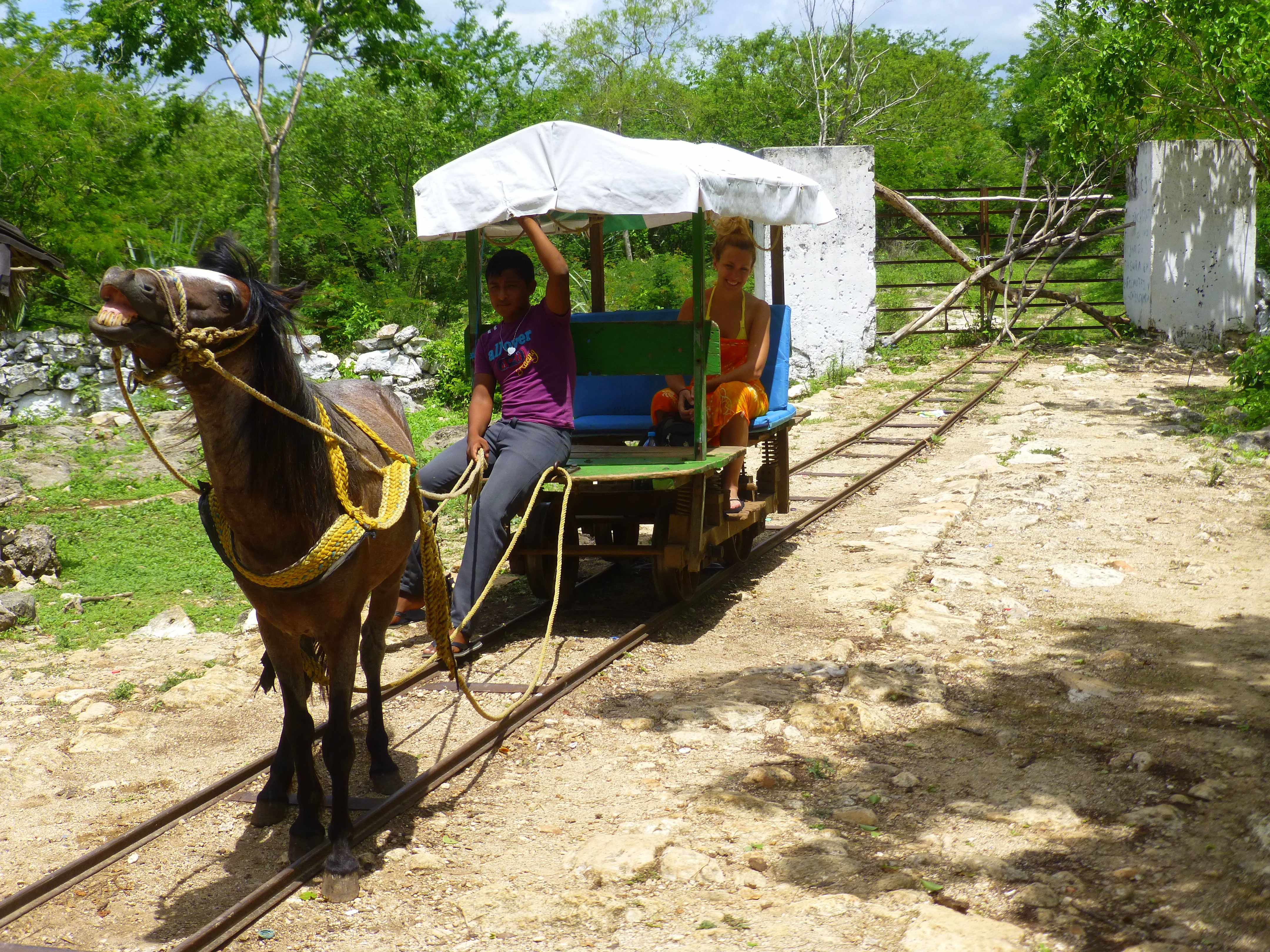 Horse-drawn cart on old henequen rail tracks at Cuzamá, Yucatán
Why Cuzamá feels different
Most cenote visits begin in a car park. Cuzamá begins on rails.
The narrow-gauge system is generally described as Decauville-style track, a lightweight railway format once used across Yucatán's henequen estates. Carts carried cut agave from the fields toward hacienda processing areas. Long after the henequen economy declined, sections of track remained, and local families adapted them for journeys into the cenote country.
Today's carts are simple wooden platforms mounted on rail wheels and pulled by horses. The ride is slow, uneven and noisy in the best possible way. Wheels clatter at the joins, branches brush the edge of the cart, and the countryside closes around the track.
This is not a polished theme-park transfer. Expect jolts, occasional pauses and stretches with little shade. The carts are part of the experience, but they are also working animal transport. Choose an operator that appears to rest and water its horses, avoid boarding if an animal looks distressed, and favour the cooler part of the morning whenever possible.
The classic three cenotes
Names and spellings vary between maps, signs and older accounts. Bolón-Chohol, for example, is also written as Bolonchoojol or Bolón-Chojol. The order of visits can vary by operator and operating conditions.
Chelentún
Chelentún is usually considered the gentlest introduction to the traditional route. A broad opening leads down into a limestone chamber where daylight reaches the water more easily than at the deepest cave cenotes.
The approach is generally less intimidating than Bolón-Chohol, although visitors should still expect wet steps, uneven surfaces and deep water. The appeal is immediate: a cool cavern, mineral-streaked rock and a pool that changes colour as the light moves across it.
Chelentún is often the best place to decide how much swimming you want to do. Cenote water can feel surprisingly cool after the cart ride, and there may be nowhere to stand once you leave the access area. Use a life jacket when offered, especially if you are not accustomed to swimming in deep natural pools.
Chansinic'Ché
Chansinic'Ché is remembered for the way light enters the cavern. Openings above the water create brighter patches across the pool, while roots and rock formations frame the chamber.
It can feel airier than the more enclosed stops, but do not interpret that as shallow or easy. Conditions, platforms and access arrangements can change, and all three cenotes should be treated as deep-water environments unless staff tell you otherwise.
For photographs, the best light depends on the season, cloud cover and time of day. Rather than planning around a promised sunbeam, arrive early and allow the cave to reveal itself gradually.
 Decauville rail transport used to reach the Cuzamá cenotes in Yucatán
Bolón-Chohol
Bolón-Chohol is traditionally described as the most difficult of the three to enter. The opening is tighter, the chamber darker and the descent steeper, commonly involving a ladder or narrow staircase.
This is the cenote that gives the route its adventurous reputation. From below, shafts of light pick out sections of the cavern and water, creating a much more enclosed atmosphere than at a large open cenote.
The descent is not suitable for everyone. Wet hands, slippery footwear, fear of heights, pregnancy, limited mobility or responsibility for a small child can all turn a dramatic entrance into an unnecessary risk. Look at the access before committing. Skipping one cenote is better than forcing a descent you do not feel able to reverse safely.
Choosing the right operator
There is no need to frame one local business as the only “authentic” choice. Several operations use parts of the historic rail network, and the practical differences matter more than the marketing.
Ask these questions before boarding:
- Which cenotes are included today?
- Is the price for the whole cart or per person?
- How many passengers can ride?
- How long should the complete trip take?
- Are life jackets included, rented separately or unavailable?
- How much swimming time is allowed at each stop?
- What is the latest recommended departure?
- Are there toilets, changing areas or food at the boarding point?
Prices and hours can change, and online reports are often years out of date. Carry pesos and agree on the complete charge before the cart leaves. Keep enough cash for local transport, food and a tip if the service is good, but do not rely on a precise price found in an old blog post.
Getting to Cuzamá from Mérida
Cuzamá is roughly 50 kilometres southeast of Mérida. By car, the usual route passes through or near Acanceh before continuing toward Cuzamá. Allow around an hour in normal conditions, then additional time to locate the correct boarding point.
Navigation deserves attention. Searching only for “Cuzamá cenotes” can produce several pins and roadside offers. Save the name of your intended operator, confirm its location before leaving Mérida and ask the operator to share a map pin when possible.
Public transport is possible but less predictable. Regional buses and colectivos can change terminals, departure points and schedules. They generally take you to Cuzamá or a nearby community rather than directly to the rail-cart departure. The final connection may require a mototaxi, and the return journey should be arranged before you disappear down the track.
Travellers without a car should verify the same-day return service locally and avoid relying on a timetable copied from an older travel article. A private driver or organised excursion is more expensive, but it removes the risk of finishing the cenote circuit after the last convenient connection.
How much time to allow
Treat Cuzamá as a substantial half-day rather than a quick swim.
The full experience includes checking in, waiting for a cart, several rail sections, time at the cenotes and the return ride. The pace depends on the route, other carts using the track, weather and how long your group spends in the water. Allow at least three hours at the cenote operation, with extra time for the drive from Mérida.
Arriving in the morning gives you more room for delays and usually makes the cart ride more comfortable. Do not arrive late expecting every operator to begin a full circuit close to closing time.
 Horse trams at Cuzamá, the signature transport to the cenotes
What to bring
Pack for a rural outing rather than a managed water park.
Bring a swimsuit, towel, dry clothes, drinking water and secure footwear with grip. A waterproof pouch or small dry bag is useful for phones and cash. Insect repellent is worth carrying, particularly during the wetter months, but apply it well before swimming and follow any shower rules intended to protect the groundwater.
Avoid heavy sunscreen, body oils and perfume immediately before entering a cenote. These pools form part of Yucatán's connected aquifer, not an isolated swimming basin.
Facilities vary. One boarding point may have changing rooms and food; another may be much simpler. Do not assume there will be lockers, card payments, an ATM or a full restaurant.
Safety and accessibility
Cuzamá rewards visitors who are comfortable with rustic conditions. It is a poor choice for anyone expecting level paths, uniform handrails and easy water access at every stop.
The main considerations are:
- deep water with limited or no shallow standing area
- steep or narrow descents
- slippery timber, stone or metal
- getting back out while wet and tired
- a jolting cart ride with limited back support
- heat and sun exposure between shaded sections
Children should be closely supervised and able to remain seated during the rail journey. For families with very young children, pregnant travellers, older visitors or anyone with mobility limitations, a more developed cenote park may be the better day out.
Never jump unless staff explicitly permit it and the designated landing area is clear. Follow life-jacket rules even if you are a strong swimmer.
When to visit
Cuzamá can be visited throughout the year, but conditions change.
From roughly November to April, mornings are generally drier and more comfortable for the cart ride. The hotter months can make exposed sections tiring, while rain can leave the trackside and entrances muddy. Tropical weather may also disrupt operations at short notice.
Weekends and holiday periods are more likely to attract local groups. An early weekday visit usually offers the best chance of a quieter circuit, but no cenote can promise solitude.
Check the forecast before leaving Mérida. During unsettled weather, confirm that the route is operating rather than assuming the rails and cave entrances are accessible.
Combining Cuzamá with Acanceh
Acanceh makes a natural companion stop because it lies on the route from Mérida. Its archaeological remains rise directly within the modern town, creating one of the most striking meetings of everyday Yucatán and the Maya past.
Opening arrangements, admission and access to individual structures are controlled by INAH and can change. Check the current status before building your day around entry or climbing. The Acanceh ruins guide explains what to look for in town.
A sensible day is Mérida to Cuzamá in the morning, lunch afterward, then a short stop in Acanceh on the return. Trying to add several more cenotes usually weakens the experience.
Is Cuzamá worth it?
Yes, provided the journey appeals as much as the swimming.
Cuzamá is not the easiest cenote day from Mérida. The logistics require more attention, the access is rougher and the exact route depends on the operator. That is also why it remains distinctive. The old rails turn the countryside into part of the story, linking the henequen economy above ground with the limestone world below it.
Travellers seeking easy facilities may prefer San Antonio Mulix and Cenote X'Batún or one of the organised complexes in the best cenotes near Mérida guide. Cuzamá is for those willing to accept a few jolts, ask the right questions and give the day enough time.
Confirm the route before paying, go early, carry cash and descend only where you feel confident. Do that, and Cuzamá delivers one of Yucatán's most memorable approaches to the underground.

