Ruta Puuc: Complete Visiting Guide
What Makes This Special
The Ruta Puuc (“hill route”) is a compact, 60 km archaeological corridor south of Mérida that strings together some of the most exquisite Maya architecture on earth. In one day you can combine the UNESCO-inscribed showstopper Uxmal with more intimate sites—Kabah, Sayil, Xlapak, and Labná—plus optional add-ons like Oxkintok and the Loltún Caves (status varies). Distances between stops are short (often 5–10 minutes), crowd levels are low compared to Chichén Itzá, and the signature Puuc style—smooth lower walls topped by intricate stone-mosaic friezes and long-nosed rain-god (Chaac) masks—steals the show. The official route runs from Uxmal to Labná (and traditionally to Loltún); expect world-class stonework, photogenic arches, quiet jungle trails, and excellent value at the smaller sites.
History
The Puuc Region & Architectural Style
Puuc refers both to the low limestone hills of southern Yucatán and to the regional architectural style that flourished mainly in the Late–Terminal Classic (c. 700–1000 CE). Builders used concrete-core masonry with a finely cut stone veneer, leaving lower façades plain and concentrating elaborate geometric mosaics and deity masks on the upper registers; multiple Chaac masks reflect the region’s reliance on rain given scarce surface water. Corbelled vaults here are among the best preserved in the Maya world.
Uxmal
Founded around 700 CE and peaking 700–1000 CE with ~25,000 inhabitants, Uxmal anchors the route and exemplifies Puuc refinement: the Pyramid of the Magician, Nunnery Quadrangle, and the cosmologically oriented Governor’s Palace showcase masterful stone mosaics and Chaac iconography. Uxmal is a UNESCO World Heritage Site (1996).
Kabah
Kabah is linked to Uxmal by a ceremonial sacbé and is famed for the Codz Poop (Palace of the Masks), whose façade bristles with hundreds of stacked Chaac masks—an iconic statement of Puuc aesthetics from ~700–900 CE.
Sayil
Sayil, a major Puuc settlement of the Terminal Classic, is best known for its three-tiered Great Palace. Population estimates suggest ~10,000 in the core and thousands more nearby during its c. 900 CE peak, before rapid decline by ~1000 CE.
Xlapak
Smaller and serene, Xlapak (“old stone”) supported the region agriculturally and preserves superb Chaac-mask façades on the so-called Palace. Occupation flourished roughly 750–950 CE.
Labná
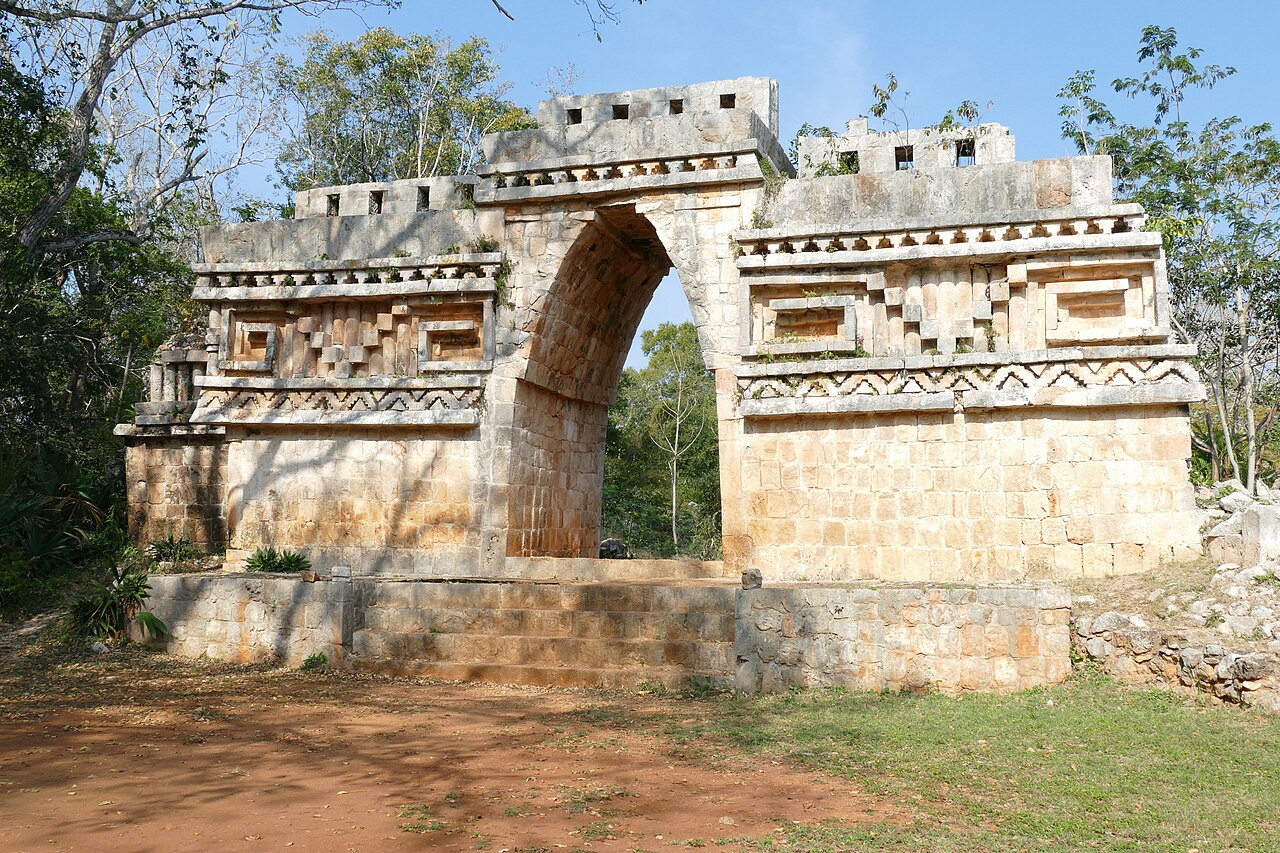
Labná’s freestanding arch is a Puuc masterpiece; the site also features a long palace and the El Mirador temple. The compact city (≈2.2 km²) peaked 800–1000 CE and is part of Uxmal’s UNESCO inscription alongside Sayil and Kabah.
Secondary Stops
Oxkintok (NW Puuc) spans from the Late Preclassic through the Postclassic and is famed for the multi-level vaulted labyrinth Satunsat, one of the region’s most enigmatic structures.
Loltún Caves have evidence of >10,000 years of human use (Pleistocene fauna, rock art) and were used in the Caste War; access has been variable since flooding in 2020. Check current status before you go.
Practical Information
- Hours (typical): Most sites are open daily 8:00–17:00. Last entry often 16:00. Uxmal follows 8:00–17:00 with evening light show on select nights.
- Entry Fees (2025):
- Uxmal: MXN $556 foreigners / $252 Mexicans (state + INAH, July 2025). Light show from ~$459–$748 depending on residency.
- Kabah: INAH Category II/III; posted MXN $80 (check onsite).
- Sayil: INAH Category III, MXN $75; hours 8:00–17:00, last entry 16:00.
- Xlapak: INAH Category III, MXN $75; 8:00–16:00.
- Labná: INAH posted MXN $75; 8:00–17:00.
- Oxkintok: INAH MXN $75; 8:00–17:00, last entry 16:00.
- Loltún: Status has fluctuated; reopening has been announced but verify current operations and tour times locally.
- Who Pays / Discounts: INAH sites offer free entry on Sundays to residents of Mexico with ID; children under 13, students, teachers, seniors, and people with disabilities often have exemptions. State (AAFY) fees may still apply at Uxmal.
- Payments: Bring cash (pesos). Card acceptance is inconsistent, especially at the smaller sites. (General advisory based on operator postings and traveler reports.)
What to Expect
Expect short drives between sites, modest trail networks through light jungle, and minimal shade on plazas. Uxmal has the most services (restrooms, lockers, vendors), while Kabah/Labná also have basic facilities; Sayil/Xlapak are simpler. Allocate ~2–3 hours for Uxmal, ~45–90 minutes each for Kabah, Sayil, Labná, and ~30–45 minutes for Xlapak. (Tour operator itineraries reflect this pacing.)
Getting There
Self-Drive (Recommended): From Mérida, take Hwy 261 south ~1 hr to Uxmal. Continue southeast to Kabah (≈22 km / 14 mi), then Sayil (9.5 km), Xlapak (5 km), and Labná (3.4 km). Fuel in Muna/Ticul; limited services on the corridor.
Public Transport: Buses run from Mérida (CAME/TAME) to Uxmal several times daily; on Sundays a dedicated Ruta Puuc bus reportedly loops Uxmal–Sayil–Labná–Xlapak (8:00–16:00). Confirm current times at the station, as schedules can change.
Tours: Numerous Mérida operators run day trips combining Uxmal + Kabah and/or multiple Puuc sites; some include Choco-Story Museum or a cenote stop.
Sample One-Day Loop (north→south): Uxmal (8:00–10:30) → Kabah (10:45–11:45) → Sayil (12:00–13:00) → Xlapak (13:10–13:40) → Labná (13:50–15:00) → late lunch/Santa Elena → Mérida. (Common private-tour pacing.)
What to Bring
- 2L water per person, salty snacks
- Sun hat, breathable clothing, sturdy walking shoes
- Biodegradable sunscreen (apply after swimming elsewhere; not relevant on ruins but eco-friendly)
- Insect repellent, small first-aid kit
- Cash (pesos) for tickets, tips, snacks
- Camera/phone, power bank
Tips & Safety
- Beat the heat: Start at opening; midday shade is limited.
- Respect restrictions: Climbing is limited; obey signage and guards.
- Road realities: Expect speed bumps (topes) and occasional wildlife; drive cautiously.
- Services: Toilets are reliable at Uxmal and available at some smaller sites; carry TP/hand gel just in case.
- Evening option: Uxmal light show operates select nights; buy tickets early and plan a late drive or overnight nearby.
Nearby Attractions
- Choco-Story Uxmal (cacao museum across from Uxmal; daily ~9:00–19:30; family-friendly workshops).
- Hacienda Yaxcopoil (historic henequen estate on Hwy 261; generally Mon–Fri 10:00–18:00, Sat 10:00–14:00).
- Santa Elena (nearest town with simple eateries/guesthouses; good overnight base).
- Oxkintok + Calcehtok Caves (NW of route; archaeology + cavern adventure).
Ruta Puuc: Complete Visiting Guide
Contents
What Makes This Special
The Ruta Puuc (“hill route”) is a compact, 60 km archaeological corridor south of Mérida that strings together some of the most exquisite Maya architecture on earth. In one day you can combine the UNESCO-inscribed showstopper Uxmal with more intimate sites—Kabah, Sayil, Xlapak, and Labná—plus optional add-ons like Oxkintok and the Loltún Caves (status varies). Distances between stops are short (often 5–10 minutes), crowd levels are low compared to Chichén Itzá, and the signature Puuc style—smooth lower walls topped by intricate stone-mosaic friezes and long-nosed rain-god (Chaac) masks—steals the show. The official route runs from Uxmal to Labná (and traditionally to Loltún); expect world-class stonework, photogenic arches, quiet jungle trails, and excellent value at the smaller sites.
History
The Puuc Region & Architectural Style
Puuc refers both to the low limestone hills of southern Yucatán and to the regional architectural style that flourished mainly in the Late–Terminal Classic (c. 700–1000 CE). Builders used concrete-core masonry with a finely cut stone veneer, leaving lower façades plain and concentrating elaborate geometric mosaics and deity masks on the upper registers; multiple Chaac masks reflect the region’s reliance on rain given scarce surface water. Corbelled vaults here are among the best preserved in the Maya world.
Uxmal
Founded around 700 CE and peaking 700–1000 CE with ~25,000 inhabitants, Uxmal anchors the route and exemplifies Puuc refinement: the Pyramid of the Magician, Nunnery Quadrangle, and the cosmologically oriented Governor’s Palace showcase masterful stone mosaics and Chaac iconography. Uxmal is a UNESCO World Heritage Site (1996).
Kabah
Kabah is linked to Uxmal by a ceremonial sacbé and is famed for the Codz Poop (Palace of the Masks), whose façade bristles with hundreds of stacked Chaac masks—an iconic statement of Puuc aesthetics from ~700–900 CE.
Sayil
Sayil, a major Puuc settlement of the Terminal Classic, is best known for its three-tiered Great Palace. Population estimates suggest ~10,000 in the core and thousands more nearby during its c. 900 CE peak, before rapid decline by ~1000 CE.
Xlapak
Smaller and serene, Xlapak (“old stone”) supported the region agriculturally and preserves superb Chaac-mask façades on the so-called Palace. Occupation flourished roughly 750–950 CE.
Labná
Labná’s freestanding arch is a Puuc masterpiece; the site also features a long palace and the El Mirador temple. The compact city (≈2.2 km²) peaked 800–1000 CE and is part of Uxmal’s UNESCO inscription alongside Sayil and Kabah.
Secondary Stops
Oxkintok (NW Puuc) spans from the Late Preclassic through the Postclassic and is famed for the multi-level vaulted labyrinth Satunsat, one of the region’s most enigmatic structures.
Loltún Caves have evidence of >10,000 years of human use (Pleistocene fauna, rock art) and were used in the Caste War; access has been variable since flooding in 2020. Check current status before you go.
Practical Information
- Hours (typical): Most sites are open daily 8:00–17:00. Last entry often 16:00. Uxmal follows 8:00–17:00 with evening light show on select nights.
- Entry Fees (2025):
- Uxmal: MXN $556 foreigners / $252 Mexicans (state + INAH, July 2025). Light show from ~$459–$748 depending on residency.
- Kabah: INAH Category II/III; posted MXN $80 (check onsite).
- Sayil: INAH Category III, MXN $75; hours 8:00–17:00, last entry 16:00.
- Xlapak: INAH Category III, MXN $75; 8:00–16:00.
- Labná: INAH posted MXN $75; 8:00–17:00.
- Oxkintok: INAH MXN $75; 8:00–17:00, last entry 16:00.
- Loltún: Status has fluctuated; reopening has been announced but verify current operations and tour times locally.
- Who Pays / Discounts: INAH sites offer free entry on Sundays to residents of Mexico with ID; children under 13, students, teachers, seniors, and people with disabilities often have exemptions. State (AAFY) fees may still apply at Uxmal.
- Payments: Bring cash (pesos). Card acceptance is inconsistent, especially at the smaller sites. (General advisory based on operator postings and traveler reports.)
What to Expect
Expect short drives between sites, modest trail networks through light jungle, and minimal shade on plazas. Uxmal has the most services (restrooms, lockers, vendors), while Kabah/Labná also have basic facilities; Sayil/Xlapak are simpler. Allocate ~2–3 hours for Uxmal, ~45–90 minutes each for Kabah, Sayil, Labná, and ~30–45 minutes for Xlapak. (Tour operator itineraries reflect this pacing.)
Getting There
Self-Drive (Recommended): From Mérida, take Hwy 261 south ~1 hr to Uxmal. Continue southeast to Kabah (≈22 km / 14 mi), then Sayil (9.5 km), Xlapak (5 km), and Labná (3.4 km). Fuel in Muna/Ticul; limited services on the corridor.
Public Transport: Buses run from Mérida (CAME/TAME) to Uxmal several times daily; on Sundays a dedicated Ruta Puuc bus reportedly loops Uxmal–Sayil–Labná–Xlapak (8:00–16:00). Confirm current times at the station, as schedules can change.
Tours: Numerous Mérida operators run day trips combining Uxmal + Kabah and/or multiple Puuc sites; some include Choco-Story Museum or a cenote stop.
Sample One-Day Loop (north→south): Uxmal (8:00–10:30) → Kabah (10:45–11:45) → Sayil (12:00–13:00) → Xlapak (13:10–13:40) → Labná (13:50–15:00) → late lunch/Santa Elena → Mérida. (Common private-tour pacing.)
What to Bring
- 2L water per person, salty snacks
- Sun hat, breathable clothing, sturdy walking shoes
- Biodegradable sunscreen (apply after swimming elsewhere; not relevant on ruins but eco-friendly)
- Insect repellent, small first-aid kit
- Cash (pesos) for tickets, tips, snacks
- Camera/phone, power bank
Tips & Safety
- Beat the heat: Start at opening; midday shade is limited.
- Respect restrictions: Climbing is limited; obey signage and guards.
- Road realities: Expect speed bumps (topes) and occasional wildlife; drive cautiously.
- Services: Toilets are reliable at Uxmal and available at some smaller sites; carry TP/hand gel just in case.
- Evening option: Uxmal light show operates select nights; buy tickets early and plan a late drive or overnight nearby.
Nearby Attractions
- Choco-Story Uxmal (cacao museum across from Uxmal; daily ~9:00–19:30; family-friendly workshops).
- Hacienda Yaxcopoil (historic henequen estate on Hwy 261; generally Mon–Fri 10:00–18:00, Sat 10:00–14:00).
- Santa Elena (nearest town with simple eateries/guesthouses; good overnight base).
- Oxkintok + Calcehtok Caves (NW of route; archaeology + cavern adventure).