The Great Ball Court is often the second monument visitors notice at Chichén Itzá, after El Castillo. That order can undersell it. The court is not simply a large ancient sports field beside the pyramid. It is a carefully designed ceremonial space where architecture, political authority, movement, sound, images of warfare, and Maya ideas about life and death meet in one long limestone arena.
If you are visiting Chichén Itzá from Mérida, Valladolid, or farther away, give the Great Ball Court more than a quick photograph. Walk to one end, look up at the rings, read the carved panels along the lower walls, and notice how the surrounding temples turn the court into a contained theatre. You do not need to accept every dramatic story told about the Maya ballgame to understand why this place mattered. The surviving evidence is already extraordinary, and the unanswered questions are part of the monument's interest.
Quick answer: what is the Great Ball Court?
The Great Ball Court is the largest and one of the best-preserved ball courts at Chichén Itzá. It has two long, parallel walls enclosing a central playing alley, with temples and raised structures at the ends. The familiar stone rings are set high on the side walls. The court is usually described as the largest in Mesoamerica, although published measurements differ depending on whether researchers measure the playing alley, the full architectural complex, or the outer terraces. A useful visitor impression is that it is roughly 168 metres long, around 70 metres across in its broader enclosure, and bordered by walls that rise close to eight metres.
The game played in spaces like this is generally called the Mesoamerican ballgame. At Chichén Itzá, the modern Maya term pok ta pok is widely used, although scholars are careful about applying one later or regional name to every ancient version. Players struck a heavy rubber ball with the hips, thighs, and other permitted body areas rather than using hands or feet in the way a modern football player would. The exact rules, teams, scoring system, and outcome of every match are not known.
The court's carved reliefs show that the game could carry ritual and political meaning. They do not prove that every game ended in a human sacrifice, nor do they settle whether a winning or losing player was killed on a particular occasion. The safest interpretation is that the court connected competition with ceremony, legitimacy, fertility, warfare, and the maintenance of a sacred order.
 The long walls and playing alley of the Great Ball Court at Chichén Itzá
Why the court matters in Chichén Itzá
Chichén Itzá was not a single-period city with one simple identity. Its architecture and inscriptions reflect long Maya traditions as well as contacts and political relationships across Mesoamerica. The site developed over centuries, and the buildings that dominate the central monumental zone belong to different phases of construction and use. The Great Ball Court belongs to a city whose rulers were presenting power through scale, imagery, and control of shared ceremonial spaces.
That context matters because the word “sport” can make the court sound less serious than it was. People may have trained, competed, and watched the game, but the setting was not an ordinary recreation ground. Ball courts throughout Mesoamerica appear in sacred and civic centres. Their imagery repeatedly links the game with rulers, captives, sacrifice, plants, animals, celestial cycles, and the boundary between the living world and the underworld.
The court also demonstrates how the builders used space to guide attention. From the broad plaza, the walls look almost impossibly long. The parallel sides create a strong visual corridor. High above, the rings are small compared with the total structure, which gives the visitor an immediate sense of how difficult the target would have been. At the ends, elevated temples frame the action rather than allowing it to dissolve into the wider city.
This is why the Great Ball Court is worth studying even if you are not especially interested in ancient sports. It offers a concentrated lesson in how a city can turn movement into meaning. The ball travelled through the court, players moved within strict limits, spectators occupied edges and platforms, and the architecture made the performance visible and memorable.
Guide5 Days in Yucatán: Mérida, Uxmal, Izamal, Chichén Itzá and ValladolidA practical five-day Yucatán itinerary using Mérida and Valladolid as bases, with Uxmal, Kabah, Izamal, Chichén Itzá, Ek Balam and realistic drive times.Open
How the Mesoamerican ballgame worked
No rulebook from Chichén Itzá survives, so explanations should distinguish evidence from reconstruction. Carved scenes, ceramic images, colonial descriptions, equipment, and comparisons among many sites provide clues. They do not give us a complete match report.
The ball was made from latex obtained from rubber-producing trees. Ancient makers processed the material into a resilient ball that could be heavy and fast. The weight and size probably varied according to the local game and period. A ball that looks manageable when held by a modern visitor would behave very differently when struck at speed against stone.
Players wore protective equipment. Images show belts, hip guards, knee protection, and other pieces whose precise use is still debated. The equipment was not decorative costume alone. A hard rubber ball could injure a player, and the game demanded repeated impact with the body. The broad hip yoke associated with the ballgame may have helped protect the pelvis or distribute force, though researchers continue to discuss how particular objects functioned in actual play.
The central challenge seems to have been controlling the ball without using the hands and feet in the ordinary sense. A player had to anticipate its bounce, move quickly, lower the body, and redirect it with the hips or thighs. The high rings on the walls intensified the difficulty. Modern visitors often imagine that every play required putting the ball through a ring, but the rings may have been one part of a larger scoring or ceremonial system rather than a target used on every exchange.
The game could be played in different formats in different places. Teams, pairs, and individual players appear in artistic evidence. The court at Chichén Itzá was large enough to host a public spectacle, but its size does not tell us exactly how many people stood on the playing surface. It is better to say that the space supported organised competition and ritual display than to claim a precise team size.
The Popol Vuh, a K'iche' Maya narrative recorded in colonial times, tells a famous story of the Hero Twins and a ballgame in the underworld. It is not a direct description of a match at Chichén Itzá, and it should not be treated as an instruction manual. It is nevertheless useful for understanding why the ballgame became associated with death, rebirth, challenge, and encounters between worlds in later Maya interpretation.
The stone rings: difficult targets, not decoration
The stone rings are among the court's most recognisable details. They sit high on the side walls, decorated with carved imagery and oriented toward the playing alley. From ground level they can look surprisingly small. That is part of the point: the court's scale makes the target feel remote and demanding.
A successful passage through a ring may have carried special significance, but we should not assume that every game was decided by a single ring shot. The rules of ancient ballgames varied, and evidence from one region or century cannot be transferred automatically to another. The rings may have served as scoring goals, ritual markers, or symbols that made the court's cosmic associations visible.
Look at the ring as both an object and a position in the architecture. It is not placed at eye level for easy viewing. Players had to send the ball upward while moving along a narrow central space, and spectators could see the effort from the raised sides. The ring turns a difficult bodily action into a public sign of control.
The court's walls also carry the visual language of power. Serpents, feathers, plants, shields, weapons, and human figures appear in the larger sculptural programme around the complex. These motifs do not offer a single caption explaining the game. Instead, they place it inside a world where political authority and sacred forces were inseparable.
What the carved reliefs show
The lower reliefs are the most important evidence for the court's ritual meaning. They are not all equally easy to see from the visitor path, and bright sun can flatten the carving. Take time to examine the panels from different angles rather than relying on the first dramatic description offered at the entrance.
The best-known scene shows a ballplayer in a moment of decapitation. Serpents or streams of blood emerge from the neck, and a plant appears in the image. The composition is powerful because it connects violence with growth and renewal. The scene is not a straightforward newspaper illustration. It is a ritual image arranged with symbols that ask the viewer to think about transformation, not only about an individual death.
The players are represented with elaborate attire and equipment. Headdresses, protective pieces, shields, and other objects help identify status and role. The reliefs show that a ballplayer could be a person of importance rather than an anonymous athlete. The game was part of a social world in which elite display, warfare, captives, and ceremonial authority overlapped.
The presence of decapitation imagery is why many popular accounts say, “The loser was sacrificed.” That sentence is too certain. The relief shows sacrifice, but the scene does not provide a universally accepted label saying whether the victim was the winning captain, the losing captain, a captive represented through the language of the game, or a figure participating in a specific rite. Maya sacrifice itself had varied forms and meanings, so a single rule applied to every match would be misleading.
Nor is there evidence that a normal game at the court ended with a killing every time. A ceremonial match, a political event, and an everyday training contest could have had different stakes. The court's imagery tells us that sacrifice was part of its symbolic vocabulary. It does not allow us to reconstruct the schedule of every match.
 The carved ballgame sacrifice relief associated with Chichén Itzá
Winner or loser: what can we responsibly say?
The question attracts attention because it seems to offer a simple answer, but the evidence is more complicated. Some interpretations argue that the winning player was sacrificed because offering a valued person could be an honour and a gift to the gods. Other interpretations connect sacrifice with defeat, captivity, and the removal of an enemy. Both ideas have appeared in public explanations, and neither should be presented as settled for the Great Ball Court.
A better way to understand the image is to ask what sacrifice does within the scene. The decapitated player is not shown as an insignificant criminal. The body is integrated into a visual system of blood, snakes, plants, and regeneration. The sacrifice may mark a passage between states: human and divine, death and new growth, order and danger. That interpretation does not make the violence less real. It explains why the artists put the scene at the heart of a major public monument.
Maya peoples today are not museum pieces, and ancient imagery should not be used to create a sensational portrait of a “mysterious” civilisation. Chichén Itzá was built by people who managed water, food, trade, craft production, diplomacy, conflict, family life, and religious ceremony. The court is one part of that society. Its violent reliefs are important, but they should not erase the wider human landscape.
When a guide says the winner was sacrificed, ask what source supports that claim and whether it is an interpretation rather than a fact. A good explanation will acknowledge debate. It will also connect the scene to wider Mesoamerican traditions without pretending that every ball court had identical rules.
The famous acoustics
Visitors often test the court's acoustics with a clap or a spoken word. A sound made at one end can carry down the playing alley and return in an unusual series of reflections. A voice may be heard more clearly at the opposite end than you expect, especially when the court is relatively quiet.
The effect comes from the long, parallel walls and the enclosed ends. Sound reflects rather than disperses immediately across an open plaza. The height and surfaces of the structures shape the reverberation. Modern acoustic research has examined the court as an architectural space, but the existence of the echo does not by itself prove that the builders designed every dimension for a specific musical or vocal effect.
It is reasonable to say that the acoustics may have supported spectacle and communication. A chant, announcement, drumbeat, or call could travel across the court. It is not reasonable to claim that one echo proves an exact ritual function or that the builders possessed a modern acoustic formula. Architecture can be intentional without every result having one demonstrable purpose.
Try the effect respectfully. Do not shout over other visitors, climb barriers, strike the stone, or turn the monument into a performance for a phone video. If the court is busy, listen to guides and wait for a quieter moment. The most useful thing to notice is not whether a clap returns a magical number of times, but how the court makes people at opposite ends feel connected.
The acoustics also help explain the court as a political space. A ruler or priest did not need to stand beside every participant to be present. Words and sounds could move through the architecture. The court's long axis created a shared field of attention, making ritual visible and audible to a large audience.
 A view across the stone walls of the Great Ball Court at Chichén Itzá
The temples at each end
The Great Ball Court is not only two walls and a floor. Raised buildings at the ends complete the architectural theatre. The North Temple, sometimes called the Temple of the Bearded Man in older guidebooks, looks toward the court from one end. At the other end, the Temple of the Jaguars and related structures contribute carved imagery and elevated viewpoints.
Older names can be useful for finding a monument on a map, but they do not always reflect an agreed ancient name or function. “Bearded Man” is a descriptive label given by later observers, not proof that the Maya represented a bearded deity or person. Treat these labels as visitor vocabulary rather than final historical explanations.
The elevated structures frame the court and create places from which people could observe or participate in ceremonies. Their height changes the visitor's view: from above, the central alley reads as a controlled corridor; from within it, the walls dominate the body. This difference is part of the design's power.
Look for how the court relates to other monuments. El Castillo is nearby, but the Great Ball Court is not simply an accessory to the pyramid. The court has its own visual programme and ceremonial weight. The Temple of the Warriors, the skull platform known as the Tzompantli, and other structures in the Great North Plaza extend the same atmosphere of public ritual, warfare, and authority.
A short stop can make the court look isolated. A longer walk shows that it is part of a planned group. Chichén Itzá rewards visitors who keep asking how one building directs them toward the next.
What to look for on the lower walls
Start at a corner and walk slowly along the base of the side walls. The reliefs are easier to understand when you see how they repeat and vary. Notice the bodies of the players, their equipment, the plants and animals, and the way the figures are arranged in a procession or sequence.
Look for the difference between a general image of a player and the central decapitation scene. The court does not show only a single moment. It presents a visual story in which movement, identity, conflict, and sacrifice are related. The repetition may have helped visitors recognise the event as an organised ceremony rather than random violence.
Do not touch the carvings, even where a surface looks smooth or accessible. Oils, dust, and repeated contact damage limestone. Keep bags and clothing away from the walls and follow the current barriers and one-way instructions. Access rules at archaeological zones can change, so do not plan your visit around entering a building or crossing into an area that may be closed.
A guide can help you identify details that are hard to see in direct sun. If you are exploring independently, bring a small amount of background knowledge but leave space for observation. The court is large enough that reading every panel in one pass can become tiring, especially in the heat.
 The Great Ball Court complex within the archaeological landscape of Chichén Itzá
How to visit the Great Ball Court today
The court is inside the Chichén Itzá archaeological zone in Yucatán, near the modern community of Pisté. It is an inland site, not a coastal attraction, and the day can be intensely hot even when the morning feels comfortable. The court is reached on foot from the main visitor route, alongside other major monuments.
Most people visit as part of a wider Chichén Itzá circuit. From Mérida, a rental car or private driver makes it easier to arrive early and decide how long to stay. Public transport can work, especially for travellers staying in Valladolid or Pisté, but schedules and onward connections require more attention. From Cancún and the Riviera Maya, organised day trips are common, though the long road journey can limit the time and energy available for careful interpretation.
If you want a guide, choose one who is comfortable saying when evidence is uncertain. A good archaeology guide will explain the ballgame, read the reliefs, and place Chichén Itzá in Maya history without reducing the visit to a sequence of dramatic claims. Guided tours also help with the practical flow of a large site, particularly if this is your first archaeological visit in Yucatán.
Compare Chichén Itzá tours on GetYourGuide · See Chichén Itzá options on Viator
Arrive as early as your ticket and the site's current opening arrangements allow. Early hours are usually more comfortable and can make the court easier to understand before large groups fill the central route. Late afternoon light can be attractive, but do not assume that every structure remains accessible until sunset. Check the official site or INAH information before travelling for current entrance rules, closures, permitted routes, and special events.
Wear shoes with a firm sole. The route includes uneven ground, and limestone reflects heat. Bring water in a permitted reusable bottle, sun protection, a hat, and enough patience for a slow walk. A small notebook or phone note can be more useful than trying to photograph every panel. If you have limited mobility, ask about the current accessible route before entering; surfaces, barriers, and access to individual buildings vary.
How long should you spend here?
Allow at least 20 to 30 minutes for the Great Ball Court alone if you want to walk the length, observe the rings, listen to the acoustics, and look at the reliefs. That is a minimum, not a full study visit. An hour is more comfortable for readers interested in history or photography, provided the rest of the archaeological zone also fits your day.
The court can be visited quickly during a packed excursion, but a rushed stop changes the experience. You may remember the scale and the echo while missing the reason the walls are carved. If the court is crowded, step to the side where permitted and wait rather than standing in the central route. The monument is easier to read when you can see its full length.
Do not spend all your energy at the court if you have just arrived. Chichén Itzá includes a wide area, and the heat builds. A realistic plan gives the court a deliberate first look or pairs it with nearby monuments before taking a shaded rest. If you are travelling with children, describe the ballgame as a demanding ancient team competition with ritual meaning rather than leading with graphic sacrifice imagery; then answer questions honestly and calmly.
Independent visit, private guide, or group tour?
An independent visit suits travellers who have already read about Maya architecture and prefer to move slowly. It gives you control over the court and the rest of the site, but you must supply your own historical framework. Download or save practical information before leaving Mérida or Valladolid because mobile coverage and attention can be inconsistent once you are walking under the sun.
A private guide is useful when the Great Ball Court is a main reason for visiting. You can ask about dimensions, construction phases, the reliefs, acoustic research, and the limits of current interpretation. The cost and availability vary, so check current terms rather than relying on an old travel forum. A private visit can also be easier for families or photographers who need pauses.
A group tour is often the simplest option from a distant base. Compare the departure point, time at Chichén Itzá, whether the guide enters the archaeological zone, and what other stops are included. An itinerary that adds a cenote and Valladolid may be convenient, but it can leave little time for the court. Treat a long list of stops as a tradeoff, not as proof of a better tour.
If you stay near Valladolid, the shorter approach can make an early visit more realistic. You can then return to town for food and shade or continue to another nearby attraction. If you stay in Mérida, the route is longer but works well as part of a broader eastern Yucatán plan. Overnight stays near the archaeological zone are another option when early access matters, but compare current location, transport, and facilities carefully.
Check current Valladolid-area hotel rates on Booking.com · Compare Valladolid stays on Trip.com
The court and the problem of simple stories
Ancient Maya history is often presented through a handful of familiar phrases: mystery, sacrifice, lost civilisation, and a ballgame where the winner died. These phrases are memorable, but they can flatten a complex society and turn uncertainty into entertainment.
The Great Ball Court offers a better story because it can hold several truths at once. The ballgame required physical skill. The court was a public architectural project. The reliefs connect the game with violence and renewal. Rulers used monumental spaces to express authority. Sound shaped the visitor's experience. The exact rules and ritual sequence remain incomplete. None of these points cancels the others.
Use the word “Maya,” not “the Mayans,” when referring to the people and cultures of the region. Maya communities continue to live across Mexico and Central America, with many languages and distinct histories. The ancient city of Chichén Itzá should be understood as part of that long and continuing history, not as a civilisation that simply vanished.
It is also worth remembering that archaeology is an ongoing process. Excavation, conservation, epigraphy, architectural study, and Indigenous perspectives can change how a monument is interpreted. A guide who updates their explanation and distinguishes a strong reading from a popular theory is offering more value than one who supplies a perfectly certain answer to every question.
What to combine with the Great Ball Court
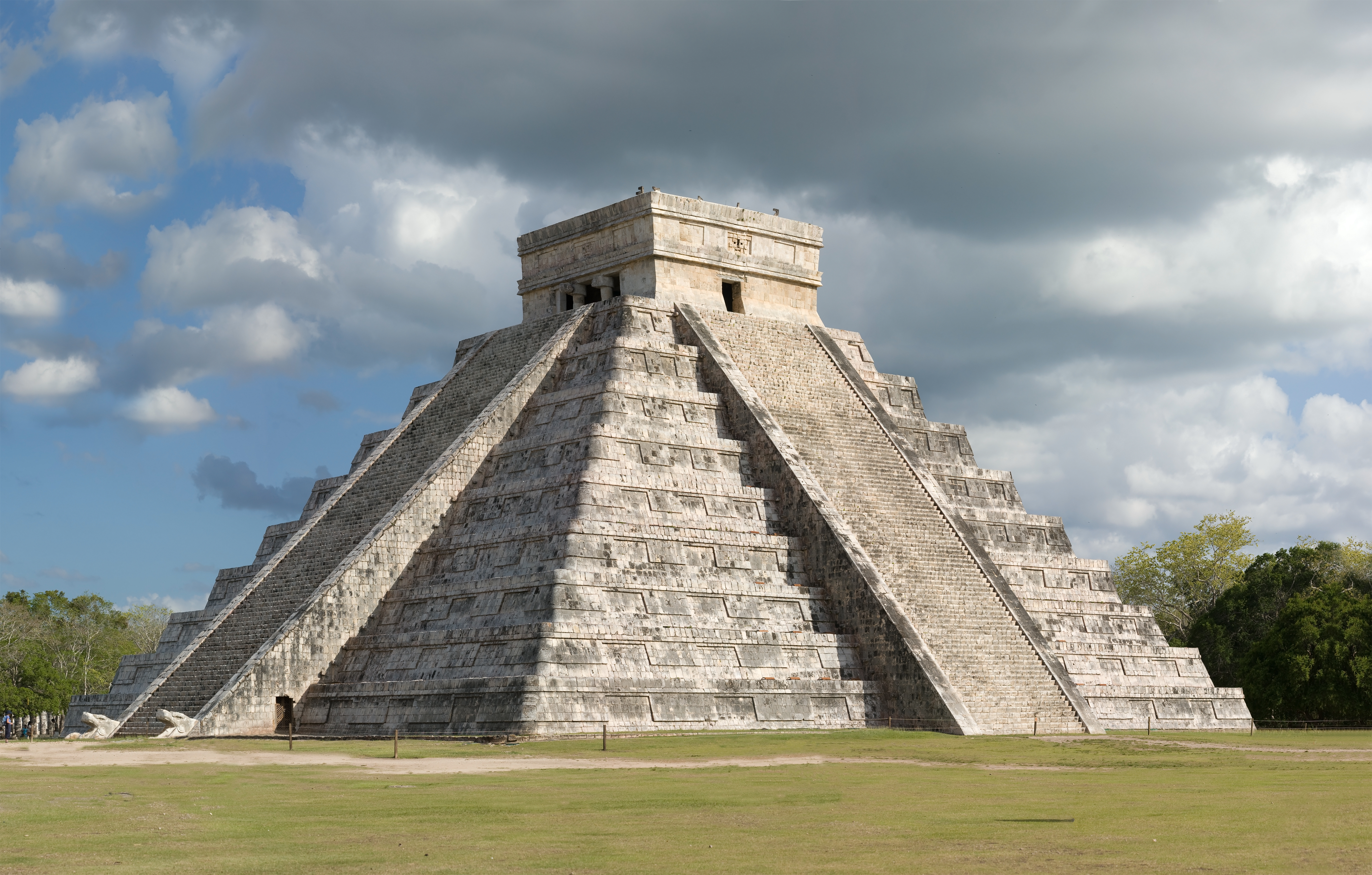
El Castillo is the obvious nearby comparison. The pyramid rises above the same ceremonial landscape and is associated with Kukulcán, the feathered serpent. Seeing both helps explain how Chichén Itzá used different building types to express linked ideas of movement, power, sky, earth, and time. Do not treat the court as a warm-up photograph before the pyramid; give each monument its own question.
The Temple of the Warriors and the surrounding colonnades are useful for understanding public architecture and processional space. The Tzompantli and nearby platforms bring a more direct focus on warfare, bodies, and ritual display. The Sacred Cenote lies farther along the archaeological route and helps connect the city to water, offerings, and the special importance of cenotes in a limestone landscape.
If you are planning a full day from Mérida or Valladolid, add a cenote or a colonial town only if the schedule remains realistic. Swimming after a hot archaeological visit can be pleasant, but a tour with too many stops may turn every place into a hurried half-hour. Decide whether your priority is detailed history, a comfortable mixed day, or the maximum number of attractions.
Common questions
Was the Great Ball Court used for sport or sacrifice?
It was used for a ballgame that could be both competitive and ritual. The reliefs show sacrifice imagery, but the court was not necessarily a place where every ordinary match ended in a killing. The game had social, political, and sacred dimensions that cannot be reduced to one purpose.
Who was sacrificed at Chichén Itzá: the winner or the loser?
The carved relief does not settle that question. Interpretations differ, and a responsible explanation should say so. There is no sound basis for presenting one rule as proof that every winning or losing player was sacrificed.
Could the Maya really hear a voice across the court?
The long parallel walls create striking reflections, and sound can carry across the playing alley. The acoustics are real, but claims about a precise intentional design or a fixed number of echoes should be treated cautiously. Try listening respectfully when the court is quiet.
How big is the Great Ball Court?
Published measurements vary according to what is included. It is commonly described as approximately 168 metres long and about 70 metres across in the wider complex, with walls close to eight metres high. The important visitor fact is its scale: it is an immense ceremonial space, not a small neighbourhood court.
Can visitors play ball or enter the court?
Visitors should not recreate the game, touch the carvings, climb structures, or cross current barriers. Access rules can change, and the permitted route may keep people at the edges of the court. Follow staff instructions and protect the monument from contact.
Is a guide necessary?
No, but a knowledgeable guide can make the reliefs and architecture much easier to understand. Independent visitors should read in advance and allow time to observe rather than relying only on plaques. If you book a tour, confirm how much time is actually spent inside the archaeological zone.
Is the Great Ball Court suitable for children?
Yes, especially if children are interested in puzzles, architecture, or sport. Explain that the ancient game had ritual meaning and decide in advance how much detail about sacrifice is appropriate for your family. Sun, walking, and heat are usually bigger practical challenges than the court's content.
The best way to remember the monument
Stand near the middle of the playing alley and look toward one end without immediately taking a photograph. The walls compress distance, the rings sit high above you, and the reliefs turn athletic movement into a story about order and renewal. Then walk to the side, study the carved player, and listen to how your voice changes in the space.
The Great Ball Court is most rewarding when you resist the demand for one sensational answer. It was a place of skill and ceremony, public performance and political authority, violence and renewal. Visit early if possible, use a guide who respects the evidence, and leave enough time to see the court as part of Chichén Itzá rather than as a single photograph beside El Castillo. That slower approach is the one that lets the monument keep its scale and its questions.