

Last updated: 8 June 2026. Practical details below were checked against official and reliable sources including INAH, Secretaría de Cultura, and the Tren Maya booking system. As of the latest available information, Chichén Itzá is open to visitors, with official pages commonly listing access from 08:00 to 16:00 and INAH Lugares listing last access at 15:00. Ticket costs are split between the federal INAH archaeology fee and a Yucatán state fee collected through AAFY/CULTUR. Hours, prices, access routes, museum rules, and transport schedules can change, so verify before travelling, especially if you are coming from Cancún, Playa del Carmen, or Tulum.
Chichén Itzá is one of the most famous archaeological sites in Mexico, and for many travellers it is the main ruins visit of a first trip to Yucatán. The fame is justified. El Castillo, the Great Ball Court, the Temple of the Warriors, the Sacred Cenote, El Caracol, Las Monjas, and the newer museum together make this one of the strongest cultural visits in the peninsula.
It is also hot, busy, commercial, and easy to plan badly. A rushed visit can feel like a long drive, a queue, a crowded photo stop, and a packed cenote. A well-planned visit is different. Arrive early, understand the ticket structure, allow enough time, and Chichén Itzá becomes a serious cultural day rather than a box to tick.
 El Castillo at Chichén Itzá in Yucatán
Chichén Itzá at a glance
| Question | Quick answer |
|---|---|
| Best for | First-time visitors, history travellers, families, photographers, and classic Yucatán itineraries |
| Best base | Valladolid for early access; Mérida for a city-based day trip |
| Best time to arrive | At opening, or as close to it as possible |
| Time needed | 2.5–4 hours for most visitors; 4–5 hours if you include the museum properly |
| Guide needed? | Not mandatory, but recommended for first-timers |
| Best combo | Chichén Itzá + cenote + Valladolid |
| Main drawback | Heat, crowds, vendors, and changing fees or hours |
| Quick recommendation | Sleep in Valladolid or Pisté if Chichén Itzá is a priority; otherwise use an early tour, rental car, or private driver |

Is Chichén Itzá worth visiting?
Yes, Chichén Itzá is worth visiting, especially if this is your first trip to Yucatán. It is famous for good reason. The scale of El Castillo, the length of the Great Ball Court, the ritual importance of the Sacred Cenote, and the mix of Maya and central Mexican influences make it one of the most important archaeological experiences in the region.
That said, it is not the quietest ruins site in Yucatán. If you want silence, forest, and a slower atmosphere, Uxmal is often more rewarding. If you are based in Valladolid and want a smaller ruins-and-cenote day, Ek Balam can be easier. If you are in Mérida and want a short, less crowded ruins visit, Mayapán is much simpler.
A useful way to think about it:
| Site | What it does best |
|---|---|
| Chichén Itzá | Iconic, monumental, famous, historically important |
| Uxmal | Quieter, more atmospheric, architecturally rich |
| Ek Balam | Easier Valladolid and cenote pairing |
| Mayapán | Smaller, less crowded, easier from Mérida |
Chichén Itzá rewards planning more than most ruins in Yucatán. Go early if you want cooler weather and fewer crowds. Hire a guide if you want context. Do not treat El Castillo as the whole visit.
For a wider comparison, see our best Mayan ruins in Yucatán guide.
Is Chichén Itzá open right now?
As of the latest checked official listings, Chichén Itzá is open to visitors. INAH and the Secretaría de Cultura list visitor access information for the archaeological zone, but official pages can show slightly different wording or hours. That is why visitors should verify before making a long trip.
Closures and access changes can happen because of maintenance, storms, holidays, crowd-control operations, protests, road issues, or special events such as equinox periods. This matters more if you are coming from Cancún, Playa del Carmen, or Tulum, where the day is long and expensive.
Before travelling, check one of the following:
- The official INAH listing for Chichén Itzá
- The current ticket provider or tour operator
- Your hotel, local guide, or driver
- The official Chichén Itzá or Gran Museo channels if there has been recent news
Do not rely only on an old blog post for hours or ticket prices. Chichén Itzá fees change, and official pages are not always updated in the same place at the same time.
 Backup planIs Chichén Itzá Open Today? Current Status & Visitor Updates
Chichén Itzá opening hours
The safest current planning assumption is that Chichén Itzá is generally open daily from the morning, with last access before closing. Recent official pages commonly list 08:00–16:00, while INAH Lugares has listed 08:00–16:00 with last access at 15:00. Some third-party ticket pages and tour providers may still describe the site as 08:00–17:00 with later last entry. Because of these differences, verify the current details before travelling.
| Detail | Current practical note |
|---|---|
| General opening | Usually daily |
| Official hours to verify | Commonly listed as 08:00–16:00 on official INAH/Cultura pages |
| Last access | INAH Lugares has listed last access at 15:00 |
| Best arrival | 08:00 or shortly after |
| Poor arrival time | Late morning to early afternoon |
| Late-day warning | Last entry does not mean you will have enough time for a good visit |
Arriving at opening is the best practical decision you can make. The site is exposed, shade is limited in the main plazas, and tour groups begin to change the atmosphere as the morning goes on.
GuideChichén Itzá Tickets & Hours: Current INAH + Yucatán FeesCurrent Chichén Itzá opening hours, ticket prices, last entry, the INAH and Yucatán fee components, exemptions, ticket buying, parking and practical visit planning for a full archaeological-site day.OpenChichén Itzá tickets and entrance fees
Chichén Itzá tickets can be confusing because the total cost is split between different fees. Visitors usually pay:
- A federal archaeology/site fee managed by INAH
- An additional Yucatán state fee through AAFY/CULTUR
- Different rates depending on nationality, residency, age, and ID
The latest official cultural listing reviewed for this guide states a federal INAH fee of MXN $105, plus an additional state fee of MXN $592 for foreign visitors and MXN $205 for national visitors. That means a simple adult total, before any discount or exemption, may work out around MXN $697 for foreign visitors and MXN $310 for Mexican nationals under that listing. Always verify the current total before travelling.
| Visitor type | Approximate fee | Notes |
|---|---|---|
| Foreign adult | Verify latest total; recent official total works out around MXN $697 | Usually the highest rate |
| Mexican national | Reduced total with valid official ID | Bring INE or other accepted proof |
| Yucatán resident | State fee exemption may apply | Bring valid local ID |
| Children | Discounts or free entry may apply | Depends on age, nationality, and ID |
| Students / teachers / seniors | Discounts or free entry may apply | Bring valid credentials |
| Tour visitor | Depends on package | Check whether both federal and state fees are included |
Important warnings:
- Some tours include entrance fees; some do not.
- Some tours include only part of the ticket cost.
- Some online resellers charge more for convenience or bundling.
- Bring cash in pesos and a card.
- Do not assume Sunday is free unless you qualify and have the right ID.
- Old ticket-price articles are often wrong.
For a long day from the coast, a tour that appears cheap can become less cheap once you add entrance fees, lunch, cenote fees, tips, and long transport time. Check inclusions line by line.
GuideChichén Itzá Tickets & Hours: Current INAH + Yucatán FeesCurrent Chichén Itzá opening hours, ticket prices, last entry, the INAH and Yucatán fee components, exemptions, ticket buying, parking and practical visit planning for a full archaeological-site day.OpenBest time to visit Chichén Itzá
Best time of day
The best time to visit Chichén Itzá is early morning, ideally at opening.
Early arrival gives you:
- Cooler weather
- Better light for photos
- Fewer people around El Castillo
- A more comfortable walk to the Sacred Cenote and southern group
- A better chance of enjoying the Great Ball Court before it gets crowded
This is especially important from March into summer, when heat can make the open areas tiring by late morning.
Worst time of day
Late morning to early afternoon is the hardest time to visit. This is when heat, harsh light, tour-bus arrivals, and vendor activity all become more noticeable.
If you arrive at midday, the site can still be worthwhile, but adjust expectations. Bring water, move slowly, prioritise the main structures, and do not force a long walking route if someone in your group is overheating.
Best season
The dry season, roughly November to April, is easier logistically. Roads are simpler, rain is less likely to interrupt the day, and photos are often clearer. It is also more popular.
The rainy season can still be good, especially if you are flexible. Rain often comes in bursts rather than all day, but storms can affect roads, access, and comfort. The heat and humidity can be intense.
Spring into summer can be punishing in the middle of the day. This is not the season to arrive casually at noon with no hat and one small bottle of water.
Best base for an early visit
For the easiest early arrival, stay in Valladolid or Pisté.
Valladolid is the best overall base because it is close enough for an early start and much more interesting as a place to stay. Pisté is more convenient for the ruins themselves, but less attractive as a destination.
How long do you need at Chichén Itzá?
Fast visit: 2–3 hours
A fast visit works if you are short on time or travelling with people who do not want a long ruins day.
Focus on:
- El Castillo
- Great Ball Court
- Temple of the Warriors
- Group of the Thousand Columns
- Sacred Cenote
- Quick photos near the main plaza
This is enough to understand the scale of the site, but not enough to absorb the deeper context.
Balanced visit: 4–5 hours
This is the better option for most serious visitors.
A balanced visit gives you time for:
- A guide
- Main structures
- El Caracol / Observatory
- Las Monjas
- Sacred Cenote
- Gran Museo de Chichén Itzá
- Water breaks and slower walking
This pace feels more like a real cultural visit and less like a photo stop.
Full-day experience
A full-day Chichén Itzá day usually means:
- Early departure
- Ruins
- Museum
- Cenote
- Lunch
- Valladolid
- Return to Mérida, Cancún, Playa del Carmen, or Tulum
This works well, but only if the route is realistic. Trying to add too many stops can turn a good day into a long, hot checklist.
How to get to Chichén Itzá
Chichén Itzá is near Pisté in the municipality of Tinum, beside the Mérida–Cancún highway. Official cultural listings place it around 115 km from Mérida, with access by Highway 180 and public transport possible.
| Starting point | Approx. drive time | Best option | Notes |
|---|---|---|---|
| Valladolid | 40–45 min | Car, taxi, colectivo, tour | Best base for early entry |
| Mérida | 1.5–2 hr | Car, bus, private driver, tour | Strong day-trip option |
| Cancún | 2.5–3 hr | Tour or car | Long but popular day trip |
| Playa del Carmen | 2.5–3 hr | Tour or car | Long day |
| Tulum | Around 2 hr | Car or tour | Viable, but still a full day |
Drive times depend on route, traffic, road works, stops, and hotel location.
Valladolid to Chichén Itzá
Valladolid is the best base for most independent travellers visiting Chichén Itzá. It is close enough to arrive early without leaving in the dark, and it also gives you easy access to cenotes, restaurants, and a walkable colonial centre.
| Option | Best for | Notes |
|---|---|---|
| Rental car | Independent travellers | Easiest for combining cenotes after the ruins |
| Taxi | Couples, families, short visits | Agree price and waiting time clearly |
| Colectivo/shared transport | Budget travellers | Availability and departure points can change; check locally |
| Tour | Visitors who want context | Easy, but less flexible |
| Private driver | Families or small groups | Best balance of comfort and control |
A good Valladolid plan is simple: leave early, visit Chichén Itzá at opening, go to a cenote after, then return to Valladolid for lunch or evening.
For more on the base itself, see the Valladolid travel guide and best cenotes near Valladolid.
GuideValladolid to Chichén Itzá: How to Get ThereThe best ways to travel from Valladolid to Chichén Itzá — by colectivo, ADO bus, private taxi, rental car, or Tren Maya — with prices, schedules, and tips for beating the crowds.Open
Mérida to Chichén Itzá
Mérida is a strong base for Chichén Itzá if you are already exploring Yucatán’s capital. The day is longer than from Valladolid, but still manageable.
| Option | Best for | Notes |
|---|---|---|
| Rental car | Flexible day trip | Good for cenote + Valladolid add-ons |
| Bus | Budget travellers | Check current departures and return times |
| Private driver | Families, couples, older travellers | More comfortable and easier in the heat |
| Group tour | Visitors who want simple logistics | Check whether entrance fees are included |
| Private tour | History-focused travellers | Best pacing, higher cost |
A rental car or private driver works best if you want to combine Chichén Itzá with a cenote and Valladolid. A bus can work, but it gives you less control over timing.
GuideMérida to Chichén Itzá GuideHow to get from Mérida to Chichén Itzá by ADO bus, rental car, colectivo or tour — with costs, travel times, ticket info and tips for arriving before the crowds.Open
Cancún to Chichén Itzá
Cancún to Chichén Itzá is a long but common day trip. The main issue is not whether it is possible. It is whether the tour is well-paced and transparent.
Before booking, check:
- Departure time
- Pickup location
- Whether entrance fees are included
- Whether both federal and state fees are included
- Whether lunch is included
- Which cenote is included
- Whether Valladolid is a real stop or just a quick photo stop
- Group size
- Return time
- Whether the guide is certified
A cheap tour from Cancún can still be fine, but many visitors underestimate how much of the day is transport. If Chichén Itzá is a priority, choose an early-departure tour or consider spending a night in Valladolid.
Playa del Carmen to Chichén Itzá
Playa del Carmen is also a long day. Group tours are common and can be good value if you do not want to rent a car. A rental car gives more control, but you need to be comfortable driving in Mexico and returning after a long day.
The same advice applies: check inclusions carefully. If the tour is too cheap, entrance fees or cenote fees may be excluded.
Tulum to Chichén Itzá
Tulum is closer than Cancún in some cases, but it is still a full-day trip. A car or private tour gives the best pacing. Group tours work if you are comfortable with a fixed schedule.
Tulum visitors should compare Chichén Itzá with other ruins days. If you want the iconic site, go to Chichén Itzá. If you want less road time, local options and Coba may be more practical, depending on your itinerary.
Can you take the Tren Maya to Chichén Itzá?
Yes, Chichén Itzá appears as a station option in the official Tren Maya booking and timetable system. That does not automatically mean the train is the best way to visit.
The Tren Maya can be useful if the current schedule, station transfer, and return timing match your day. It can be awkward if:
- The train arrives too late for an early ruins visit
- Return times do not suit your route
- You still need last-mile transport from the station
- You are carrying luggage
- You want to combine a cenote and Valladolid
- You are staying far from the departure station
Use the official timetable for your exact date. Do not assume the train is easier than a car, bus, driver, or tour until you have checked the full door-to-door timing.
 Backup planTren Maya Prices: Current Fares, Tourist Rates & How Tickets Work
Self-guided visit vs guided tour
| Option | Best for | Pros | Cons |
|---|---|---|---|
| Self-guided | Budget travellers, independent visitors | Flexible and cheaper | Less historical context |
| Local guide at entrance | Independent visitors who want context | Good balance | Quality and price vary |
| Group tour | Visitors from Cancún/Riviera Maya | Transport solved | Can feel rushed |
| Private tour | Families, couples, older travellers, history lovers | Better pacing | More expensive |
For first-time visitors, a guided visit is usually worth it. Chichén Itzá is not just a collection of stone buildings. The site makes more sense when someone explains astronomy, rulership, ritual practice, trade, warfare, water, architecture, and the later history of restoration and tourism.
Best choices:
- Best for first-timers: guided visit
- Best for budget travellers: self-guided with optional local guide
- Best from Cancún/Riviera Maya: early-departure group or private tour
- Best from Valladolid: self-arranged transport + local guide
- Best for families: private or small-group tour
- Best for history lovers: private guide with museum time included
For the next step, browse Tours & Experiences or continue with the relevant destination guide.
Suggested walking route inside Chichén Itzá
This route starts with the most important and most crowded structures, then moves outwards.
- El Castillo / Temple of Kukulcán
- Great Ball Court
- Temple of the Jaguars
- Tzompantli / Skull Platform
- Platform of Venus
- Temple of the Warriors
- Group of the Thousand Columns
- Sacred Cenote
- El Caracol / Observatory
- Las Monjas / Nunnery Complex
- Gran Museo de Chichén Itzá
El Castillo / Temple of Kukulcán
What it is: The central pyramid and the most recognisable structure at Chichén Itzá.
Why it matters: It represents power, ceremony, architectural planning, and the symbolic importance of Kukulcán, the feathered serpent. The site is also famous for the light-and-shadow effect associated with the equinox on El Castillo.
What to look for: The stepped form, serpent heads, stairways, symmetry, and the way the pyramid dominates the plaza.
Photo tip: Go here first. Early light and fewer people make a big difference.
Common misunderstanding: El Castillo is not the whole site. It is the visual centre, not the full story.
 El Castillo pyramid at Chichén Itzá
Great Ball Court
What it is: A monumental court used for the Mesoamerican ballgame.
Why it matters: It shows the ritual, political, and ceremonial importance of the ballgame at Chichén Itzá.
What to look for: The long playing alley, high walls, rings, carved panels, and temples at the ends.
Photo tip: Use a wide shot from one end to show scale.
Common misunderstanding: This was not a casual sport in the modern sense. It was connected to ritual, power, and cosmology.
Temple of the Jaguars
What it is: A temple structure associated with the Great Ball Court.
Why it matters: It adds detail to the ball court zone and helps show that this part of the site was not only athletic, but ceremonial and political.
What to look for: Reliefs, platforms, and the relationship between the temple and the court.
Photo tip: Photograph it as part of the wider ball court rather than only as a detail.
Common misunderstanding: Many visitors walk past it too quickly because they are focused only on the court walls.
Tzompantli / Skull Platform
What it is: A platform decorated with skull imagery.
Why it matters: It reflects warfare, sacrifice, and central Mexican influence within the broader Chichén Itzá landscape.
What to look for: Rows of carved skulls and the platform’s position near other ceremonial structures.
Photo tip: Use side light if possible; the carvings can look flat in harsh midday sun.
Common misunderstanding: It should not be treated as a horror attraction. It is part of a complex ritual and political world.
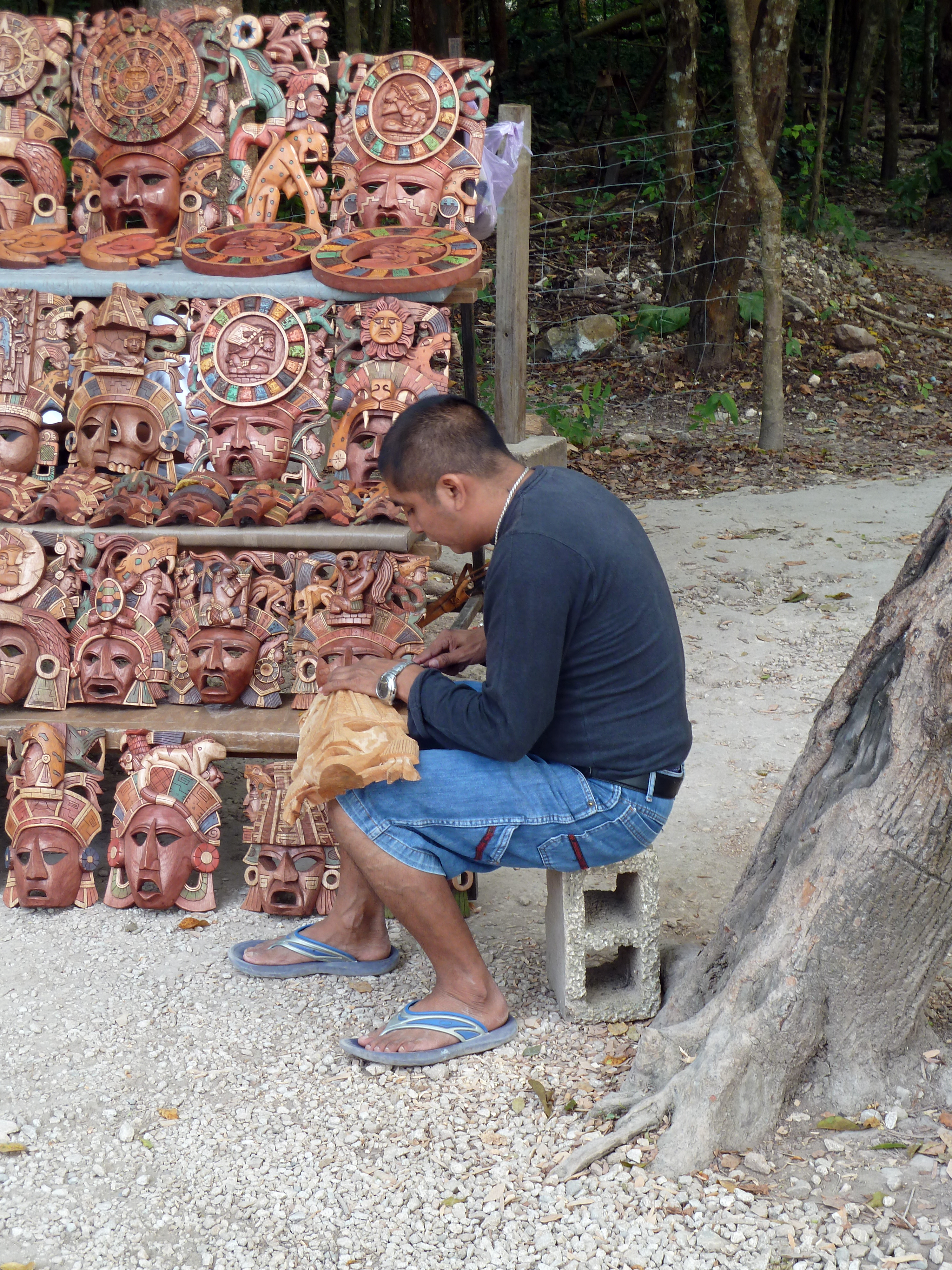 Stone carving detail at Chichén Itzá
Platform of Venus
What it is: A ceremonial platform associated with Venus.
Why it matters: Venus had deep astronomical and ritual importance in Mesoamerica.
What to look for: Relief details and its position between El Castillo and the route toward the Sacred Cenote.
Photo tip: Photograph the platform with surrounding structures to show context.
Common misunderstanding: Small platforms are easy to skip, but they help explain how the plaza worked as a ceremonial space.
Temple of the Warriors
What it is: A stepped temple with rows of columns in front and around it.
Why it matters: It is one of the strongest examples of militaristic and ceremonial imagery at Chichén Itzá. It also helps visitors see the connection between architecture, processions, and elite power.
What to look for: The columns, temple platform, Chac Mool association, and the relationship with the Group of the Thousand Columns.
Photo tip: Stand far enough back to include the columns in the foreground.
Common misunderstanding: The columns are not random ruins. They are part of a larger architectural complex.
Group of the Thousand Columns
What it is: A large colonnaded area beside the Temple of the Warriors.
Why it matters: It gives a sense of scale and suggests roofed or semi-roofed spaces connected with gathering, ceremony, or administration.
What to look for: Rows of columns, alignments, and how the space connects to the temple.
Photo tip: Low angles can show repetition and depth.
Common misunderstanding: The name is descriptive, not a precise count for visitors to verify.
Sacred Cenote
What it is: A large natural sinkhole within the archaeological zone.
Why it matters: The Sacred Cenote was a major ritual place. This is different from the swimming cenotes people visit after the ruins.
What to look for: The steep limestone walls, green water, and the path connecting it with the main ceremonial zone.
Photo tip: Photograph from the viewing area, but respect barriers.
Common misunderstanding: This is not a swimming cenote. Do not confuse it with Ik Kil, Yokdzonot, or other nearby swimming stops.
El Caracol / Observatory
What it is: A round structure often associated with observation and astronomy.
Why it matters: It is one of the most interesting buildings at Chichén Itzá because it feels different from the main plaza monuments.
What to look for: The circular tower, platform, stairways, and its distance from the busier northern group.
Photo tip: Allow enough time to reach it. Many rushed tours do not give this area the attention it deserves.
Common misunderstanding: It is not a modern observatory, but it is connected with the study of celestial movements and architectural alignment.
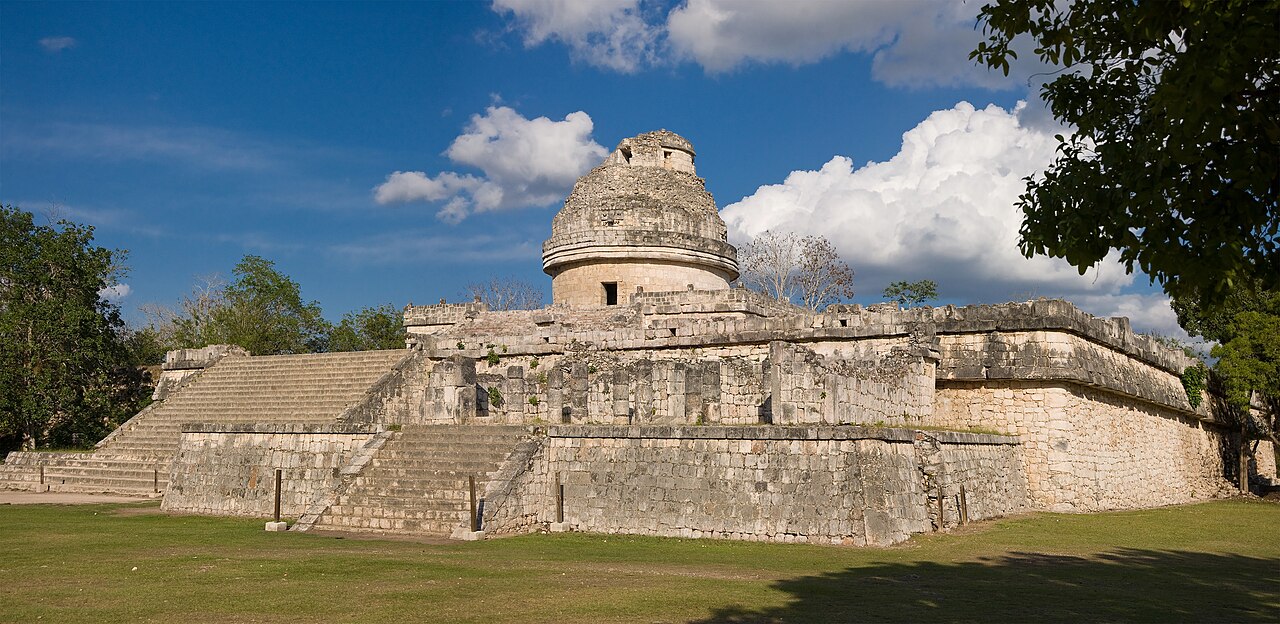 Caracol observatory at Chichén Itzá, Yucatán
Las Monjas / Nunnery Complex
What it is: A group of structures named by the Spanish, not because it was actually a convent.
Why it matters: The architecture is detailed and different from the main northern plaza. It helps show the depth of Chichén Itzá beyond the famous pyramid.
What to look for: Puuc-style details, masks, façades, and the relationship with nearby structures.
Photo tip: Look for carved details rather than only wide shots.
Common misunderstanding: The name “Nunnery” is colonial shorthand. It does not describe the original Maya function.
Gran Museo de Chichén Itzá
What it is: The newer museum connected with the archaeological zone.
Why it matters: It gives context to the ruins, especially for visitors who want more than a quick photo at El Castillo.
What to look for: Objects, interpretation, Chichén Itzá context, Sacred Cenote material, and displays connected to the wider Maya region.
Photo tip: Use the museum as a calmer visual break after the exposed ruins.
Common misunderstanding: Many visitors ignore the museum because they think the outdoor site is the whole experience.
Main things to see at Chichén Itzá
GuideEl Castillo at Chichén Itzá: Temple of Kukulcán ExplainedUnderstand El Castillo at Chichén Itzá: its design, Kukulcán symbolism, astronomical alignments, history, photography, and how to visit respectfully.OpenEl Castillo / Temple of Kukulcán
El Castillo is the structure most people come to see. It is a stepped pyramid with four stairways and a temple at the top, standing in the main plaza. It is linked with Kukulcán, the feathered serpent, and with the famous light-and-shadow effect seen around equinox periods.
Visitors cannot climb El Castillo. You view it from ground level and from designated areas. Do not cross barriers or touch restricted stonework.
The best way to experience El Castillo is to arrive early, see it first, take your photos, then move on. If you wait until the tour-bus peak, the atmosphere changes quickly.
Great Ball Court
The Great Ball Court is one of the most impressive parts of Chichén Itzá because of its scale. Walk into it slowly and look along the full length rather than treating it as a short stop.
The ballgame was tied to ritual and power. The rings, walls, reliefs, and temple spaces all matter. A guide can make this area much more meaningful.
Temple of the Warriors
The Temple of the Warriors is one of the key structures near the main plaza. Its relationship with the columns makes it visually strong and historically important.
Look for the sense of procession and order. This part of Chichén Itzá feels more militaristic and ceremonial than the clean geometry of El Castillo.
Group of the Thousand Columns
This area is easy to underestimate. The columns help visitors imagine roofed structures and public space rather than only isolated pyramids.
Take a few minutes here. It gives texture to the site and helps explain why Chichén Itzá was a city, not just a ceremonial monument.
Tzompantli / Skull Platform
The Tzompantli should be approached respectfully. Its skull imagery is direct and powerful, but it belongs to a wider system of warfare, sacrifice, ritual display, and political authority.
This is a good place for a guide to explain cultural context without sensationalising it.
Sacred Cenote
The Sacred Cenote is reached by a path from the main area. It is not as visually polished as the swimming cenotes near Valladolid, but it is far more important historically.
Do not plan to swim here. If you want a swim after the ruins, choose Ik Kil, Yokdzonot, Tsukán, or another nearby cenote.
El Caracol / Observatory
El Caracol is one of the best reasons not to rush. It has a distinct shape and a quieter setting than the main plaza. If you are interested in Maya astronomy, agricultural cycles, or architectural orientation, this area is worth the extra walking.
Las Monjas / Nunnery Complex
Las Monjas is one of the easiest areas to skip when the day is hot, but it is worth including if you have time. The architecture is detailed, and the southern group gives a broader sense of Chichén Itzá’s development.
Gran Museo de Chichén Itzá
The Gran Museo de Chichén Itzá is one of the most important recent improvements for visitors. INAH has listed the museum as open Monday to Sunday from 08:00 to 17:00, with last access at 16:00, and has stated that it is included in the archaeological zone entrance. Verify current rules before travelling.
The museum is useful if you want more context than a guided walk and photos can provide. It helps explain the city, the region, the Sacred Cenote, trade, ritual, architecture, and the wider Maya world.
| Visit style | Museum time |
|---|---|
| Quick look | 30–45 min |
| Proper visit | 60–90 min |
| History-focused visit | 90 min+ |
Most first-time visitors should do the ruins first while the temperature is cooler, then use the museum as a shaded, slower second half. If you are a history-focused traveller, visiting the museum first can make the site easier to read.
GuideNoches de Kukulkán at Chichén Itzá: Night Show Tickets, Schedule & TipsA practical guide to Noches de Kukulkán at Chichén Itzá, with ticket notes, timing, transport advice, who it suits, and how to plan the night show from Valladolid, Mérida, or Cancún.Open
Best cenotes near Chichén Itzá
Do not automatically choose Ik Kil because it is famous. It may be the right choice, but it is not the only choice.
| Cenote | Best for | Why visit | Warning |
|---|---|---|---|
| Ik Kil | Classic first-time visit | Very close and photogenic | Can be very busy |
| Yokdzonot | Quieter/local feel | Less commercial atmosphere | More rustic |
| Tsukán | Organised visitor experience | Easy logistics and facilities | More structured |
| Xcajum | Families/groups | Often used by tours | Can be busy |
Best classic option: Ik Kil
Ik Kil is the classic Chichén Itzá cenote pairing. It is close, dramatic, and easy to understand visually. It is also popular with tours.
Go early or after the main tour rush if you want a calmer swim. See the Cenote Ik Kil guide for a more detailed visit plan.
 Cenote Ik Kil near Chichén Itzá with hanging vines and deep blue water

Best quieter option: Yokdzonot
Yokdzonot is often a better fit for travellers who want a less commercial atmosphere. It works well after an early ruins visit if you have a car or driver.
GuideCenote Yokdzonot Guide: Community-Run Swimming Near Chichén ItzáA practical guide to community-run Cenote Yokdzonot near Chichén Itzá, including admission, opening hours, swimming conditions, facilities, transport and sensible day-trip combinations.Open
Best organised option: Tsukán
Tsukán is more structured and visitor-oriented. That can be a positive if you want facilities, a smoother experience, and less uncertainty.
GuideCenote Tsukán Guide: Swimming Near Chichén ItzáPractical guide to Cenote Tsukán near Chichén Itzá, with current prices, opening hours, swimming conditions, transport options and itinerary advice.Open
Best with a tour
The best cenote with a tour depends on the full itinerary. Some tours choose a cenote because it is efficient for the route, not because it is the quietest or most beautiful. Check how much time you actually get to swim.
For more options, see best cenotes near Valladolid.
Best Chichén Itzá itineraries
For a personalized departure time, site route, cost estimate, and reality check, use the free Chichén Itzá Day Planner.
2–3 hour quick visit
Best for travellers on a tight schedule.
- Arrive early.
- Go straight to El Castillo.
- Visit the Great Ball Court.
- See Tzompantli and Platform of Venus.
- Walk to Temple of the Warriors.
- Visit the Sacred Cenote if time allows.
- Leave before the worst heat.
This is not the deepest visit, but it covers the essentials.
Half-day visit
Best for travellers staying in Valladolid or nearby.
- Arrive at opening.
- Take a guided visit of the main structures.
- Walk to El Caracol and Las Monjas.
- Visit Gran Museo.
- Eat in Pisté or Valladolid.
- Add a cenote swim after lunch if you have energy.
This is a strong plan if you want quality without exhausting the day.
Full-day trip from Mérida
Best for travellers based in Mérida.
- Leave Mérida early.
- Arrive close to opening.
- Visit Chichén Itzá with a guide.
- Add Gran Museo if time allows.
- Swim at a cenote.
- Have late lunch or early dinner in Valladolid.
- Return to Mérida.
This is easier with a rental car, private driver, or well-structured tour.
Full-day trip from Cancún, Playa del Carmen, or Tulum
Best for resort travellers who do not want to change hotels.
- Very early departure.
- Chichén Itzá first.
- Cenote swim.
- Lunch.
- Optional Valladolid stop.
- Long return journey.
Choose tour quality carefully. A rushed itinerary can feel like more road than culture.
Overnight Valladolid plan
Best for serious travellers.
- Arrive in Valladolid the night before.
- Have dinner in the centre.
- Leave early for Chichén Itzá.
- Visit at opening.
- Add museum time.
- Swim at a cenote.
- Return to Valladolid for the afternoon.
- Stay another night or continue to Mérida / Riviera Maya.
This is the best overall way to visit Chichén Itzá without rushing.
 Iglesia de San Servacio in central Valladolid
Where to stay for Chichén Itzá
Valladolid
Valladolid is the best overall base for Chichén Itzá.
It gives you:
- Early access without a punishing departure time
- Good restaurants
- A walkable centre
- Easy cenote access
- A better evening than staying by the highway
- Good onward routes to Mérida, Tulum, or Cancún
If Chichén Itzá is a priority, Valladolid is usually the right answer.
GuideValladolid Travel Guide: What to Do, Where to Stay and How to Plan Your TripValladolid is a small colonial town in eastern Yucatán, roughly halfway between Mérida and Cancún and within an hour’s drive of Chichén Itzá and Ek Balam. The guide suggests staying two nights for most itineraries, with three nights better for families or those who want to visit several cenotes or make day trips to Río Lagartos, Las Coloradas or Cobá. Getting there is easy by rental car, ADO bus, Tren Maya or private driver; the bus station is central, while the train station lies outside the historic centre and requires a taxi or shuttle. Within the town the historic centre, Calzada de los Frailes and the main square are all walkable, but a car, taxi, colectivo, bicycle or scooter is needed for most cenotes and ruins. Typical activities include a morning walk around the main square, visiting Iglesia de San Servacio and the municipal palace, strolling the colourful Calzada de los Frailes, and touring the Convent of San Bernardino de Siena. Cenote Zací, just outside the centre, offers a convenient swim; the local market provides cheap breakfast and snacks. Visitors should plan to start early at ruins and cenotes to avoid the heat, bring cash in small bills, wear grip sandals for cenote water, and respect church dress codes. In the hotter months (April‑May) a hotel with a pool is advisable, and the most comfortable weather is from November to March.Open
Pisté / near the ruins
Pisté and the hotels near the archaeological zone are best for the earliest possible access.
Choose this if:
- You want maximum convenience
- You are focused mainly on Chichén Itzá
- You want to avoid morning travel
- You are not bothered about nightlife or a broader town experience
Pisté is practical, but Valladolid is more rewarding for most travellers.
Mérida
Mérida is the best city base.
Stay in Mérida if:
- You are already exploring Yucatán’s capital
- You want restaurants, museums, and city life
- You are combining Chichén Itzá with Uxmal, Izamal, cenotes, or haciendas
- You do not mind a longer day
Mérida to Chichén Itzá is very doable, but it is not as easy as Valladolid.
GuideMérida Travel Guide: What to Do, Where to Stay and How to Plan Your TripMérida is the capital of the Mexican state of Yucatán, located in the northwest part of the peninsula and known as “La Ciudad Blanca” for its bright limestone architecture. The city is served by Mérida International Airport (MID), a 15‑25 minute drive to the historic centre, and by ADO bus terminals that connect to Cancún, Valladolid, Campeche and other destinations; rideshare services such as Uber and inDrive operate throughout town, while a car is only needed for longer day trips to sites like Uxmal or Celestún. The guide suggests an ideal stay of three to five nights in the city, with day trips ranging from 45 to 90 minutes. No specific entry fees are listed, but visitors should budget for accommodation, meals, transport and optional tours. The article notes that tap water is not potable, so purified water should be purchased, and that most restaurants expect a 10‑15 % tip. Travelers can expect a walkable historic centre, Sunday “bici‑ruta” streets closed to cars, lively plazas with marimba music, and a culinary scene that ranges from market breakfasts to fine‑dining in restored mansions. The climate varies: December‑March offers the mildest weather, April‑May is very hot, June‑October brings rain and humidity, and November is a transition period. Recommended packing includes breathable clothing, a wide‑brim hat, reef‑safe sunscreen (to be rinsed before entering cenotes), comfortable walking shoes and insect repellent. Tips include planning activities for early mornings and evenings to avoid midday heat, using shaded arcades in the centre, staying hydrated, and bringing a reusable water bottle with electrolytes. Modest dress is advised for churches and cultural venues, and a small fan or portable cooler can make the hot season more comfortable.Open
Cancún / Playa del Carmen / Tulum
The coast works if you are a resort traveller and do not want to move hotels. Just be honest about the day.
From the coast:
- The journey is long
- Tour quality matters
- Cheap tours may exclude fees
- Pickup routes can add time
- Valladolid may be rushed
- A private tour is often more comfortable for families or older travellers
If you have time, spending one night in Valladolid can improve the whole experience.
What to bring
Bring:
- Hat
- Refillable water bottle
- Comfortable shoes
- Light breathable clothing
- Sunscreen
- Sunglasses
- Cash in pesos
- Card
- Phone or camera
- Portable charger
- ID for discounts if applicable
- Swimwear and towel if visiting a cenote afterwards
- Light rain layer in rainy season
- Small day bag
Do not wear heavy clothes. Do not rely on shade. Do not arrive with only one small bottle of water for a family.
Visitor rules and practical tips
Official visitor conditions can change, but current practical expectations include:
- You cannot climb El Castillo or the main monuments.
- Do not touch carvings or restricted structures.
- Respect ropes, barriers, and distance rules.
- Drones and professional filming may require permission.
- Tripods, flash, or professional equipment may have restrictions or fees.
- Food restrictions may apply.
- Smoking restrictions apply.
- Pets are not allowed, except where official assistance rules apply.
- Use toilets before walking deeper into the site.
- Bring water, but respect site rules.
- Expect vendors inside or around the site.
- Keep small bills for tips, taxis, or small purchases.
- If travelling with children, plan shade and breaks.
The vendors are part of the current visitor experience. Some travellers find this distracting. Go in expecting it, and focus your attention on the structures and your guide.
Common Chichén Itzá mistakes
- Arriving too late in the day.
- Booking a cheap tour without checking if entrance fees are included.
- Visiting from Cancún and underestimating the travel time.
- Skipping Valladolid.
- Thinking El Castillo is the whole site.
- Not bringing sun protection.
- Ignoring the museum.
- Assuming every blog’s ticket price is current.
- Trying to do too many stops in one day.
- Not hiring a guide when you actually want historical context.
- Visiting a famous cenote at peak crowd time.
- Forgetting cash or ID.
- Wearing uncomfortable shoes.
- Leaving the Sacred Cenote and southern group off the route.
- Assuming the Tren Maya will automatically fit your schedule.
Chichén Itzá vs other ruins in Yucatán
| Site | Best for | Compared with Chichén Itzá |
|---|---|---|
| Uxmal | Architecture and atmosphere | Quieter and more elegant |
| Ek Balam | Valladolid/cenote combo | Smaller, easier visit |
| Mayapán | Easy ruins near Mérida | Much smaller and less crowded |
| Dzibilchaltún | Quick trip from Mérida | Less dramatic but convenient |
Chichén Itzá is the iconic visit. Uxmal is often the more atmospheric visit. Ek Balam is easier to pair with Valladolid and cenotes. Mayapán is the practical short ruins trip from Mérida.
For a wider overview, use the best Mayan ruins in Yucatán guide.
GuideChichén Itzá vs Uxmal: Which Maya Ruins Fit Your Yucatán Trip?A practical comparison of Yucatán's two great Maya cities — Chichén Itzá and Uxmal — covering what you'll actually see, how much it costs, how to get there, and which one suits your trip.Open
FAQ
Is Chichén Itzá open?
As of the latest checked official listings, Chichén Itzá is open daily, with official pages listing daytime access. Verify before travelling because hours and access can change.
How much are Chichén Itzá tickets?
The latest official cultural listing reviewed for this guide shows a federal INAH fee of MXN $105 plus a Yucatán state fee of MXN $592 for foreign visitors and MXN $205 for national visitors. That works out around MXN $697 for foreign adults and MXN $310 for Mexican nationals before discounts or exemptions. Verify before travel.
Can you climb Chichén Itzá?
No. Visitors cannot climb El Castillo or the main monuments. View the structures from ground level and respect barriers.
Do you need a guide at Chichén Itzá?
A guide is not mandatory, but it is recommended for first-time visitors. Chichén Itzá is much more meaningful when you understand the architecture, ritual spaces, astronomy, water systems, and political history.
How long do you need at Chichén Itzá?
Most visitors need 2.5–4 hours. Allow 4–5 hours if you want a guide, the southern group, and the Gran Museo.
What is the best time to visit Chichén Itzá?
Early morning is best. Arrive at opening if possible. Late morning and early afternoon are hotter, busier, and harder for photos.
Is Chichén Itzá better from Mérida or Cancún?
Mérida is usually easier and more culturally coherent for a Yucatán trip. Cancún is possible, but it is a longer resort-based day trip. Valladolid is the best base if Chichén Itzá is a priority.
Is Valladolid a good base for Chichén Itzá?
Yes. Valladolid is the best overall base for most travellers because it is close, attractive, walkable, and easy to combine with cenotes.
What is the best cenote near Chichén Itzá?
Ik Kil is the classic option. Yokdzonot is better for a quieter local feel. Tsukán is good for an organised visitor experience. The best choice depends on your transport and crowd tolerance.
Can you visit Chichén Itzá by bus?
Yes, buses can work from major towns and cities, but schedules change. Check current departures and returns before planning the day.
Can you take the Tren Maya to Chichén Itzá?
Yes, Chichén Itzá appears as a station in the official Tren Maya booking and timetable system. Whether it is useful depends on current schedules, last-mile transport, and return timing.
Is Chichén Itzá good for kids?
Yes, but plan carefully. Go early, bring water and sun protection, keep the route realistic, and consider a guide who can explain the site in a family-friendly way.
What should you wear to Chichén Itzá?
Wear comfortable shoes, light breathable clothing, a hat, and sunglasses. The site is exposed and can be very hot.
Is Chichén Itzá wheelchair accessible?
INAH lists accessibility among the services for Chichén Itzá, but the site has uneven surfaces, exposed areas, and distances between structures. Travellers with mobility needs should verify current access and consider a private guide or driver.
Is Sunday a good day to visit Chichén Itzá?
Sunday can be busier, especially if discounts or free-entry rules apply to eligible Mexican visitors. It can still be fine if you arrive early, but weekdays are usually easier.
Chichén Itzá vs Uxmal: which is better?
Chichén Itzá is more iconic and famous. Uxmal is usually quieter, more atmospheric, and architecturally elegant. First-time visitors often choose Chichén Itzá; travellers who dislike crowds may prefer Uxmal.
