

Yucatán has some of the most important Maya archaeological sites in Mexico, but the best one to visit depends on where you are staying, how much time you have, and what kind of day you want.
Chichén Itzá is the famous choice. Uxmal is often the better experience from Mérida. Ek Balam works well from Valladolid. Mayapán is close, compact, and easier to fit into a half day. Dzibilchaltún is the closest ruin to Mérida, but it is not the strongest option if you only have time for one site.
This guide is written for travelers choosing between ruins, not for archaeology specialists. It focuses on what matters on the ground: distance, heat, crowds, transport, family suitability, what to combine nearby, and when a private driver or tour makes the day easier.
The short version
If you are staying in Mérida and only want to visit one major ruin, choose Uxmal. It has the best balance of architecture, atmosphere, distance, and ease.
If you want the famous postcard site, choose Chichén Itzá. It is busier and more commercial, but it is still a major archaeological site and an important part of many first Yucatán trips.
If you are staying in Valladolid, choose Chichén Itzá for the classic visit or Ek Balam for a quieter ruin-and-cenote day.
If you are traveling with children or want a shorter visit from Mérida, Mayapán is often the easiest choice.
If you like road trips, stonework, and quieter places, build a day around Uxmal and the Ruta Puuc.
Quick comparison
| Best for | Ruins to choose | Why it works |
|---|---|---|
| First-time visitors who want the famous site | Chichén Itzá | Iconic, large, highly interpreted, and easy to combine with Valladolid or a cenote |
| Travelers based in Mérida | Uxmal | Beautiful architecture, easier logistics from Mérida, usually calmer than Chichén Itzá |
| Families who want a manageable ruin day | Mayapán or Uxmal | Less overwhelming than Chichén Itzá, easier pacing, good day-trip options |
| Travelers staying in Valladolid | Ek Balam or Chichén Itzá | Both are realistic day trips from Valladolid, with cenotes nearby |
| Architecture and photography | Uxmal and the Ruta Puuc | Strong stonework, Puuc-style details, fewer crowds on the wider route |
| Short visit from Mérida | Dzibilchaltún or Mayapán | Close to the city, but with different strengths |
| Road trip travelers | Ruta Puuc | Best with a rental car or private driver |
| Travelers without a car | Chichén Itzá | Easiest site to reach by bus or organized tour |
1. Chichén Itzá
Chichén Itzá is the most famous archaeological site in Yucatán and one of the most visited ruins in Mexico. For many travelers, it is the site they came to see.
The main draw is El Castillo, the stepped pyramid often used as the image of ancient Maya Yucatán. The site also includes the Great Ball Court, the Temple of the Warriors, the Sacred Cenote, and several ceremonial platforms.
Chichén Itzá is impressive, but it is not a quiet ruin experience. Go early if you want cooler weather and fewer crowds.
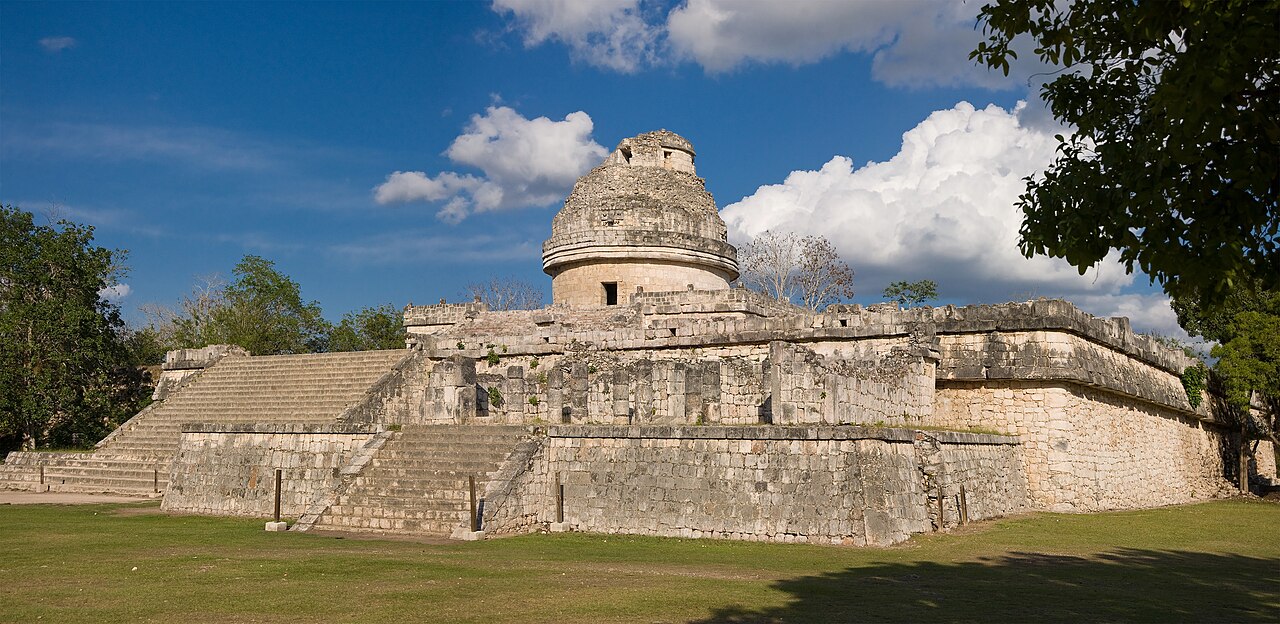 Caracol observatory at Chichén Itzá, Yucatán
 El Castillo pyramid at Chichén Itzá

Best for
Chichén Itzá is best for first-time visitors, history-focused travelers, families who want the most recognizable site, and anyone who has always wanted to see El Castillo in person.
It is also the easiest ruin to include in a classic Yucatán or Riviera Maya itinerary because there are many tours, buses, private drivers, and transfers serving the site.
Good to know
Chichén Itzá is large, exposed, and hot by late morning. Shade is limited in many sections. Bring water, a hat, sun protection, and comfortable shoes.
Vendors are common inside the archaeological zone. Some travelers enjoy browsing; others find it distracting. If you want a calmer experience, arrive close to opening time and start with the main structures before the site gets busy.
You cannot climb El Castillo.
How much time to spend
Plan for 2 to 3 hours inside the site. Add more time if you want a guide, a slower pace, or the museum areas when available.
A full Chichén Itzá day trip usually takes 8 to 10 hours from Mérida, Cancún, Playa del Carmen, or Tulum once transport, lunch, and a cenote stop are included.
How to get there
From Mérida, Chichén Itzá is usually around 1 hour 45 minutes to 2 hours by car.
From Valladolid, it is much closer and works well as an early morning visit.
From Cancún, Playa del Carmen, or Tulum, expect a long day. A tour or private driver is often easier than trying to manage the route independently.
What to combine with Chichén Itzá
Good combinations include:
- Valladolid for lunch, a walk around the plaza, and a calmer colonial town stop
- Cenote Ik Kil if you want the classic nearby cenote experience
- Cenote Yokdzonot for a less hurried cenote stop
- Ek Balam only if you have a private driver and want a very full archaeology day
This is not the best day to overload with too many stops. Chichén Itzá already takes energy, especially in hot months.
2. Uxmal
Uxmal is one of the strongest archaeological sites in Yucatán and, for many travelers based in Mérida, the most rewarding ruin to visit.
It is known for Puuc architecture, carved stone façades, masks of Chaac, broad plazas, and the Pyramid of the Magician. The site feels more open and less commercial than Chichén Itzá, though it is still an important and well-known destination.
Uxmal is a good choice when you want beauty, history, and a calmer pace without turning the day into a long cross-peninsula journey.
 Uxmal archaeological site, Yucatán
 Puuc-style stonework at Uxmal

Best for
Uxmal is best for travelers staying in Mérida, architecture lovers, photographers, couples, families with older children, and anyone who wants a major Maya site without the heavier crowds of Chichén Itzá.
It is also a good fit for travelers who like a slower, more thoughtful visit.
Good to know
Uxmal has less shade than many people expect. Go early if you can. The stone plazas hold heat, and the site can feel very warm by midday.
You cannot climb the Pyramid of the Magician, but there are still areas where you can get good views across the site. Access rules can change, so follow posted signs and local staff instructions.
Uxmal feels more elegant than dramatic. The experience is in the carved details, the proportions of the buildings, and the way the site sits in the low hills of the Puuc region.
How much time to spend
Plan for 2 to 3 hours at Uxmal.
If you add Kabah or more of the Ruta Puuc, plan a full day.
How to get there
From Mérida, Uxmal is usually around 1 hour 15 minutes to 1 hour 30 minutes by car.
Public transport is limited compared with Chichén Itzá. This is easier with a rental car, private driver, or organized tour.
What to combine with Uxmal
Good combinations include:
- Kabah for a simple Uxmal plus Ruta Puuc day
- Muna for lunch or a viewpoint stop
- A chocolate museum or nearby hacienda stop, depending on your route
- More Ruta Puuc sites if you have a full day and a car
Uxmal works well as a quieter cultural day from Mérida.
3. Ek Balam
Ek Balam sits north of Valladolid and is one of the best ruin options for travelers staying in eastern Yucatán.
It is smaller than Chichén Itzá but still substantial, with impressive structures and a more relaxed feel. Many travelers like Ek Balam because it feels easier to understand without rushing, and it pairs naturally with nearby cenotes.
Depending on current access rules, some structures may be climbable, but rules can change for conservation and safety. Check on arrival and respect any closed areas.
 Ek Balam archaeological site, Yucatán
 Stucco façade at Ek Balam

Best for
Ek Balam is best for travelers based in Valladolid, people who want a less crowded ruin day, families who want a manageable site, and travelers combining ruins with a cenote swim.
It is also a good option if you have already seen Chichén Itzá and want a different style of visit.
Good to know
Ek Balam is quieter than Chichén Itzá, but it is not empty. Go in the morning for better light and cooler weather.
The site pairs well with a slower Valladolid stay. It is not the most efficient choice from Mérida unless you are already heading east or building a full day around Valladolid.
How much time to spend
Plan for 1.5 to 2.5 hours inside the archaeological zone.
Add time for a cenote and lunch in Valladolid.
How to get there
From Valladolid, Ek Balam is usually around 30 minutes by car.
From Mérida, it is a long day unless combined with Valladolid or Chichén Itzá.
From the Riviera Maya, it can work with a private driver, but Chichén Itzá is usually the more common first-time choice.
What to combine with Ek Balam
Good combinations include:
- Valladolid
- Cenote X’Canche, when open and suitable for your group
- Temozón for food
- Chichén Itzá only if you want a packed archaeology-focused day
Ek Balam is best when you do not rush it.
4. Mayapán
Mayapán is one of the most useful ruins near Mérida for travelers who want a shorter, easier archaeological visit.
It is often described as a smaller, more compact site, with structures that give a sense of a walled Maya city without the scale or fame of Chichén Itzá or Uxmal.
Mayapán works well when you want ruins, but you do not want a full-day journey.
 Mayapán archaeological zone, Yucatán
 Structures at Mayapán

Best for
Mayapán is best for families, travelers short on time, repeat visitors, people staying in Mérida, and anyone planning a cenote day southeast of the city.
It is a good choice if you want to combine culture and swimming without overcomplicating the day.
Good to know
Mayapán is more modest than Chichén Itzá and Uxmal. That is part of its appeal. You come here for a simpler, quieter, more flexible visit.
It is not the best option if you want the grandest architecture in Yucatán. It is a very good option if you want a meaningful ruin stop within easy reach of Mérida.
How much time to spend
Plan for 1 to 1.5 hours at Mayapán.
That makes it easy to combine with cenotes, small towns, or a longer countryside route.
How to get there
From Mérida, Mayapán is usually around 45 minutes to 1 hour by car.
This is easiest with a rental car or private driver. Some tours include Mayapán with cenotes or nearby communities.
What to combine with Mayapán
Good combinations include:
- Homún cenotes
- Telchaquillo
- Acanceh
- Tecoh
- A private cenote route southeast of Mérida
Mayapán is one of the better ruin choices if your group wants both history and swimming in the same day.
5. Dzibilchaltún
Dzibilchaltún is the closest major archaeological site to Mérida. It sits north of the city, on the road toward Progreso and the coast.
The site is known for the Temple of the Seven Dolls and its long history of settlement. Many travelers also know it because of Cenote Xlacah, although swimming access can change and should not be assumed.
Dzibilchaltún is convenient, but convenience is not the same as being the best ruin experience in Yucatán.
 Dzibilchaltún archaeological site near Mérida
 Temple of the Seven Dolls at Dzibilchaltún

Best for
Dzibilchaltún is best for travelers with limited time in Mérida, families who want a short outing, visitors heading toward Progreso, and people with a specific interest in the equinox or the Temple of the Seven Dolls.
It is also useful if you want a light culture stop without committing to a long drive.
Good to know
Do not choose Dzibilchaltún as your only ruin if this is your first trip and you have time for Uxmal or Chichén Itzá. It is worthwhile, but it is not as visually powerful as the bigger sites.
Check current access before planning around the cenote or museum, as openings and closures can change.
How much time to spend
Plan for 1 to 2 hours.
How to get there
From central Mérida, Dzibilchaltún is usually around 25 to 40 minutes by car, depending on traffic and your starting point.
A taxi, private driver, or rental car is the simplest option. It can also be combined with a beach day toward Progreso.
What to combine with Dzibilchaltún
Good combinations include:
- Progreso
- Chicxulub Puerto
- Xcambó and the coast, if you are building a longer day
- A relaxed lunch north of Mérida
This is a practical half-day stop, not a full-day anchor for most travelers.
6. Ruta Puuc: Kabah, Sayil, Xlapak, and Labná
The Ruta Puuc is not one single ruin. It is a route through several archaeological sites south of Mérida, usually combined with Uxmal.
The main sites include Kabah, Sayil, Xlapak, and Labná. Each is smaller than Uxmal, but together they help you understand the Puuc region as a wider cultural landscape.
This route is best for travelers who enjoy quiet roads, small sites, and architectural detail.
 Ruta Puuc archaeological route in Yucatán
 The Great Palace on the Ruta Puuc
 The arch at Kabah
Best for
The Ruta Puuc is best for repeat visitors, road trip travelers, photographers, architecture lovers, and people who prefer low-crowd cultural days.
It is not the best option if you are short on time or traveling with children who need frequent shade, food, and easy facilities.
Good to know
Facilities can be limited compared with Chichén Itzá and Uxmal. Bring water, snacks, sun protection, and cash.
Do not try to see every site if your group is already tired after Uxmal. Kabah alone is often enough for a first Puuc route extension.
How much time to spend
Uxmal plus Kabah can be a comfortable day.
Uxmal plus Kabah, Sayil, Xlapak, and Labná is a fuller road trip day and works best with an early start.
How to get there
This route is best with a rental car or private driver.
Public transport is not practical for seeing multiple Ruta Puuc sites in one day.
What to combine with the Ruta Puuc
Good combinations include:
- Uxmal
- Muna
- Santa Elena
- Small local lunch stops along the route
- A hacienda stay if you are building a slower itinerary
The Ruta Puuc rewards travelers who are not in a hurry.
7. Acanceh
Acanceh is a small archaeological site inside a living town southeast of Mérida. It is not a major standalone ruin day, but it can be a good stop if your route already passes through the area.
The appeal is the mix of everyday town life and visible pre-Hispanic structures close to the plaza.
GuideAcanceh Ruins Guide: The Pyramid of the Masks in a Living Maya TownAcanceh is a compact Maya archaeological site set inside a working Yucatecan town, famous for its monumental stucco masks and Teotihuacán-influenced frieze. Here is what to see, how to get there, and how to combine it with nearby cenotes and ruins.Open
Best for
Acanceh is best for travelers with a car, repeat visitors, people heading toward cenotes, and travelers interested in smaller local stops.
It is not the right choice if you are looking for a dramatic ruin experience.
How much time to spend
Plan for 30 minutes to 1 hour.
What to combine with Acanceh
Good combinations include:
- Mayapán
- Homún cenotes
- Tecoh
- Cuzamá or other southeast cenote routes
Acanceh works best as part of a larger day trip from Mérida.
Best ruins from Mérida
If you are staying in Mérida, the easiest and most rewarding ruin choices are Uxmal, Mayapán, Dzibilchaltún, Chichén Itzá, and the Ruta Puuc.
Uxmal is the strongest all-around choice from Mérida. It is close enough for a comfortable day, large enough to feel important, and usually calmer than Chichén Itzá.
Mayapán is best for a shorter day or a cenote combination.
Dzibilchaltún is best when you want something very close.
Chichén Itzá is worth the trip if it matters to you personally, but it makes for a longer and busier day from Mérida.
The Ruta Puuc is best for travelers with a car, private driver, or a strong interest in architecture.
Best ruins from Valladolid
If you are staying in Valladolid, the best ruin choices are Chichén Itzá, Ek Balam, and Cobá.
Chichén Itzá is close enough from Valladolid that you can arrive early, see the main site before the heat builds, and return to town for lunch.
Ek Balam is the calmer alternative and pairs well with a cenote.
Cobá is in Quintana Roo, not Yucatán state, but it is a practical option from Valladolid if you are heading toward Tulum or the Riviera Maya.
Best ruins from Cancún, Playa del Carmen, or Tulum
From the Riviera Maya, Chichén Itzá is the most common Yucatán ruin day trip. It is a long day, but it is well served by tours and private drivers.
Ek Balam can also work, especially if you want to combine it with Valladolid.
Uxmal is usually too far for a normal day trip from the Riviera Maya. It is better as part of a Mérida stay or a longer Yucatán road trip.
If you are staying in Tulum, Cobá is often the easier ruin day, though it is outside Yucatán state.
Which ruin is best for families?
For families, the best choice depends on age, heat tolerance, and how much driving your group can handle.
Mayapán is good for a shorter visit. It is easier to manage and pairs well with cenotes.
Uxmal is good for families with school-age children or teens who can handle a few hours outdoors.
Chichén Itzá is good if the famous site matters to the family, but it can feel hot, crowded, and tiring.
Ek Balam is good from Valladolid because the day is shorter and easier to combine with a swim.
Dzibilchaltún is good for a quick outing from Mérida, but check current access if you are planning around the cenote.
Go early. Bring more water than you think you need. Keep the ruin visit focused rather than trying to read every sign or see every corner.
For younger children, a private driver can make the day much easier because you can control stops, timing, and lunch.
Which ruin is best without a car?
Chichén Itzá is the easiest major ruin to visit without a car because it has the most tour options and bus connections.
Uxmal is possible without a car, but transport is less convenient. Many travelers prefer a tour or private driver.
Dzibilchaltún can be reached from Mérida with taxis or ride services, depending on availability.
Mayapán, Ek Balam, and the Ruta Puuc are easier with a rental car or private driver.
If you do not want to rent a car, choose fewer stops and make the day smooth. One good ruin with easy transport is better than three complicated stops.
Should you hire a guide?
A good guide can make a major difference, especially at Chichén Itzá and Uxmal.
At Chichén Itzá, a guide helps explain the scale, astronomy, ball court, political history, and layered cultural influences. Without a guide, it is still impressive, but you may miss much of the meaning.
At Uxmal, a guide can help you understand Puuc architecture and the details carved into the façades.
At smaller sites like Mayapán and Dzibilchaltún, a guide is useful but not always necessary if you prefer a shorter visit.
For families, a private guide can help keep the visit focused and prevent the day from becoming a long walk in the heat.
When to visit ruins in Yucatán
The best time of day is early morning.
Most archaeological sites are hotter and brighter by late morning. The stone plazas reflect heat, and shade is not always available.
November through February are generally more comfortable for walking ruins.
March through May can be very hot.
June through October can bring humidity, rain, and stronger sun, though mornings can still be workable.
Arrive close to opening time when possible.
If you are visiting Chichén Itzá, early arrival is especially important because tour buses and large groups build through the day.
Chichén Itzá and Dzibilchaltún receive extra attention around equinox dates. These visits can be interesting, but they are also crowded and more controlled.
Go for the cultural experience, not for a quiet day.
What to bring
Bring lightweight clothing, comfortable walking shoes, a hat, sunscreen, water, cash, insect repellent, and a small towel and swimwear if you are combining the ruins with a cenote.
Do not bring drones unless you have proper authorization. Archaeological sites have rules, and restricted areas should be respected.
Common mistakes to avoid
Do not arrive late and expect a comfortable visit. The heat can change the whole experience.
Do not plan too many ruins in one day unless you already know your group enjoys archaeology.
Do not assume every cenote near a ruin is open for swimming.
Do not rely only on card payments. Carry cash.
Do not choose Chichén Itzá only because it is famous if what you really want is a calm day from Mérida. Uxmal may fit you better.
Do not treat smaller sites as lesser experiences. Mayapán, Kabah, and Labná can be excellent when they match the route.
Best one-day ruin itineraries
From Mérida: Uxmal and Kabah
Start early from Mérida.
Visit Uxmal first, then continue to Kabah if your group has energy. Stop for lunch in Muna, Santa Elena, or back in Mérida depending on timing.
This is one of the best cultural day trips from Mérida.
From Mérida: Mayapán and Homún cenotes
Visit Mayapán in the morning, then continue to Homún for a cenote swim and lunch.
This works well for families, groups, and travelers who want a mix of history and water.
A private driver is useful here because cenote roads and choices can be confusing.
From Valladolid: Chichén Itzá and Valladolid
Leave early for Chichén Itzá, spend 2 to 3 hours at the ruins, then return to Valladolid for lunch and a slower afternoon.
Add a cenote only if your group still has energy.
From Valladolid: Ek Balam and cenote
Visit Ek Balam in the morning, then add a nearby cenote and lunch in Valladolid or Temozón.
This is a calmer day than Chichén Itzá and works well for travelers who dislike crowds.
From Mérida: Dzibilchaltún and Progreso
Visit Dzibilchaltún in the morning, then continue north for seafood and a beach walk in Progreso.
This is a light day, not a deep archaeology day.
Final recommendation
For most travelers staying in Mérida, Uxmal is the best Mayan ruin to visit in Yucatán. It has strong architecture, manageable distance, and a calmer feel than Chichén Itzá.
For first-time visitors who want the iconic site, Chichén Itzá is still the right choice.
For a shorter, easier day from Mérida, choose Mayapán.
For travelers staying in Valladolid, choose Chichén Itzá for the classic visit or Ek Balam for a quieter ruin-and-cenote day.
For road trip travelers, add the Ruta Puuc.
The best ruin is not always the biggest one. It is the one that fits your route, your group, and the kind of day you actually want.
Need help choosing the right ruins day?
If you are deciding between Chichén Itzá, Uxmal, Ek Balam, Mayapán, or a cenote-and-ruins route, Yucatán Guide can help you shape the day.
For the next step, use the Plan hub to compare itineraries, transport and practical resources already available.


