

Progreso is the easiest beach day from Mérida. That is the main reason to go.
It is close enough for a late start, easy enough without a rental car, and developed enough that you can arrive with very little planning. There is a long public beach, two distinct malecones, seafood restaurants, beach clubs, the Museo del Meteorito, family attractions, and quick connections to mangroves and quieter fishing villages.
It is also important to know what Progreso is not. This is the Gulf of Mexico, not the Caribbean. The water can be pale green and clear on a calm morning, but it can also turn gray-blue, choppy or cloudy after wind. The town is a working port, a cruise stop and Mérida's weekend beach rather than a secluded tropical escape.
That honesty makes Progreso easier to enjoy. Come for a swim, shade, seafood, people-watching and a few hours beside the Gulf. If you want a quieter or prettier stretch of coast, use Progreso as the starting point and continue toward Chicxulub, Chelem or Chuburná.
 Progreso beach and pier
Quick verdict: is Progreso worth visiting?
Yes, especially if you are staying in Mérida and want an easy beach day without turning it into a major excursion.
Progreso is particularly good for:
- first-time visitors staying in Mérida
- families who want bathrooms, food and shade nearby
- travelers without a rental car
- people who want a half-day rather than a long coastal road trip
- seafood lunches by the water
- travelers combining beach time with El Corchito or Dzibilchaltún
- cruise passengers who prefer to stay close to the ship
It is less suitable if your priority is:
- untouched coastline
- Caribbean-blue water every day
- complete quiet on weekends
- boutique beach-town atmosphere
- a full nature experience without urban or port infrastructure
If you have one easy beach day from Mérida, Progreso is usually the sensible choice. If you have a car and care more about atmosphere than convenience, compare it with the other beaches near Mérida before deciding.
Progreso at a glance
| Planning point | What to expect |
|---|---|
| Distance from Mérida | Roughly 35–40 km north of the city |
| Typical drive from Centro | Around 45–60 minutes, depending on traffic |
| Best visit length | 4–6 hours for a simple beach day; full day with an excursion |
| Need a car? | No for central Progreso; useful for the coast beyond town |
| Public transport | Autoprogreso is the established budget option from Mérida |
| Beach entry | Public beach access is free |
| Best time to arrive | Morning for cooler weather, calmer planning and easier parking |
| Best for | Families, first-time visitors, budget travelers, easy coast days |
| Main drawback | Busy weekends and variable Gulf water conditions |
| Easy add-ons | El Corchito, Chicxulub Puerto, Dzibilchaltún |
Is Progreso Beach actually nice?
On the right day, yes. The beach is broad, sandy and easy to use. The nearshore Gulf is generally shallow, and calm mornings can be very pleasant for swimming.
But Progreso is a weather-sensitive beach. Wind matters. After stronger wind or a norte, the water can look stirred up and the shoreline can feel much less inviting. Seaweed, floating plant matter and rougher water can appear depending on conditions.
Do not judge Progreso using photographs from Cancún, Tulum or Cozumel. The attraction here is different: warm Gulf water, a local beach-town rhythm, easy lunch, a long waterfront walk and the ability to return to Mérida the same afternoon.
 Beach at Progreso, Yucatán
If the sea is the main reason for your day, check the wind forecast before leaving Mérida. If conditions look poor, Progreso can still work for the Museo del Meteorito, a long lunch and a walk, but it may not be worth traveling specifically for swimming.
The two malecones: where should you actually go?
Progreso has two main waterfront zones, and they are not quite the same experience.
Understanding the difference makes the town much easier to use.
Malecón Tradicional
The Malecón Tradicional is the established heart of Progreso. It is the best starting point for a first visit because restaurants, beach seating, vendors, snacks and the busiest part of the waterfront are concentrated here.
The promenade is pedestrian-focused, so the experience is simple: walk, choose somewhere to sit, swim, eat and continue along the water.
Come here if you want:
- the easiest beach-and-lunch day
- the widest restaurant choice
- a lively Sunday atmosphere
- convenient access from central Progreso
- traditional snacks such as marquesitas, esquites and shaved ice
- to stay close to the town's main activity
The trade-off is crowds. On Sundays, school holidays and cruise days, this part of Progreso can feel busy by late morning.
 Progreso Malecón waterfront
Malecón Internacional
The Malecón Internacional sits farther west around the Playón Poniente side of the waterfront. It is newer and more recreation-oriented, with open walking space, family attractions, public art and photo stops.
For many families, this is a useful place to finish the afternoon rather than where to base the entire beach day. It tends to feel more spacious than the restaurant-heavy traditional Malecón, and the evening atmosphere can be pleasant when the strongest heat has passed.
Come here if you want:
- a longer waterfront walk
- more open recreational space
- family photo stops and children's attractions
- sunset rather than a long restaurant lunch
- a quieter change of pace after the traditional Malecón
The two waterfront areas are close enough to form part of the same visit, but you do not need to walk every metre if it is hot. Choose the part that suits the day.
The Municipality of Progreso publishes Blue Flag information and periodic water-quality material for both the Malecón Tradicional and Malecón Internacional. If water quality is important to your plans, check the latest municipal information rather than relying on an old certification badge: Blue Flag Progreso.
The world-record Progreso pier
The immense pier is Progreso's defining landmark.
Guinness World Records recognizes the Progreso structure as the world's longest jetty or pier, measuring 8,018.98 metres. The record was achieved by the Municipality of Progreso in July 2023.
 Progreso’s long pier and port infrastructure sit far out in the shallow Gulf.
Its length is not decorative. The northern Yucatán coast is extremely shallow, so port infrastructure has to extend far offshore before large cargo and cruise vessels can reach usable water depth.
This is one of the easiest ways to understand Progreso. The beach town and the industrial port are not separate stories. The town exists because of its relationship with Mérida, trade and the sea.
The long pier is working infrastructure, not a normal public boardwalk. Do not arrive expecting to walk eight kilometres out over the Gulf. The best views are from the beach, waterfront and boats.
You can see the current Guinness record listing at Guinness World Records.
A short history of Progreso
Progreso developed as a more practical maritime outlet for Mérida during the 19th century, particularly as Yucatán's henequén economy grew.
Sisal had previously served as an important port, but Progreso's location and transport connections made it increasingly useful. The town is formally known as Progreso de Castro, honoring Juan Miguel Castro, associated with the development of the port.
That commercial role remains visible today. Cargo infrastructure, cruise ships, fishing activity, beach restaurants and local families all occupy the same stretch of coast.
 The port infrastructure at Progreso shows the town’s role as Yucatán’s main maritime gateway.
For travelers, this means Progreso feels more lived-in than a purpose-built resort. That can be a strength. Walk a few streets inland and the waterfront tourism gives way quickly to an ordinary Yucatecan port town.
What a normal beach day looks like
The easiest version of Progreso needs very little planning.
Arrive around 9:30 or 10:00 am, walk part of the Malecón before the heat builds, then choose either a public patch of sand or a restaurant/beach setup with shade.
Swim before lunch if the water is calm. By midday, settle somewhere shaded for seafood and cold drinks. After lunch, visit the Museo del Meteorito or walk toward the newer Malecón Internacional. Leave in the late afternoon, or stay for sunset if you are not worried about traffic back to Mérida.
You do not need to fill every hour.
Progreso works precisely because it can be a low-effort day.
Public beach or beach club?
The beach itself is public. You can bring a towel, use a public access point and sit on the sand without buying a package.
The practical issue is shade. Progreso's sun can be severe, and a sea breeze can make it easy to underestimate how quickly you are burning.
Restaurants and beach clubs may offer:
- palapas
- umbrellas
- loungers
- tables on or beside the sand
- food and drink service
- bathrooms
- showers in some locations
Some charge a direct rental fee. Others expect a minimum spend. Ask before settling in.
If you only want two or three hours, paying for shade can be more useful than trying to save a small amount of money and spending the day uncomfortable.
Swimming conditions and safety
Progreso is generally known for shallow nearshore water, but calm-looking Gulf water should not be treated as risk-free.
Conditions change with wind, weather and boat activity. Follow lifeguard instructions where present and use marked swimming areas.
For families:
- stay close to young children in the water
- avoid areas with active small boats or water sports
- use shade through the middle of the day
- bring drinking water even if you plan to eat at a restaurant
- reconsider swimming during a strong norte or obvious chop
Winter cold fronts can produce surprisingly windy days. If the beach looks unpleasant when you arrive, do not force the plan. Use the town, museum and food instead.
Best time to visit Progreso
There is no single perfect month. The better question is what type of day you want.
Weekday mornings
This is the easiest time for most international visitors. Parking is simpler, the beach is calmer and restaurants are less pressured.
Sundays
Sunday is when Progreso feels most like Mérida's beach town. Families arrive from the city, restaurants fill and the waterfront becomes social and noisy.
Go on Sunday if you want atmosphere. Avoid it if you want quiet.
Mexican holiday periods
Semana Santa, Easter, summer holidays and long weekends can transform the coast. Expect traffic, fuller restaurants, higher demand for chairs and more people on the beach.
Cruise days
Cruise arrivals can add a noticeable daytime visitor wave around central Progreso. This does not make the town unusable, but it can affect taxis, restaurants, chairs and excursions.
If you want to plan around the ships, check our 2026 Progreso cruise port guide and call calendar.
Norte season
From roughly late autumn into winter, cold fronts can bring wind, cooler air and rougher water. Some of the most comfortable walking weather of the year can also occur in this period, so a norte does not automatically ruin the day. It simply changes the beach conditions.
Museo del Meteorito
The Museo del Meteorito is the strongest non-beach attraction in central Progreso and one of the easiest ways to improve a family day.
The museum explains the Chicxulub impact and the wider story of meteorites, extinction and prehistoric life. It uses interactive displays, audiovisual material and mechatronic dinosaur elements rather than functioning as a conventional archaeological museum.
Cultur Yucatán currently lists the museum Tuesday to Sunday from 11:00 to 18:30. It also lists visitor services including a ticket office, café, toilets and showers. Check the current listing before traveling because hours and admission prices can change: Museo del Meteorito at Cultur Yucatán.
A museum visit works particularly well:
- after lunch when the sun is strongest
- with children who are tired of the beach
- on a windy day
- as a one-hour addition before returning to Mérida
Do not plan the whole day around it if your main interest is beach time, but it is worth knowing it is there.
Where to eat in Progreso
Seafood is the obvious choice, but where you eat changes the feel and price of the day.
The Malecón Tradicional has the largest concentration of easy visitor-facing restaurants. Current, established reference points include Almadía, Crabster, Los Mariscos de Chichí, Eladio's Bar and Le Saint Bonnet. Farther west, the newer waterfront has options including Zal Marina.
These are not a ranking and restaurants can change. Use them as useful anchors when comparing menus, atmosphere and location.
For a polished seafood lunch
Almadía and Crabster are among the better-known contemporary seafood choices around the waterfront. They suit travelers who want to make lunch one of the main events of the day rather than simply grabbing fish tacos in swimwear.
For a lively local institution
Eladio's is known for a more social, botanero-style atmosphere. The experience is less about quiet fine dining and more about food, drinks and a busy Yucatecan beach-day mood.
For seafood without overthinking it
Los Mariscos de Chichí and other established seafood restaurants around the traditional Malecón make sense when you want ceviche, fish, shrimp or octopus without leaving the waterfront area.
For a lower-cost meal
Walk a few streets inland before assuming every meal in Progreso costs Malecón prices. The most visible waterfront restaurants pay for the location. Small local kitchens, taquerías and simple seafood places away from the beach can be better value.
Whatever you choose, check the menu before sitting down. Ask about the price of whole fish by weight, seafood specials and beach furniture if anything is unclear.
What to order
Useful coastal choices include:
- ceviche
- fried whole fish
- shrimp cocktails
- fish tacos
- grilled octopus
- coconut shrimp
- aguachile
- pescado tikin xic when available
Octopus is particularly associated with Yucatán's coast, but fishing seasons and regulations matter. A responsible restaurant may not offer every species year-round.
If you are unsure, ask what is fresh that day rather than ordering from habit.
Progreso with children
Progreso is one of the easiest Yucatán beach towns for families because you can keep the day compact.
You do not need to move children between a ruin, cenote, restaurant and distant beach unless you want to. A good family day can simply be:
- beach in the morning
- shaded lunch
- Museo del Meteorito
- Malecón Internacional in the late afternoon
The shallow water can be helpful on calm days, but supervision still matters.
Families should prioritize:
- shade
- easy bathroom access
- a restaurant base
- a dry change of clothes
- plenty of water
- a return plan before children are exhausted
If you want to add nature, El Corchito is the easiest extension. Do it early rather than trying to squeeze it in after a long beach lunch.
Accessibility
The waterfront is flatter and easier to navigate than many smaller coastal villages, but accessibility is uneven once you leave the paved promenade and move onto sand.
Progreso has operated an inclusive beach area with equipment and support intended for people with disabilities and older visitors. Services, staffing and hours can change, so confirm the current arrangement before making a trip that depends on assisted sea access.
For wheelchair users or travelers with limited mobility, choose a restaurant or beach facility near the promenade and confirm:
- step-free entrance
- accessible toilet
- distance from parking or drop-off
- whether beach-access mats or assistance are operating
- whether a chair can be placed under shade without crossing deep sand
A private driver can be worth the extra cost if door-to-door access matters.
How to get to Progreso from Mérida
Progreso is straightforward to reach from Mérida, but the best option depends on what you are doing after you arrive.
For a full comparison, use our Mérida to Progreso transport guide.
Autoprogreso bus
For solo travelers and couples staying near central Mérida, the Autoprogreso bus is normally the cheapest practical option.
The service connects Mérida and Progreso, and the town is compact enough that you can continue to the beach on foot after arrival.
Timetables, fares and terminal arrangements can change. Check with Autoprogreso before relying on a specific departure, especially for the last return of the day.
Choose the bus if:
- you only want central Progreso
- you have a small beach bag
- you are comfortable walking in the heat
- you do not need a precise return pickup
Rental car
A car becomes more useful if Progreso is only one part of your day.
Drive if you want to combine:
- El Corchito and Progreso
- Progreso and Chicxulub Puerto
- Progreso, Chelem and Chuburná
- Dzibilchaltún and Progreso
From central Mérida, allow roughly 45–60 minutes depending on traffic. From northern Mérida, the drive can be shorter.
Parking near the waterfront becomes harder on Sundays and holidays. Arrive early rather than circling in midday heat.
Taxi or rideshare
A direct taxi, Uber or DiDi can be convenient for two to four travelers splitting the fare.
The weak point is the return. Rideshare availability in Progreso can be less predictable than in Mérida.
If you are staying until evening or traveling with children, consider arranging the return with the same driver instead of assuming another car will appear immediately.
Private transfer
A pre-booked private transfer is most useful for:
- families
- groups
- travelers with significant luggage
- airport arrivals continuing directly to Progreso
- people who want a guaranteed return time
- travelers needing a child seat or specific vehicle size
It costs more than the bus, but removes the uncertainty around pickup and return transport.
Do you need a tour?
Not for a normal Progreso beach day.
This is one of the easiest places in Yucatán to visit independently.
A tour becomes more useful when you want to combine Progreso with:
- a nature reserve
- a boat excursion
- several coastal villages
- archaeology
- a cruise-port pickup with strict timing
If the plan is simply beach, lunch and Malecón, spend the money on transport and a good meal instead.
El Corchito: the easiest nature add-on
El Corchito is the most natural extension to a Progreso day.
The ecological reserve sits close to town and is reached by a short boat crossing into mangroves. Inside are freshwater springs, small swimming areas, boardwalks and coastal wildlife.
It is especially useful for families because it gives the day a clear activity before the beach.
Go early. The reserve is more pleasant before the heat and crowds build.
Keep food packed away and do not feed coatis, raccoons or other wildlife. Bring pesos and treat swimming access, opening hours and boat arrangements as things to confirm on the day rather than permanent guarantees.
A practical route is:
Mérida → El Corchito → Progreso lunch → beach → Malecón → Mérida
That is enough for a full day.
GuideEl Corchito Guide: Cenotes, Mangroves and Raccoons Near ProgresoEl Corchito is a cooperatively managed ecological reserve hidden in the mangroves just outside Progreso. Three freshwater cenotes, wild raccoons and a quiet boat ride through the wetlands make it a worthwhile half-day trip from Mérida or the coast.OpenChicxulub Puerto: quieter beach and crater context
Chicxulub Puerto sits immediately east of Progreso and works well when you want a calmer second stop.
The town is associated with the Chicxulub impact crater, although there is no dramatic crater rim to stand beside. The impact structure is buried beneath the peninsula and offshore sediments.
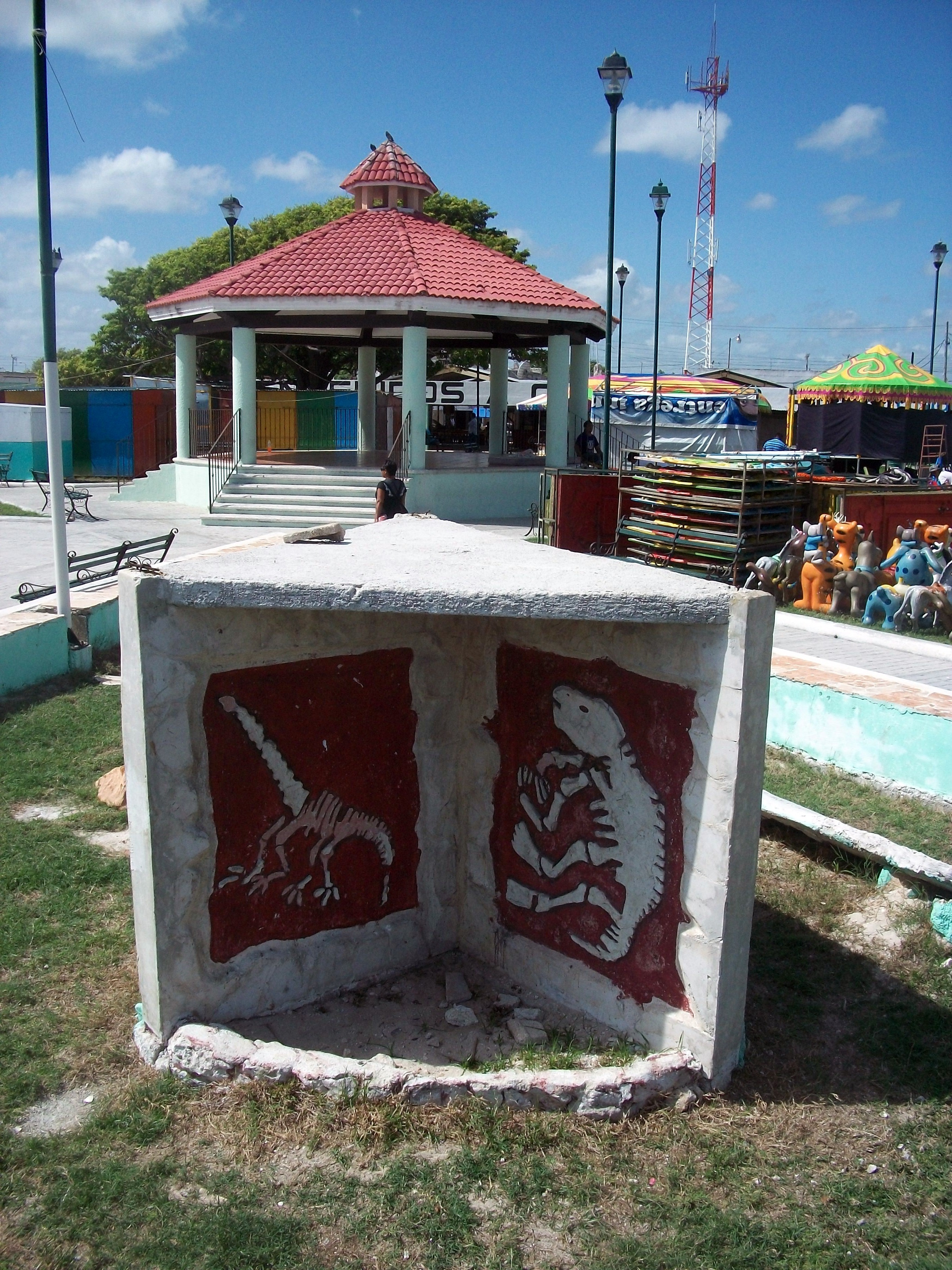 Meteorite-themed landmark in Chicxulub Puerto
For travelers, Chicxulub is useful because it gives you:
- a quieter waterfront than central Progreso
- local restaurants
- a second beach atmosphere without a long drive
- a natural continuation of the meteorite story after the museum
Read the Chicxulub Puerto guide if you are deciding whether to split the day between the two towns.
GuideChicxulub Puerto Guide: Beach, Pier, Crater History & Day Trip TipsChicxulub Puerto is a small Gulf‑coast town east of Progreso and north of Mérida, best known for its quiet pier, local seafood and its proximity to the Chicxulub impact‑crater story. The town has no entrance fee; the beach, pier and small restaurants are free to use. Opening hours are not specified, but services such as food stalls and the pier are available throughout the day. Getting there is easiest by rental car: drive north from Mérida to Progreso and continue east along the coast, allowing flexible timing for a sunrise walk or a sunset lunch. A private driver or a combination of bus/colectivo to Progreso followed by a taxi eastward are also possible, though rideshare return options can be unreliable. Visitors typically spend one to three hours walking the pier, snapping photos of the giant letters and monuments, and enjoying a brief beach break or seafood snack. A half‑day (about 3–4 hours including travel) is sufficient; a full day can be built by adding the Meteorite Museum in Progreso or other nearby coastal stops. Expect a modest, local beach with pale Gulf water, occasional seaweed after storms, and limited parking that fills up on weekends, so arrive early. Bring small‑bill cash because many stalls do not take cards and signal can be spotty. Early morning offers cooler weather and easier parking; late afternoon provides gentler light for walks. The water is swimmable when calm, but check conditions, watch for rocks and shells, and consider water shoes. The best months are November through March, while weekdays are quieter than weekends or holiday periods.Open
Chelem and Chuburná: go west for a quieter coast
West of Progreso, the coast becomes more residential and spread out.
Chelem is close enough for a simple detour. Chuburná is farther and gives you more open beach, fishing-village atmosphere and access to local boat excursions.
 Chuburná Puerto beach with open sand near Mérida
This side of the coast is better with a car or private driver.
Choose it if central Progreso feels too busy or if you want the beach to be the beginning of a coastal route rather than the whole day.
Use the Chuburná Puerto guide and Chuburná islands guide before planning a boat trip.
GuideBest Beaches Near Mérida: Where to Go for an Easy Coast DayThe guide lists the Gulf‑of‑Mexico beaches that are most convenient from Mérida, a city set inland in Yucatán. The closest and most service‑filled option is Progreso, about a 35–45‑minute drive north, while quieter alternatives such as Chelem, Chuburná, Chicxulub Puerto, Telchac Puerto, San Crisanto, Sisal and Celestún lie 45 to 110 minutes away and generally require a rental car or private driver. Practical details vary by spot. Progreso can be reached by car, taxi, rideshare, bus or hired driver; a half‑day to a full day can be spent there, with restaurants, palapas, beach chairs, some bathrooms and a long malecón. Chelem and Chicxulub Puerto are best accessed by rental car or driver for a half‑day, offering fewer amenities but a calmer atmosphere. Chuburná, Telchac Puerto and San Crisanto each suggest a half‑day to full‑day visit, with the latter two emphasizing mangrove tours and limited services. Sisal and Celestún are longer trips (75–90 min and 90–110 min respectively) suited to full‑day outings that combine beach time, seafood meals and, in Celestún’s case, seasonal flamingo boat tours. El Corchito is a mangrove stop near Progreso, useful for families but not a beach itself. Visitors should arrive early for cooler weather and easier parking, bring cash for small vendors, and expect strong sun with limited shade. Weekday mornings are quieter at Progreso; weekends and holidays are busier. Choosing a beach depends on whether you need family‑friendly facilities, a quiet walk, wildlife viewing or a longer, more scenic drive.OpenDzibilchaltún and Progreso in one day
Dzibilchaltún is the most natural archaeology-and-beach combination from Mérida because the site lies near the Mérida–Progreso corridor.
The important 2026 update is that the visit has changed.
The new Museo Ichkaantijoo opened in July 2026 with more than 300 archaeological pieces and gives the site much stronger historical interpretation. At the same time, Cenote Xlacah remains closed to swimming and public access under the current INAH listing.
Do not plan the old itinerary of ruins followed by a swim in Xlacah.
Instead, do:
- Dzibilchaltún at opening time
- Museo Ichkaantijoo
- Progreso for lunch
- beach in the afternoon
This is a much better use of the day.
Read the current Dzibilchaltún guide and Cenote Xlacah status guide before leaving Mérida.
 Temple of the Seven Dolls at Dzibilchaltún
INAH currently lists Dzibilchaltún as open daily while specifically marking Cenote Xlacah closed. Check the official Centro INAH Yucatán listing for the latest status.
GuideDzibilchaltún Guide: Ruins, Museo Ichkaantijoo and Visiting from MéridaDzibilchaltún is an ancient Maya archaeological site situated just north of Mérida, notable for its unique astronomical observatory and a cenote that can be swum in after touring the ruins. The entry fee is $65 MXN per person and the site is open daily from 8:00 AM to 4:30 PM. Guided tours are offered in both Spanish and English, though the article does not specify their cost or schedule. Visitors typically arrive by car or bus from Mérida; the short distance makes a half‑day visit sufficient to see the main attractions. The experience includes walking the Sacbe, an ancient Maya road, exploring the Temple of the Seven Dolls—famous for its equinox light display—visiting the on‑site museum, and swimming in the Sacred Cenote Xlacah. The best time to explore is early in the morning when temperatures are cooler, which also helps avoid the larger crowds that arrive later. Bring swimwear for the cenote and consider joining an English‑language guide if you want detailed historical context. Sun protection and water are advisable, as the site has limited shade along the pathways.OpenSuggested Progreso itineraries
Easy half-day from Mérida
Best for: first-time visitors, no-car travelers, short stays
- Leave Mérida around 9:00 am
- Arrive in Progreso mid-morning
- Walk the Malecón Tradicional
- Swim or rent shade
- Have seafood lunch
- Return to Mérida around 3:00 or 4:00 pm
This is the simplest version and often the best one.
Full family day
Best for: families with children
- El Corchito early
- Progreso beach late morning
- Long shaded lunch
- Museo del Meteorito
- Malecón Internacional toward sunset
- Return to Mérida
Do not add another distant stop unless your children genuinely enjoy long days in the car.
Archaeology and beach day
Best for: travelers who want culture without a long inland drive
- Dzibilchaltún at opening
- Museo Ichkaantijoo
- Drive to Progreso
- Seafood lunch
- Swim and relax
- Return before evening traffic
This route is easier with a rental car or private driver.
West-coast sampler
Best for: repeat visitors and travelers with a car
- Progreso in the morning
- Lunch on the Malecón
- Chelem
- Chuburná Puerto
- Sunset west of town
Skip this route if you are relying on public transport. The day becomes too fragmented.
Progreso or another beach near Mérida?
Choose Progreso for convenience.
Choose Chicxulub Puerto if you want something quieter but still close to Progreso.
Choose Chelem for a residential, lower-key coast day.
Choose Chuburná for more open sand and a slower village atmosphere.
Choose Sisal if you are willing to drive farther for a more distinctive small-port day.
Choose Celestún when wildlife is the main reason for traveling west.
For a direct comparison, read Sisal vs Progreso or the broader best beaches near Mérida guide.
What to bring
A Progreso day does not require specialist gear.
Bring:
- swimsuit
- towel
- hat
- sunglasses
- light long-sleeve cover-up or rash guard
- sunscreen
- reusable water bottle
- sandals
- small dry bag or waterproof phone pouch
- cash in pesos
- insect repellent if adding mangroves
Cash still matters for taxis, small vendors, tips, chair rentals and some excursions even when larger restaurants accept cards.
Do not bring unnecessary valuables onto the sand. If everyone in your group wants to swim at once, use a waterproof pouch or take turns watching the bag.
How much does a Progreso day cost?
Progreso can be one of the cheaper day trips from Mérida because the public beach is free and you do not need an entrance ticket simply to enjoy the waterfront.
Your main costs are:
- transport
- food and drinks
- shade or beach furniture if you rent it
- museum admission if visiting
- El Corchito or another excursion if added
A bus-and-public-beach day can be inexpensive. A private driver, beach club, seafood lunch and museum will cost considerably more.
The useful approach is to decide where convenience matters. Paying for good shade at noon may improve the day more than paying for a complicated tour.
Common mistakes
Expecting Cancún water
Progreso is Gulf coast. Some days are beautiful; some are windy and cloudy. Come with the right expectations.
Arriving at noon on a Sunday
You will get the hottest weather, more traffic and more competition for good seating. Go earlier.
Trying to visit every nearby attraction
El Corchito, Progreso, Chicxulub, Chelem, Chuburná and Dzibilchaltún do not belong in one normal day.
Choose one major add-on.
Assuming Xlacah is open for swimming
It is not. Older travel content is outdated. Use the current INAH status.
Sitting at beach furniture without asking the terms
Confirm whether the chair, table or palapa has a rental charge or minimum spend.
Depending on a rideshare for the return without a backup
Progreso is not central Mérida. Availability can change when demand is high.
Staying in direct sun because the breeze feels cool
This is one of the easiest ways to get badly sunburned. Shade matters.
Frequently asked questions
How far is Progreso from Mérida?
The coast is roughly 35–40 km north of Mérida. From Centro, a normal car journey is usually around 45–60 minutes depending on traffic.
Can you visit Progreso without a car?
Yes. Progreso is one of the easiest Yucatán beach towns to visit by public transport. Autoprogreso is the established bus option from Mérida.
Is Progreso Beach free?
Yes. The public beach itself is free. You only pay if you choose rented furniture, a beach club, food, activities or another attraction.
Is Progreso good for swimming?
It can be. The nearshore Gulf is often shallow and pleasant on calm days, but wind can quickly make conditions less attractive. Check the weather and use common water-safety precautions.
Is Progreso good for families?
Yes. Its main advantage for families is convenience: food, shade, bathrooms, attractions and transport are close together. The Museo del Meteorito and El Corchito make useful additions.
Which Malecón is better?
For a first visit, start with the Malecón Tradicional because it has the strongest concentration of restaurants and beach activity. Use the Malecón Internacional for a more open walk, family attractions and late-afternoon atmosphere.
Can you walk on the long Progreso pier?
Do not treat the world-record pier as a public sightseeing boardwalk. It is working port infrastructure. Admire it from shore rather than planning a walk to the end.
Is Progreso busy when cruise ships are in port?
It can be noticeably busier around central tourist areas. The effect varies by ship schedule and number of vessels. Check the current cruise guide if crowd levels matter to you.
Is Progreso better than Sisal?
Progreso is easier. Sisal is quieter and more of a dedicated coastal day trip. If you do not have a car or only want a half-day, Progreso usually wins. If atmosphere matters more than travel time, Sisal may suit you better.
Can I combine Progreso with Chichén Itzá?
You can, but it is rarely the best use of a normal Mérida-based day. Chichén Itzá deserves its own early start. Pair Progreso with Dzibilchaltún or El Corchito instead.
Final recommendation
Progreso is worth understanding for what it is: Mérida's practical coast.
It is not Yucatán's wildest beach and it does not need to be. Its strength is that you can leave Mérida in the morning, swim, eat well, walk beside the Gulf and return without spending most of the day in transit.
For most first-time visitors, stay around the Malecón Tradicional, rent shade if the sun is hard, have a proper seafood lunch and keep the schedule loose. Add the Museo del Meteorito if you have children or the weather turns. Add El Corchito if you want nature. Add Dzibilchaltún if archaeology is a priority.
If you want a quieter beach rather than an easier one, keep driving.
For transport details, compare the Mérida to Progreso bus, taxi, driving and private-transfer options. For a wider coastal decision, use the beaches near Mérida guide. If you want to build Progreso into a larger Yucatán itinerary, continue through the Plan hub.
