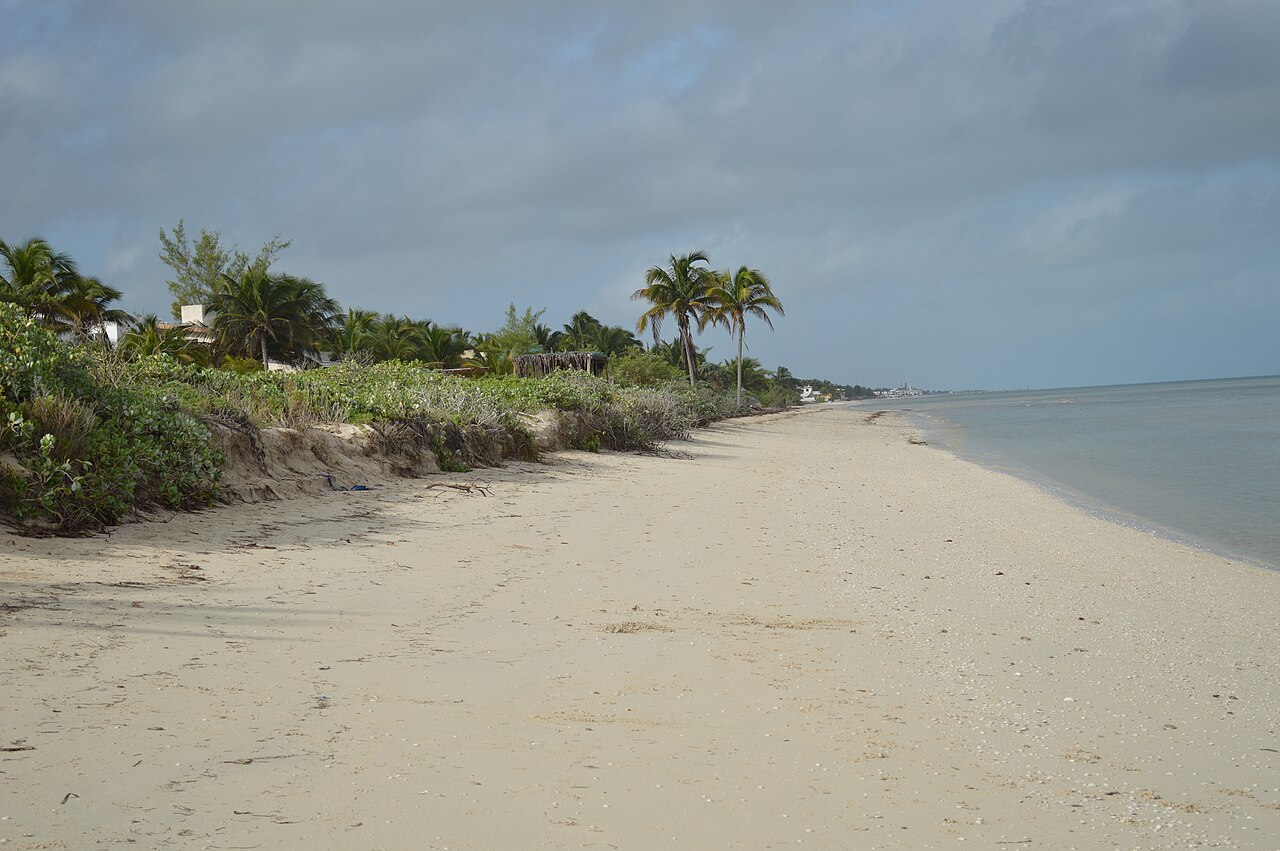
Chuburná Puerto sits at the quieter western end of the inhabited coast beyond Progreso and Chelem. It is still recognisably a fishing town rather than a developed resort: small boats gather around the harbour, seafood restaurants open near the centre, beach houses line parts of the shore and the road eventually gives way to dunes, mangroves and shallow water.
The main reason to come is not a conventional beachfront promenade. Chuburná works because several different coastal landscapes sit close together. You can swim along the Gulf coast, eat fresh fish in town, continue west to the broad sands of Las Dunas and take a local boat into the sheltered waters popularly known as Las Islas.
Those parts are connected, but they are not interchangeable. The town is the practical centre. The main beach is easiest for a simple swim. Las Dunas is the exposed, open landscape at the western edge. Las Islas are boat-accessed sandbanks and rustic shallow-water stops, not one formal island attraction. Understanding that layout makes the day much easier to plan.
A rental car or private driver is the most useful way to visit. Public transport can get you into town, but reaching the dunes, harbour and a precisely timed boat departure may require a mototaxi and some coordination for the return journey.
 The coast and shallow waters around Chuburná Puerto
Chuburná Puerto at a glance
| Practical detail | What to expect |
|---|---|
| Location | Around 20 kilometres west of Progreso, beyond Yucalpetén and Chelem |
| Drive from Mérida | Usually 55–75 minutes, depending on your starting point and traffic |
| Best for | Quiet beach days, families, seafood, nature, boat trips and slow coastal stays |
| Ideal visit length | One full day or two quiet nights |
| Car needed? | Not essential for the centre, but strongly recommended for Las Dunas and a multi-stop day |
| Swimming | Often shallow near shore, but conditions vary and lifeguards are limited or absent |
| Boat tours | Arrange locally or reserve ahead for weekends, holidays and private departures |
| Cash | Bring pesos for boats, mototaxis, small restaurants, parking and beach services |
| Facilities | Basic in town and increasingly limited toward the dunes and island stops |
| Best arrival time | Before 10:00 for cooler weather, easier parking and simpler boat arrangements |
Chuburná is a better choice than central Progreso if you want open space, a small-town atmosphere and a day centred on water rather than a malecón. It is less convenient if you want a large choice of restaurants, polished beach clubs, dependable taxis, step-free facilities or an evening promenade.
First decide what kind of Chuburná day you want
The strongest plan depends on what draws you west. Trying to include every beach, island and wetland stop in one hurried visit usually produces more transport than enjoyment.
Choose the town and main beach for the simplest day and the easiest public-transport visit.
Choose Las Dunas for open landscape, beach walks, photography and sunset rather than dependable facilities.
Choose Las Islas for shallow swimming, palapas, swings or a seafood stop. Reserve a specific route rather than simply asking for “the island.”
Choose a mangrove or kayak excursion if nature is the priority. Go early for cooler air and potentially calmer conditions.
Choose an overnight stay to enjoy the beach during the gentler early-morning and late-afternoon hours.
A short history of Chuburná Puerto
 Fishing boats used along the Chuburná coast
Chuburná is one of the older coastal settlements in the municipality of Progreso. Its history is tied to fishing, the shallow coastal environment and the need to watch a vulnerable Gulf shoreline.
In 1663, Chuburná and Chicxulub were designated coastal lookout settlements under the government of Juan Francisco Esquivel y de la Rosa. These vigías formed part of Yucatán’s response to pirate activity in the Gulf, including threats associated with the Laguna de Términos area. Chuburná was not a fortified colonial city; it was a small strategic point on a coast that was difficult to defend.
The name is generally explained through Maya roots. One interpretation connects Chubul—a yellowish cotton—with naah, meaning house or building, giving the sense of “house of yellow cotton.” Another local interpretation refers to a place where houses flood. Place-name etymologies can vary, but both readings connect the settlement to its Maya language setting and low coastal landscape.
Fishing remained central long after the era of pirate lookouts. It still shapes the working rhythm of the harbour, the food served in town and the small boat excursions now offered to visitors. Tourism has grown through beach-house rentals, modest hotels and locally operated island stops, but Chuburná has not become an urban resort.
That balance is part of its appeal. Visitors are entering a living coastal community, not a purpose-built attraction. Dress and behave accordingly around working boats, private homes and fishing areas. Keep access lanes clear and ask before photographing people at close range.
The town and fishing harbour
The modern centre is modest. You will find small shops, seafood restaurants, mototaxis, local accommodation and everyday services used by residents. There is no long architectural sightseeing list. Chuburná’s value is as the human and practical base for the surrounding coast.
Spend a little time near the harbour before continuing to the beach. Boats depart for fishing trips and different Las Islas routes from points around the protected harbour and western waterways. If you have not booked ahead, local operators can explain what is running that day.
Do not assume every boat offers the same itinerary. Some outings are essentially a transfer to one palapa area. Others include two or three shallow-water stops, a mangrove passage, an ojo de agua, birdwatching or a meal. Ask exactly what is included and how much time will actually be spent off the boat.
The harbour is functional rather than ornamental. Surfaces may be wet or uneven, shade may be limited and boarding can involve stepping down into a small lancha. Travellers with restricted mobility should describe their needs to the operator before reserving. A photograph of the boarding point can be more useful than a general assurance that the trip is “easy.”
The main Chuburná beach
Open Gulf beach at Chuburná Puerto
The beach runs along the Gulf side of town. It is generally quieter and less commercial than Progreso, with stretches of open sand interrupted by private houses, rentals and public access lanes.
The Gulf here is often shallow close to shore. On calm days, that can work well for families and less confident swimmers. The bottom may be sandy, but shells, submerged objects and changes in depth are still possible. Water shoes are useful if you are unsure of the entry.
There may be no lifeguard at the access point you choose. Check the sea before entering, supervise children continuously and stay out during thunderstorms, strong nortes or visibly rough conditions. Ask local residents or restaurant staff if there is anything unusual that day.
Bring your own towels, drinking water and shade unless you know your chosen access point has rentals. Vendors operate more reliably on weekends and holiday periods than on quiet weekdays. A beach that looks serviced in an August photograph may feel almost empty on a Tuesday in November.
The coast is especially pleasant in the morning and near sunset. Midday can be punishing, with little natural shade and strong reflection from pale sand. A sensible pattern is to swim early, eat or rest through the hottest hours and return to the beach later.
Las Dunas: Chuburná’s open western edge
 The broad dune-backed beach at Las Dunas in Chuburná
Las Dunas is the name commonly used for the open western beach beyond the more settled part of Chuburná. It is also described as the playón: a broad sweep of sand near the harbour entrance, mangroves and shallow coastal channels.
This is the most visually distinctive part of the destination. The beach feels wider, the built environment thins out and the transition between Gulf, sand, lagoon and mangrove becomes much clearer. It can feel remote even though the town is not far away.
The landscape is also more exposed. There is little dependable shade, fewer formal facilities and less certainty about food, toilets and transport. Vendors and simple beach services may appear during busy periods, but you should not build the day around them being open.
Access conditions can change after storms, heavy rain and erosion. The final approach may include soft sand or uneven ground. Use an established parking area and avoid taking an ordinary rental car onto loose sand. Recovery from a stuck vehicle is an expensive way to end a beach day.
Las Dunas works well for:
- A long walk before the heat builds
- Wide coastal photography
- Watching sunset over the western Gulf
- Beginning some Las Islas boat trips
- Kitesurfing with a qualified local instructor
- A quieter finish after lunch in town
It is not the best choice if you need step-free access, dependable toilets, a full-service beach club or continuous supervision in the water.
What are Las Islas?
 Isla Columpios in Chuburná Puerto
“Las Islas” can be confusing because the name suggests a conventional archipelago. In practice, it refers to a collection of locally operated shallow-water stops, sandbanks, palapa areas and sheltered swimming places around the harbour, lagoon and mangrove system.
Different fishing families and tour operators use different names. Isla Columpios is the most recognisable, but you may also hear Isla Paraíso, Agua Azul, Escondida, Pelícanos, Delfines, Coral, Pirata, Choventún and others. Local tourism material describes more than ten identified stops.
These are not large islands with streets, hotels or independent ferry services. Some are managed recreation areas with hammocks, swings, tables or palapas standing over shallow water. Others are sandbanks, quiet lagoon edges or nature stops. Routes, structures and names can change.
The experience is closer to a small-boat picnic and swimming trip in sheltered coastal water than a visit to a developed island attraction. That is precisely why it appeals to many visitors, but it also means you should ask more questions before booking.
Comparing the best-known island stops
 Tables and seating in the water at Isla Agua Azul
| Stop or name | General character | What to confirm |
|---|---|---|
| Isla Columpios | The best-known shallow-water palapa and swing experience | Crowd level, food, shade and time at the stop |
| Agua Azul | Seating or tables set in shallow water | Current facilities and whether meals are included |
| Paraíso | A relaxed recreational stop used by some operators | Whether this is distinct from Columpios on your route |
| Escondida | Usually promoted as quieter and less crowded | Travel time, shade and toilet arrangements |
| Pelícanos | Nature-oriented outing with birdlife, food and water activities | Current boat price, equipment rental and meal costs |
| Delfines, Coral or Pirata | Operator-specific social or swimming stops | Recent photos and the exact facilities available |
| Choventún | Often associated with nature and seasonal birds | Whether sightings are likely on the day |
This table is a planning aid, not a fixed catalogue. Do not spend too much time trying to identify one definitive “best island” online. The quality of the outing depends more on the captain, boat, weather, crowd level, route and time allowed at each stop.
Ask for recent photographs from the trip the operator is actually running. High tides, maintenance, storms and seasonal water conditions can change how an individual place looks.
Isla Columpios
 Isla Paraíso in Chuburná Puerto
Isla Columpios has become the headline name for Chuburná’s boat trips. Its appeal is straightforward: shallow water, rustic over-water structures, hammocks or swings and time to swim, sit and eat.
Expect a locally managed coastal outing rather than a polished beach club. Platforms can be wet, ladders simple and seating limited when several boats arrive together. Music and a social atmosphere are possible at busy times. Travellers seeking silence should request an early private departure or choose a nature-focused stop.
Short excursions may travel directly to the island area and remain there for around two hours. Longer private routes can add mangrove channels, another island, an ojo de agua, birdwatching or a simple meal. The name alone does not tell you which version you are buying.
Families should ask about shade and child-sized life jackets before paying. Although much of the water is shallow, children still need continuous supervision around boats, platforms and changing currents.
Isla Pelícanos and nature-led alternatives
 Coastal birdlife and flamingos around Chuburná
Isla Pelícanos is one example of a more nature-led local excursion. A 2025 report by Yucatán Today describes departures from Chuburná’s harbour, birdwatching, kayaking or paddleboarding, swings and hammocks, and a rustic seafood meal.
The report is useful for understanding the style of trip, but its quoted prices and contact details should be reconfirmed. Small operators can change rates, inclusions and departure arrangements more quickly than a large attraction.
Pelicans, frigatebirds, cormorants and herons may be visible along the way. Their presence is one reason to keep the boat slow around resting banks. A good nature guide will give birds space rather than treating a close approach as the main goal.
Choose this kind of route if you want local food and wildlife as part of the day. Choose a simple Columpios transfer if your group mainly wants shallow swimming, photographs and a sociable stop.
How to choose a boat trip
 A local boat crossing the shallow waters near Chuburná
The easiest mistake is to compare prices without comparing trips. One quote may cover a whole private boat, while another is per person. One may include only transport to a palapa; another may include three hours, a guide, drinks and ceviche.
Before reserving, confirm:
- The total price and whether it is per person or per boat
- Maximum passenger number
- Total duration from boarding to return
- Names and number of stops
- Expected travel time versus time in the water
- Whether the route includes mangroves or an ojo de agua
- Whether food, fruit, beer, soft drinks or water are included
- Whether outside food and a cooler are allowed
- Whether suitable life jackets are provided for every passenger
- Whether there is shade on the boat or only at the stop
- Whether a toilet is available before departure or during the trip
- How boarding works for children or reduced-mobility travellers
- Cancellation or postponement rules for wind and storms
- Exact meeting point, parking location and return time
Private boats are particularly useful for families, mixed-age groups and photographers. You can usually agree on a calmer pace and reduce waiting. Shared departures can be better value for one or two travellers, but may involve louder groups and less control over timing.
Do not pressure a captain to run in unsafe weather. A cancellation caused by wind is disappointing, but small boats and exposed water leave little room for stubbornness.
Mangroves, kayaking and ojos de agua
 Mangrove waterways behind the Chuburná coast
The wetlands behind Chuburná are not simply scenery around the beach. Mangroves shelter young marine life and coastal birds while helping stabilise shorelines and filter water.
Guided kayak routes enter shallow channels that motorised boats cannot always use. The Yucatán tourism authority’s Chuburná kayaking page presents the ría as a place for calm-water paddling, mangrove exploration and nature observation.
Morning is usually the easiest time to paddle. The air is cooler, wind may be lighter and wildlife activity can be better. Sunset is attractive, but mosquitoes become more noticeable around wetlands, particularly after rain.
Kayaking is not automatically suitable for every visitor simply because the water is shallow. Ask about total paddling time, current, wind exposure, tandem boats, back support and the ability to turn around early. First-time paddlers may prefer a short guided route rather than an open-ended rental.
 Ojo de Agua Dzul-Ha among the mangroves
Some longer itineraries include an ojo de agua such as Dzul-Ha, where groundwater emerges within the wetland. These small natural pools or springs can feel cooler than the surrounding water. They are environmentally sensitive and should be visited with a guide who controls numbers and explains where swimming is appropriate.
Do not touch or stand on mangrove roots. Apply sunscreen well before entering rather than washing a fresh layer directly into a spring, and carry every bottle, wrapper and food scrap back out.
Birdlife and seasonal nature
Herons, egrets, pelicans, cormorants, frigatebirds and other coastal species can be seen around the harbour, mangroves and shallow wetlands. Flamingos sometimes move through the wider coastal system, but sightings are never guaranteed.
Bird movement changes with water level, food, nesting conditions, disturbance and season. If wildlife is the principal reason for travelling, book a bird-focused guide rather than a general swimming excursion. Ask what has been seen recently rather than relying on a promotional gallery.
Bring binoculars and use a longer camera lens. Ask the captain to slow down, not to push directly toward a resting group. Drones can disturb birds and may be restricted around sensitive areas; leave one grounded unless you have clear local permission and understand the habitat.
Sea turtles and other protected wildlife should be observed from a distance. Never move hatchlings, touch nests or use flash around nesting activity. Report concerns to local authorities or a recognised conservation group rather than attempting an improvised intervention.
Eating in Chuburná
 Seafood prepared in Chuburná Puerto
Seafood is the natural lunch choice. Depending on catch and season, local kitchens may serve fried fish, ceviche, shrimp, octopus, conch dishes and simple Yucatecan preparations.
Menus, hours and availability can change quickly in a small fishing port. Go for lunch rather than assuming every restaurant will remain open late. Ask for the price of whole fish by weight before ordering and confirm whether rice, salad, tortillas or other sides are included.
Fresh does not mean every species is available every day. A shorter menu can be a good sign if the kitchen is working with the current catch. Respect seasonal closures and be wary of anyone promising protected seafood regardless of the month.
Some island operators include ceviche, fruit or a cooked meal. Others sell food separately or allow you to bring a cooler. Confirm this before leaving town because there is no conventional shop at a sandbank stop.
Vegetarians and travellers with allergies should make arrangements early. A kitchen centred on seafood may have few separate preparation surfaces. Explain the allergy clearly in Spanish and carry a backup snack if cross-contamination is a serious risk.
Bring cash. Card terminals and mobile signals are not reliable enough to depend on at every small restaurant or island stop. It is also sensible to carry smaller notes rather than expecting change from a large bill.
Getting to Chuburná from Mérida
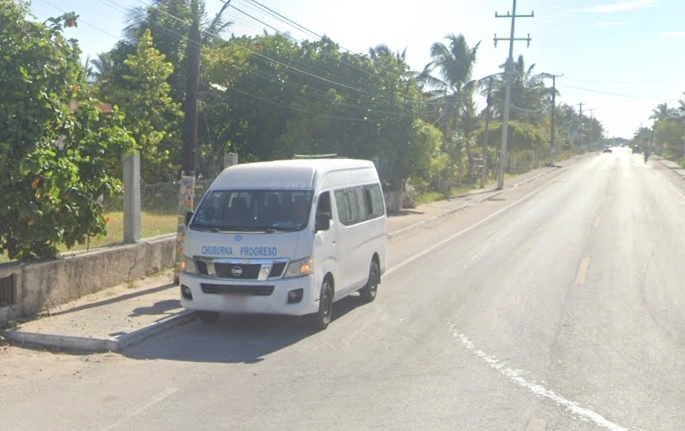 A colectivo serving the Progreso–Chuburná route
By rental car
The simplest route is north from Mérida toward Progreso, then west toward Yucalpetén, Chelem and Chuburná. Depending on traffic and your starting point, allow about one hour to 75 minutes.
A car makes it easier to carry shade, drinking water and swimming equipment. It also lets you move between the centre, main beach, Las Dunas and a boat meeting point without waiting for local transport.
Download an offline map before leaving. Do not follow an app onto an unpaved coastal track merely because it appears to shorten the journey. Use established roads and the parking location supplied by your boat operator.
Avoid leaving luggage, passports, electronics or visible valuables in the vehicle. If Chuburná is a stop between accommodations, arrange secure luggage storage rather than treating a beach car park as a safe holding place.
By private driver
A private driver is a good option for families, small groups and anyone taking a boat trip. The driver removes concerns about navigation, parking and the return after sunset.
Agree on the route, number of waiting hours and any additional charge before departure. Share the boat operator’s location pin with the driver, as “Las Dunas” or “the harbour” may not be precise enough.
For a full day, ask the driver to remain reachable rather than assuming mobile coverage will be perfect. A planned pickup time and backup meeting point are useful if the boat returns elsewhere.
By public transport
Travel first from central Mérida to Progreso using AutoProgreso or another established service. In central Progreso, change to a colectivo travelling west through Chelem to Chuburná. Local information describes the Progreso–Chuburná leg as roughly 25 minutes, but allow more time for waiting and stops.
Once in Chuburná, a mototaxi can take you toward the beach, harbour or Las Dunas. Arrange the return before beginning a boat trip, especially on a quiet weekday or late afternoon.
Public transport is workable for the centre and main beach. It becomes less convenient when the priority is a precisely timed island departure, kayaking equipment or sunset at the far western end. Confirm the last practical connection back to Progreso on the day rather than relying on an old online timetable.
Visiting with children
 A quiet stretch of beach near accommodation in Chuburná
Chuburná can work very well for families because the pace is slow and much of the near-shore water is shallow. It still requires more preparation than a serviced resort beach.
For a straightforward day, choose an early private boat of moderate length, then have lunch and rest through the hottest part of the afternoon. Four hours on an exposed lancha plus a late beach session is too much for many young children.
Confirm child-sized life jackets, shade, toilet access and food before paying. Bring more water than you expect to use, familiar snacks, dry clothes and a compact first-aid kit. Keep children within reach around platforms even when they can stand on the bottom.
Las Dunas is difficult with a heavily loaded pushchair. A baby carrier may be more practical, but heat exposure must be taken seriously. Families who need smooth access and permanent facilities may be more comfortable on Progreso’s main beachfront.
Safety and practical cautions
- Check the weather and wind before a small-boat trip.
- Use life jackets while the boat is moving, even in shallow water.
- Do not swim in a navigation channel or near a harbour mouth.
- Protect phones, money and medicine in a dry bag.
- Carry drinking water; beer is not hydration.
- Wear shoes on hot sand and unfamiliar platforms.
- Leave visible valuables out of parked vehicles.
- Avoid isolated tracks after dark if you do not know the area.
- Keep a return plan, offline location pin and enough water.
Leave open water when thunder is audible, not when rain reaches the beach. During a norte or tropical system, follow civil-protection guidance and postpone the coast if advised.
When to visit
Kayaking in Chuburná’s shallow coastal waters
November to February
Lower humidity and cooler mornings make this one of the most comfortable periods for walking and paddling. Nortes can bring strong wind, choppy water and surprisingly cool evenings. Check boat conditions rather than assuming dry-season weather guarantees a departure.
March to May
Conditions become hotter and drier. Go early, build in shade and avoid a long unprotected walk at midday. Easter can bring a marked rise in domestic visitors and accommodation demand.
June to October
This is the wetter period and overlaps with Atlantic hurricane season. Many mornings are still suitable for the beach, but afternoon storms, flooded tracks and sudden boat changes become more likely.
July and August are important coastal holiday months for Yucatecan families. Chuburná feels busier, rentals fill and restaurants may be livelier. Reserve private boats and accommodation ahead.
The town’s celebration in honour of the Virgin of the Assumption usually brings religious and popular events around late July and August. Programmes change by year, so check locally if you want to attend—or avoid extra traffic and noise.
Where to stay
 Hotel accommodation in Chuburná Puerto
Chuburná has small hotels, guesthouses and a growing supply of beach-house rentals. Staying overnight suits travellers who value quiet mornings, sunset and a slower rhythm more than nightlife.
A house can be good value for a family or group, but some properties described as Chuburná sit well beyond the centre, restaurants or your boat departure.
Before booking, ask about:
- Direct beach access or the nearest public lane
- Air conditioning in every bedroom
- Reliable Wi-Fi if you need to work
- Parking and final road conditions
- Mosquito screens
- Shops and restaurants within realistic walking distance
- Pool fencing or child safety
Choose Chuburná for privacy and a residential coast. Choose Chelem for a little more everyday activity nearby. Choose Progreso if you want a walkable malecón, supermarkets, frequent transport and a larger range of evening restaurants.
Can you combine Chuburná with Sisal?
Chuburná and Sisal appear close on a map, but wetlands and undeveloped coastline interrupt a simple road connection. Driving between them normally requires an inland detour.
Do not assume you can continue casually along the beach from Las Dunas to Sisal. Informal tracks are not a dependable through-route, and attempting both destinations in one day leaves too little time for their boat and nature experiences.
Use Sisal as a separate day if you want its pier, town, beach and mangrove tours. Chuburná combines much more naturally with Chelem, Yucalpetén and Progreso.
A sensible one-day itinerary
Chuburná’s open coast near a beachfront guesthouse
08:30 — Leave Mérida
An early departure avoids some heat and gives you time to resolve boat arrangements without rushing.
09:30 — Arrive in Chuburná
Stop near the centre and harbour. Confirm the boat, parking location, meeting point and return time.
10:00 — Boat trip or guided kayak
Choose a two- to four-hour excursion. Families may prefer one main island and a short nature stop; birdwatchers should prioritise mangroves and quieter water.
13:30 — Seafood lunch
Allow time for a slow meal. Small kitchens may prepare dishes to order.
15:00 — Rest or main beach
Use the hottest hour for shade. A short swim near an established access is more sensible than an exposed walk.
17:00 — Las Dunas
Continue west for a beach walk and sunset. Leave with enough daylight to navigate back comfortably.
This itinerary is easiest with a car or private driver. Public-transport visitors should return toward central Chuburná before services thin out.
Responsible travel in Chuburná
The fragile meeting of mangrove, shallow water and dune
Locally run tourism can keep spending within the fishing community, but only if the landscape is not treated as disposable scenery.
Choose established operators, follow their guidance and avoid routes that disturb birds or damage mangrove. Do not carve names into palapas, remove shells in quantity or leave decorations, cigarette ends and bottle caps behind.
Use refillable water containers where practical and bring a bag for rubbish. “Biodegradable” items should still be carried out. Food waste can change animal behaviour and does not belong in the mangrove.
Support local restaurants and captains, but ask clear questions about wildlife practices. Feeding birds, chasing flamingos for photographs or handling marine animals should not be part of a responsible tour.
Respect the town itself. Public beach access does not make private driveways, gardens and house fronts into parking spaces. Keep noise reasonable near homes and fishing areas.
What to bring
- Cash in Mexican pesos, including smaller notes
- Drinking water and electrolytes
- Hat and UV-protective clothing
- Reef-conscious sunscreen
- Insect repellent for mangrove areas
- Dry bag or waterproof phone pouch
- Towel and change of clothes
- Water shoes for platforms and boat landings
- Binoculars for birdwatching
- Snacks if travelling with children
- Any essential medicine in waterproof packaging
- Offline map and the operator’s phone number
- A rubbish bag for carrying everything back out
Avoid taking unnecessary valuables onto a small boat. Salt water and wet platforms are hard on phones, cameras and leather bags.
Frequently asked questions
Is Las Islas one island?
No. It is a loose local term for multiple shallow-water, sandbank and palapa stops operated by different groups. Ask which named places your boat will visit.
Can you reach Isla Columpios on foot?
Treat it as a boat excursion. Water levels, channels and the exact operating location make independent walk-in assumptions unsafe and unreliable.
Do you need to book a boat in advance?
Not always, but it is wise for weekends, holidays, private departures and families needing child life jackets. Booking ahead also lets you compare routes rather than accepting the first available boat.
Is Chuburná good for swimming?
Often, especially on calm days along the main beach. Conditions vary, lifeguards may be absent and the harbour entrance requires extra caution. Check locally before entering.
Can you visit without a car?
Yes, particularly for the centre and main beach. Use transport via Progreso and a local colectivo, then a mototaxi if needed. A car or driver is much easier for Las Dunas and a timed boat trip.
Is Chuburná suitable for a day trip from Mérida?
Yes. It is close enough for a full day without an overnight stay. Leave early if you want a boat excursion, lunch and sunset without rushing.
Can Chuburná and Sisal be visited together?
Technically yes with enough driving, but it is poor day-trip planning. The wetlands prevent a simple coastal road connection. Give each destination its own day.
How much time should you allow?
Allow most of a day if taking a boat. Three or four hours can work for a beach and lunch stop, but it will not show the dunes and wetlands properly.
Is the water Caribbean blue?
Sometimes it appears pale turquoise, but this is the Gulf of Mexico. Colour and clarity change with wind, sediment and weather. Come for the landscape and local experience rather than a guaranteed shade of blue.
Is Chuburná worth visiting?
Chuburná is worth the journey if you want a quieter, more natural coast than central Progreso and accept simpler facilities. Las Dunas and the shallow-water boat trips give the town a clear identity beyond being another Gulf beach.
It is particularly good for families with a private vehicle, couples looking for a quiet coastal day, photographers, birdwatchers and small groups that can reserve their own boat.
It is less suitable if you need polished infrastructure, nightlife, extensive shopping, guaranteed step-free access or a beach club with dependable full service. Progreso will usually serve those needs better.
For the strongest day, treat Chuburná as a connected landscape rather than a single attraction: begin in the fishing town, spend time on the water, eat locally and finish among the open sands of Las Dunas.
If you would like help checking a boat route or fitting Chuburná into a wider Yucatán itinerary, use our free WhatsApp assistant for a quick question. Human Trip Support can have a real person review the plan, while the Trip Plan & Booking Portal is the better next step for a custom itinerary, trusted driver or organised private day.