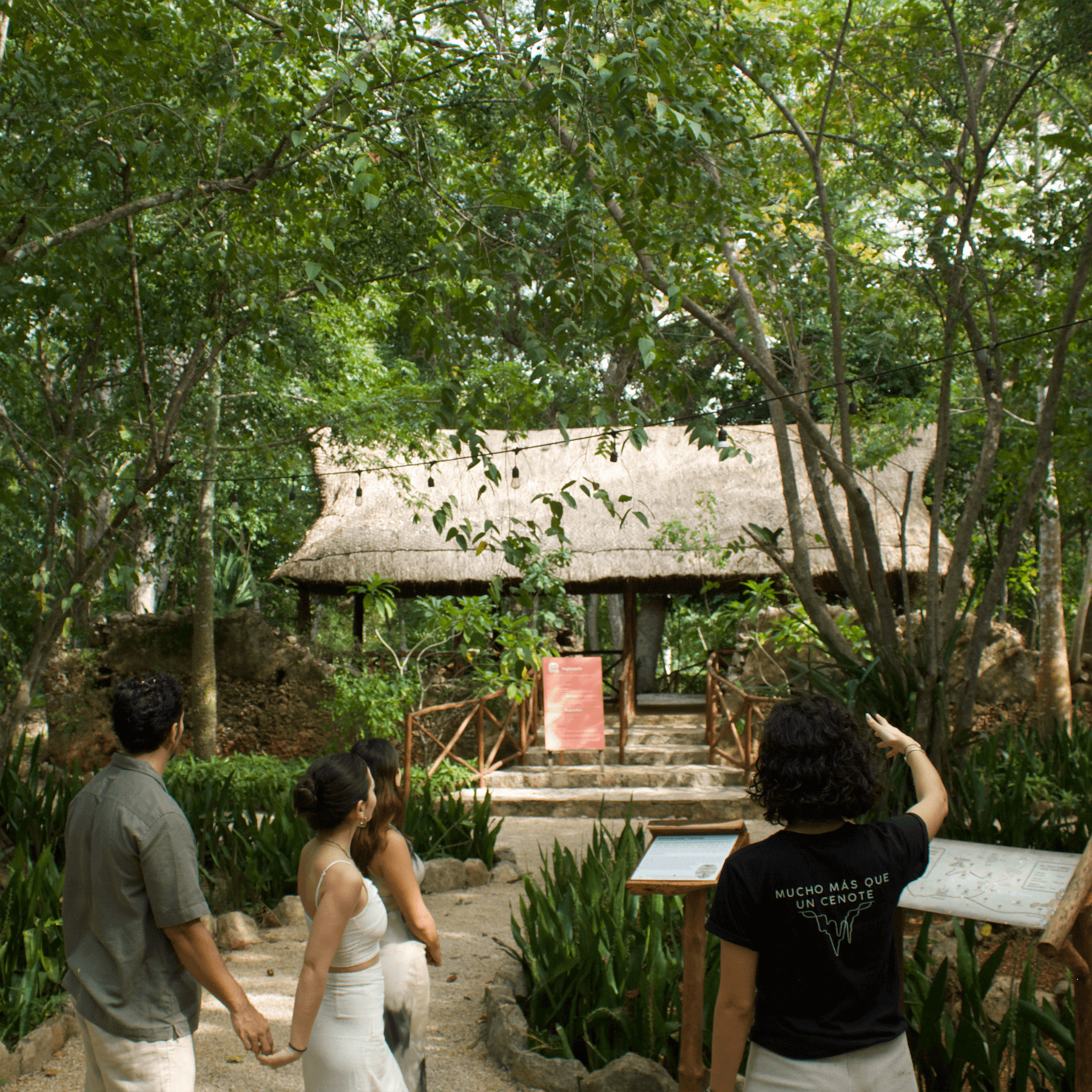
Cenote Tsukán is a large semi-open cavern cenote beside the road between Pisté and Yokdzonot, around ten minutes west of Chichén Itzá. It forms part of Tsukán Santuario de Vida, a managed visitor park combining swimming, gardens, food and short cultural activities.
It is worth considering after a morning at Chichén Itzá. The water is cool, the cavern is substantial and the facilities are more complete than those at many smaller rural cenotes. The trade-off is that Tsukán feels like an organised attraction rather than an informal swimming hole.
This is a good choice for families, first-time cenote visitors and travelers who want showers, changing areas, food and staff on site. It is less suitable for anyone seeking a low-cost community cenote, cliff jumping, rope swings or a completely independent experience.
Cenote Tsukán at a glance
| Detail | What to expect |
|---|---|
| Location | Carretera Yokdzonot–Pisté, km 108 |
| Nearest town | Pisté |
| From Chichén Itzá | Roughly 10–15 minutes by car |
| From Valladolid | Around 45 minutes by car |
| From Mérida | Approximately 1 hour 45 minutes |
| Cenote type | Semi-open cavern cenote |
| Basic adult entry | Currently listed at MXN 260 |
| Child entry | Currently listed at MXN 130 for ages 5–11 |
| Life jacket | Included and compulsory |
| Lockers | Available |
| Food | Restaurant, snacks and meal packages |
| Parking | Available on site |
| Ideal visit length | 1.5–3 hours |
| Accessibility | Long staircase; not wheelchair accessible |
The official ticket shop currently lists basic admission at MXN 260 for adults, MXN 130 for children aged 5–11 and free entry for children aged four and under. Prices can change, so check the official Tsukán ticket page before traveling.
Is Cenote Tsukán worth visiting?
Tsukán makes most sense as part of a Chichén Itzá day rather than as a special journey from Mérida on its own.
Its strongest point is convenience. After several hot hours walking around the archaeological zone, you can reach the cenote quickly, change comfortably, swim and have lunch without building a complicated route through small villages.
The cavern itself is impressive. A broad opening allows daylight into the water, while stalactites and irregular limestone formations cover the surrounding walls. The swimming area feels enclosed without being completely dark.
Tsukán is more developed than Cenote Yokdzonot or many family-run sites around Homún. Some travelers will appreciate the organisation. Others may find the guided interpretation, compulsory route and meal packages more commercial than they want.
Choose Tsukán when:
- You are already visiting Chichén Itzá
- You want reliable facilities
- You are traveling with children or less experienced swimmers
- You prefer a managed swimming environment
- You want to eat before continuing toward Valladolid or Mérida
Consider another cenote when:
- Entrance price is your main concern
- You want diving platforms or rope swings
- You prefer a small community-run site
- You cannot manage a substantial staircase
- You have already spent most of the day at another organised attraction
What the cenote is like
 Stone steps descending through vegetation toward Cenote Tsukán
Visitors approach through landscaped grounds before descending a long stone staircase. The return climb should be taken seriously by anyone with limited mobility, knee trouble or heart problems. The operator states that the cenote is not currently accessible to wheelchair users.
At the bottom, the cave opens into a wide natural pool. The water is deep and there is no shallow beach-style entry. Access is by steps, with ropes and fixed platforms around the principal swimming area.
Life jackets are compulsory and included with admission. Snorkel masks are available separately, but snorkeling equipment is not included in the standard ticket.
There are no large jumping platforms or rope swings. This is a place for floating, swimming and looking around the cave rather than an adventure-park experience.
Swimming at Cenote Tsukán
 Swimmers beneath the limestone formations inside Cenote Tsukán
The water is cool throughout the year. This feels refreshing after Chichén Itzá, although young children and people sensitive to cold may prefer a shorter swim.
The centre of the pool is deep. Compulsory life jackets make the experience easier for hesitant swimmers, but adults should still remain close to children. The cave can also feel dark and unfamiliar to children who have only swum in pools or open cenotes.
The stone steps can become wet. Walk rather than rush, use the handrails and wear sandals or water shoes with reasonable grip.
Avoid applying sunscreen, body oil, perfume or insect repellent immediately before entering. Shower first and follow the instructions given by staff. Cenotes form part of a vulnerable underground water system, and visitor rules are intended to reduce contamination.
GuideCenote Hool Kosom Guide: Swimming, Prices and the Homún Cenote RouteA practical guide to Cenote Hool Kosom near Mérida, including swimming, current price guidance, opening hours, transport and nearby Homún cenotes.Open
The cultural experiences
Tsukán presents itself as more than a swimming stop. The standard experience currently includes a welcome with copal near the park's pich tree, a visit to a traditionally constructed Maya house and a workshop introducing Yucatecan recados and spices.
The site also interprets the regional story of Tsukán, a serpent associated with guarding caves, cenotes and the cycle of water.
These are short visitor activities rather than an in-depth historical or community tour. They can be useful for families and travelers unfamiliar with Yucatán, but they should not be treated as a complete explanation of contemporary Maya culture.
The operator states that more than 140 residential foundations have been identified within the property and links them to settlements associated with the wider Chichén Itzá area.
Allow time for the complete route rather than assuming you will walk directly from the ticket desk to the water.
Cenote Tsukán prices
The official online shop currently displays the following rates:
| Package | Current listed adult price |
|---|---|
| Tsukán Experiences | MXN 260 |
| Experiences with buffet | Around MXN 510–530 |
| Experiences with traditional menu | MXN 530 |
The basic package includes park admission, the cenote, compulsory life jacket and the cultural experiences. The traditional-menu package includes a Yucatecan meal and a natural drink. The buffet package may not include drinks.
Prices and inclusions can change. Confirm the amount at the time of booking rather than planning around an exact old price.
Online payment is available. Carry some pesos as a backup for lockers, drinks, tips or connectivity problems.
Reservations are not normally required according to the park's FAQ, although pre-booking may save time during holidays and busy travel periods.
GuideCenote Hool Kosom Guide: Swimming, Prices and the Homún Cenote RouteA practical guide to Cenote Hool Kosom near Mérida, including swimming, current price guidance, opening hours, transport and nearby Homún cenotes.OpenOpening hours
The main website and ticket shop currently list opening hours of 9:30 AM to 5:30 PM daily. Older information may still display different hours, so confirm directly before making a special journey or arriving late in the afternoon.
Do not arrive close to closing time. You need time to check in, follow the route, change, shower and descend to the water.
A sensible latest arrival is around 3:30 PM, earlier if you intend to eat.
GuideChichén Itzá Opening Hours and Tickets: 2026 Prices, Last Entry and TipsCurrent Chichén Itzá opening hours, 2026 ticket prices, last-entry time, parking costs, Sunday rules, night-show tickets, and practical advice for an easier visit.Open
How long to spend
Allow around 90 minutes if you mainly want to complete the route and swim.
Allow two to three hours if you want a relaxed swim, photographs, the cultural activities and lunch. Visitors who purchase a food package or arrive with a tour group may spend longer.
Tsukán is not the best place for a rushed 30-minute stop. The walk through the site and changing process make that unrealistic.
How to get to Cenote Tsukán
The entrance is on the Yokdzonot–Pisté road at kilometre 108, around five minutes from Pisté and roughly ten minutes west of Chichén Itzá. Parking is available.
Open Cenote Tsukán in Google Maps
From Chichén Itzá
Driving is straightforward. Leave the archaeological zone toward Pisté, continue west toward Yokdzonot and follow the signs for Tsukán.
This is the most practical combination. Visit Chichén Itzá early, then move to Tsukán before the larger afternoon groups arrive.
A taxi from Pisté or the archaeological zone may be possible, but arrange the return journey in advance. The entrance is outside town, where passing taxis cannot be guaranteed.
From Valladolid
The drive takes approximately 45 minutes, depending on traffic through Pisté.
A rental car or private driver is easiest. Public transport can take you to Pisté, but you will still need a taxi for the final section and should organise a pickup for the return.
Tsukán works well from Valladolid when paired with Chichén Itzá. It is less compelling as a standalone half-day trip when several good cenotes sit much closer to town.
From Mérida
The journey is approximately 1 hour 45 minutes by road. Follow Highway 180 east toward Pisté and Chichén Itzá, then use the signed turning for the Yokdzonot road.
Public transport from Mérida to Pisté is possible, followed by a taxi to Tsukán. The connections make the day slower and less flexible.
For two or more travelers, a rental car or private driver usually makes more sense, particularly when combining Tsukán with Chichén Itzá and Valladolid.
From Cancún, Playa del Carmen or Tulum
Tsukán should normally be treated as part of a full Chichén Itzá excursion.
The cross-peninsula journey is too long to justify visiting only the cenote. A tour with transport is the simplest option, although a private driver gives you more control over how long you spend at the ruins and in the water.
Check the tour description carefully. Many Chichén Itzá excursions use Ik Kil or another cenote rather than Tsukán.
Car, tour or public transport?
Rental car
A car offers the best balance of cost and flexibility.
You can reach Chichén Itzá before the larger tour buses, leave when the heat builds and continue to Tsukán without waiting for a group. Parking is available at the cenote.
Private driver
A private driver works well for families, older travelers and groups who want a less tiring day.
It also allows you to leave wet clothing and other belongings securely in the vehicle, although valuables should never be left visible.
For the next step, use the Plan hub to compare itineraries, transport and practical resources already available.
Organised tour
A tour simplifies transport and may include admission and lunch.
The disadvantage is timing. You may reach the cenote at the same time as several other groups and have less control over swimming time.
Before booking, confirm:
- Whether Tsukán is the named cenote
- Whether entrance fees are included
- Whether lunch is buffet or à la carte
- How long is allocated to swimming
- Whether hotel pickup involves several hours of additional stops
Public transport
Public transport is possible but awkward.
Travel to Pisté by bus, then continue by taxi. Arrange the return taxi before entering the park. This option is better for flexible travelers staying in Pisté than for visitors trying to complete Chichén Itzá and Valladolid in one day.
Our getting around Yucatán guide explains when rental cars, taxis, tours and private drivers make sense.
When to visit
Go early if you want a quieter swim.
The first part of the morning can be calm, although most travelers will sensibly visit Chichén Itzá first. A good compromise is to reach Tsukán before lunch, after leaving the archaeological zone around late morning.
Tour groups tend to increase later in the day. Weekdays outside Mexican holiday periods are generally easier than weekends, Easter week and the Christmas–New Year period.
Rain is not necessarily a problem because much of the swimming area is inside the cavern. Heavy storms can still affect roads, outdoor paths and operating conditions.
Is Cenote Tsukán good for families?
Yes, provided the children can manage the stairs.
Life jackets are compulsory, staff are present and there are bathrooms, changing areas, showers and food on site. The cultural stops can also break up the visit for children who do not want to swim for a long time.
The main concerns are:
- A long descent and return climb
- Deep water
- Slippery stone
- Cool temperatures
- A dark cavern setting
- Limited suitability for strollers near the water
Bring dry clothing for children and do not assume they will want to remain in the water as long as adults.
Accessibility and mobility
 Stone entry and swimming platform inside Cenote Tsukán
Tsukán is not wheelchair accessible, and reaching the water requires a substantial staircase.
People with reduced mobility may still enjoy parts of the upper park, but they should contact the site directly before purchasing admission. Do not assume that a managed attraction means step-free cenote access.
Pregnant visitors should consider the heat, stairs and slippery surfaces. The upper grounds are easier than the cenote descent, and there is no need to swim to accompany the rest of a group.
Facilities
The park lists:
- Bathrooms and changing rooms
- Showers
- Compulsory life jackets
- Lifeguard and paramedic support
- Lockers
- Snorkel-mask rental
- Restaurant and snack area
- Bar
- Souvenir shop
- General and bus parking
- Rest areas
- Wi-Fi
Facilities are one of the main reasons to choose Tsukán over a smaller cenote.
Lock valuables away rather than leaving them beside the water. Keep the locker key or wristband secured while swimming.
Eating at Tsukán
The restaurant serves familiar Yucatecan dishes, including options such as cochinita pibil, sopa de lima, relleno negro, salbutes and panuchos. Food can be purchased separately or included through one of the admission packages.
Eating here is convenient after Chichén Itzá, especially when traveling with children or continuing toward Mérida.
Travelers focused on local restaurants and lower prices may prefer to eat in Pisté or Valladolid. Compare the package price with the basic admission before deciding.
What to bring
Bring:
- Swimsuit worn beneath light clothing
- Towel
- Water shoes or sandals with grip
- Dry clothes
- Reusable water bottle
- Waterproof phone pouch
- Cash in pesos
- Insect repellent for after swimming
- A small bag for wet clothing
Leave expensive jewellery at your hotel. Do not bring large bags unless they are necessary.
Photography inside the cavern can be difficult because of the contrast between the bright opening and darker water. A phone with a good low-light mode is usually more practical than carrying heavy camera equipment down the stairs.
What to combine with Cenote Tsukán
Chichén Itzá
This is the natural pairing.
Visit the ruins first, before the strongest heat, then cool down at Tsukán. Read our guide to Chichén Itzá opening hours and tickets before planning the day.
GuideComplete Guide to Chichén Itzá: Tickets, Hours, Tours, Cenotes & TipsChichén Itzá is the world‑famous Maya archaeological zone located near Pisté in the municipality of Tinum, Yucatán, and is typically accessed from Valladolid, Mérida, Cancún, Playa del Carmen or Tulum. The site is generally open daily from 08:00 to 16:00 with the last entry recorded at 15:00, although visitors should verify the exact hours before travelling. Admission is split between a federal INAH fee of MXN 105 and a state fee of MXN 592 for foreign adults (MXN 697 total) or MXN 205 for Mexican nationals (MXN 310 total); discounts may apply for children, students, seniors or Yucatán residents who present valid ID. Reaching the ruins takes about 40–45 minutes from Valladolid, 1.5–2 hours from Mérida, and 2.5–3 hours from Cancún or Playa del Carmen; travel can be done by rental car, taxi, colectivo or organized tour, with tours often including the entrance fee. A visit usually requires 2.5–4 hours for a quick overview, or 4–5 hours if the on‑site museum and a more relaxed pace are desired. Visitors are advised to arrive at opening to avoid the heat, crowds and vendor pressure that build up later in the morning. Early arrival provides cooler weather, better lighting for photos and shorter queues at El Castillo and the Sacred Cenote. Bring plenty of water, sun protection and cash in pesos; many tours bundle transport, guide services and cenote stops, so check the inclusions carefully. Staying overnight in Valladolid or Pisté makes an early start easier, while a guide is not mandatory but recommended for first‑time visitors who want contextual information.Open
Valladolid
Valladolid works as a late-afternoon stop or overnight base. It is a better addition for travelers with a car or driver than for those depending on buses.
See our Valladolid travel guide for food, parking and overnight planning.
GuideValladolid Travel Guide: What to Do, Where to Stay and How to Plan Your TripValladolid is a small colonial town in eastern Yucatán, roughly halfway between Mérida and Cancún and within an hour’s drive of Chichén Itzá and Ek Balam. The guide suggests staying two nights for most itineraries, with three nights better for families or those who want to visit several cenotes or make day trips to Río Lagartos, Las Coloradas or Cobá. Getting there is easy by rental car, ADO bus, Tren Maya or private driver; the bus station is central, while the train station lies outside the historic centre and requires a taxi or shuttle. Within the town the historic centre, Calzada de los Frailes and the main square are all walkable, but a car, taxi, colectivo, bicycle or scooter is needed for most cenotes and ruins. Typical activities include a morning walk around the main square, visiting Iglesia de San Servacio and the municipal palace, strolling the colourful Calzada de los Frailes, and touring the Convent of San Bernardino de Siena. Cenote Zací, just outside the centre, offers a convenient swim; the local market provides cheap breakfast and snacks. Visitors should plan to start early at ruins and cenotes to avoid the heat, bring cash in small bills, wear grip sandals for cenote water, and respect church dress codes. In the hotter months (April‑May) a hotel with a pool is advisable, and the most comfortable weather is from November to March.Open
Yokdzonot
Cenote Yokdzonot offers a more community-based, open-air experience west of Tsukán.
Visiting both cenotes on the same day is possible, but most travelers do not need two substantial swimming stops after Chichén Itzá. Choose based on the experience you prefer rather than collecting cenotes.
GuideCenote Yokdzonot Guide: Community-Run Swimming Near Chichén ItzáA practical guide to community-run Cenote Yokdzonot near Chichén Itzá, including admission, opening hours, swimming conditions, facilities, transport and sensible day-trip combinations.Open
A practical Chichén Itzá and Tsukán itinerary
From Mérida
- Leave Mérida early
- Arrive at Chichén Itzá near opening time
- Spend around 2.5–3 hours at the archaeological zone
- Drive to Tsukán before lunch
- Complete the visitor route, swim and eat
- Return to Mérida or continue to Valladolid
Adding Valladolid makes this a long day. Skip it when traveling with small children, older relatives or anyone who tires easily in the heat.
From Valladolid
- Leave Valladolid early
- Visit Chichén Itzá before the main crowds
- Continue to Tsukán for swimming and lunch
- Return to Valladolid by mid-to-late afternoon
This is a balanced day without unnecessary rushing.
Common mistakes
Arriving too late: The cultural route, changing process and staircase take time.
Assuming it is beside the Chichén Itzá entrance: It is close, but you still need a vehicle or taxi.
Expecting an inexpensive village cenote: Tsukán charges for a packaged visitor experience and developed facilities.
Underestimating the stairs: The descent is attractive, but the climb back is demanding in humid weather.
Booking a generic Chichén Itzá tour: Confirm that the itinerary specifically names Tsukán.
Taking sunscreen into the water: Shower before swimming and follow the site's environmental rules.
Trying to fit in too much: Chichén Itzá, Tsukán and Valladolid already make a full day from Mérida.
Frequently asked questions
Can you swim at Cenote Tsukán?
Yes. Swimming is one of the principal activities, and compulsory life jackets are included with admission.
Is Cenote Tsukán underground?
It is a semi-open cavern cenote. Much of the pool is beneath limestone formations, while a large opening allows natural light into the cave.
Do you need to book in advance?
Reservations are not normally required. Online tickets are available and may be useful during busy periods.
Is a life jacket required?
Yes. Life jackets are compulsory and included in the admission price.
Are lockers available?
Yes. Lockers are listed among the site's services. Confirm whether there is a separate rental charge when you arrive.
Is Cenote Tsukán wheelchair accessible?
No. The operator states that it does not currently have suitable wheelchair access.
Can you visit without a tour?
Yes. Independent visits are straightforward with a rental car. Public transport requires a bus to Pisté followed by a taxi.
Is Cenote Tsukán better than Ik Kil?
Neither is automatically better.
Tsukán offers a cavern setting, cultural activities and developed facilities. Ik Kil is closer to Chichén Itzá and is one of the region's most recognisable open cenotes, but it can receive large groups. Choose according to your route, desired atmosphere and current crowd levels.
The bottom line
Cenote Tsukán is one of the easiest swimming stops to add to a Chichén Itzá visit.
The cenote itself is substantial, the cavern formations are worth seeing and the facilities make the day simpler. Its higher price and managed format will not suit everyone, but families and first-time visitors may find it more comfortable than a lightly developed rural cenote.
Go after an early visit to Chichén Itzá, allow at least 90 minutes and use a car, organised tour or pre-arranged driver. Do not rely on finding an unplanned taxi for the return journey.
For the next step, use the Plan hub to compare itineraries, transport and practical resources already available.