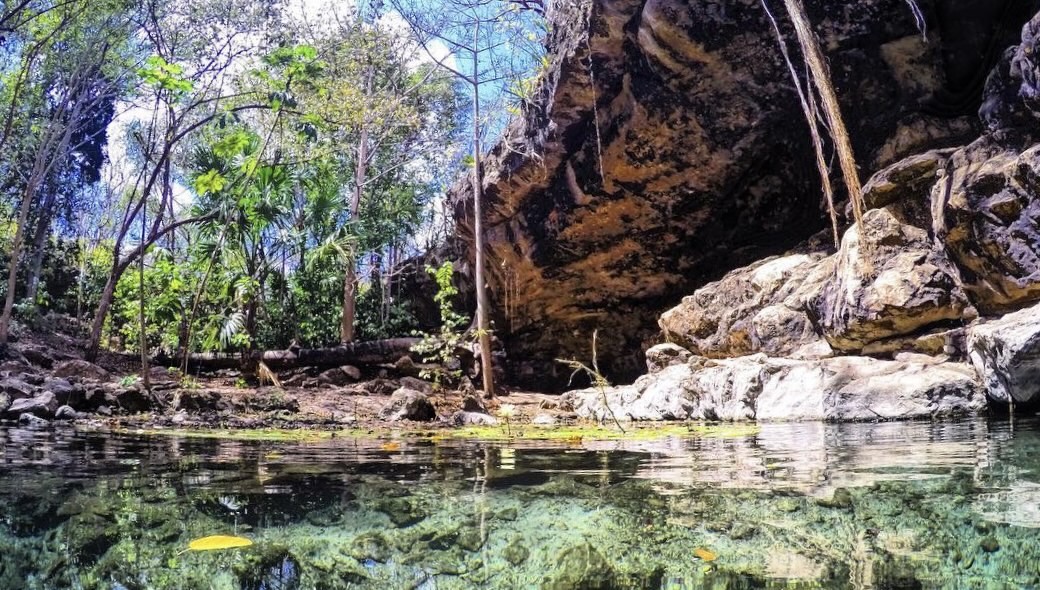
Most visitors leave Mérida by heading north toward the coast or east toward the better-known cenotes and archaeological sites. Drive south instead and the city begins to dissolve into small communities, old hacienda country and patches of low Yucatecan forest.
This is Reserva Ecológica Cuxtal, Mérida's protected green belt.
Cuxtal is not a national park with a ticket booth, marked hiking circuits and a single visitor entrance. It is a large protected landscape containing forest, roads, villages, former henequen haciendas, agricultural land and important groundwater resources.
That distinction matters when planning a visit.
You do not really arrive at "Cuxtal" and spend the day wandering wherever you like. A better approach is to choose a legitimate visitor destination inside the reserve — most notably Hacienda San Nicolás Dzoyaxché — and use the journey south to understand a quieter side of Mérida.
For travelers who have already seen the city's headline attractions, Cuxtal can make an interesting half-day.
Reserva Cuxtal at a glance
| Practical detail | What to know |
|---|---|
| Location | Southern municipality of Mérida |
| Protected area | About 11,895 hectares |
| Best visitor base | Hacienda San Nicolás Dzoyaxché |
| Time from central Mérida | Roughly 30–50 minutes depending on destination and traffic |
| Recommended time | 3–5 hours |
| Best transport | Rental car or private driver |
| Public transport | Possible, including Va y Ven service toward Dzoyaxché |
| Best time | Early morning |
| Good for families | Yes, particularly Dzoyaxché |
| Good for serious hiking | Limited |
| Swimming | Pools may be available at Dzoyaxché; do not assume cenote swimming |
| Facilities | Basic and destination-dependent |
| Cash | Bring small notes and coins |
The reserve was originally established in 1993 with 10,757 hectares. Its protected area was expanded in 2022 and the Reserva Cuxtal authority now gives its total area as 11,894.56 hectares.
More important than the number is what the land protects: low deciduous forest, wildlife habitat and part of the groundwater system on which Mérida depends.
What Reserva Cuxtal actually is
 Woodland inside the Cuxtal landscape near Dzoyaxché
Cuxtal is sometimes described as Mérida's pulmón verde, or green lung.
That is useful shorthand, but it can give visitors the wrong idea. This is not a continuous block of untouched jungle.
The reserve surrounds and incorporates communities including Xmatkuil, Tahdzibichén, San Pedro Chimay, San Ignacio Tesip, Molas, Hunxectamán, Dzoyaxché and Dzununcán. Roads, homes and former hacienda landscapes sit alongside recovering forest.
The result feels more like a protected rural district than a conventional nature park.
That mixture is part of what makes Cuxtal interesting. It shows the southern edge of Mérida as a living landscape rather than a preserved exhibit.
The reserve's own biodiversity work has recorded hundreds of plant and animal species, including mammals, birds, reptiles and amphibians. White-tailed deer, armadillos and numerous bird species are associated with the area, although ordinary visitors should not expect guaranteed wildlife sightings.
Early morning gives you the best chance of seeing birds and other activity.
Why Cuxtal matters to Mérida
Cuxtal is worth knowing about even if you never visit it.
The reserve helps protect vegetation and soils above Mérida's aquifer. In a limestone landscape where rainwater moves quickly underground, protecting the land above the water table is particularly important.
The forest also provides habitat, moderates local heat, stores carbon and gives the expanding city a substantial protected area along its southern side.
In other words, Cuxtal is not protected principally because tourists want somewhere to hike.
Its first job is conservation.
Tourism needs to fit around that.
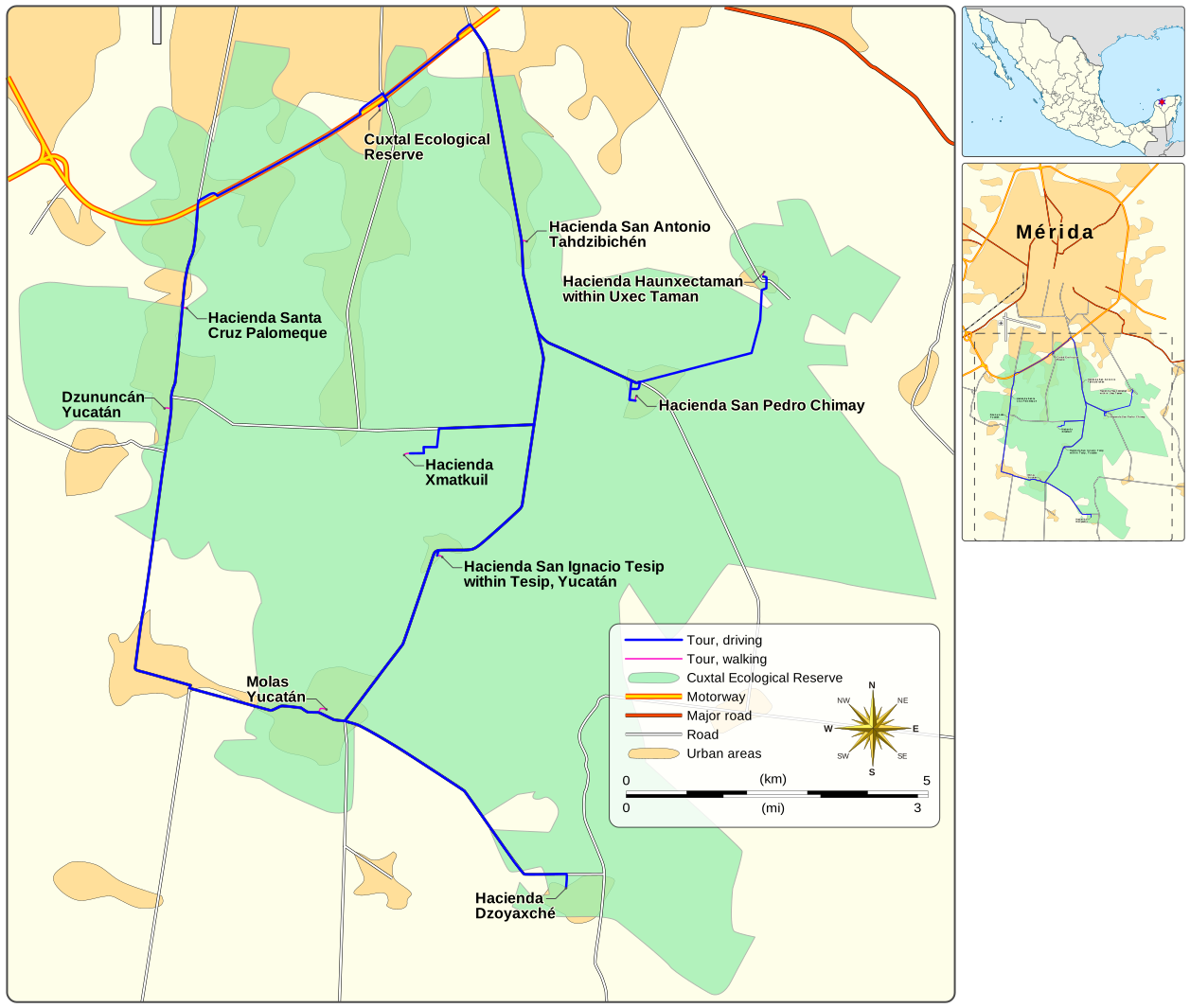 Map of the Cuxtal Ecological Reserve south of Mérida
Map via Wikimedia Commons, CC BY-SA 4.0.
The easiest place to visit: Hacienda Dzoyaxché
For an independent traveler, Hacienda San Nicolás Dzoyaxché is the most useful focal point.
The old hacienda sits deep in the southern part of the reserve, about 32 kilometres from Mérida. The journey takes you through the changing landscape of southern Mérida before reaching the small community of Dzoyaxché.
 Historic Hacienda Dzoyaxché inside Reserva Cuxtal
The site combines several different layers of Yucatán in one place:
- an old hacienda complex
- mature trees and recovering forest
- remnants of the property's former infrastructure
- picnic areas
- simple recreational facilities
- environmental education
- a cenote
- pools or splash areas used for swimming when operating
Do not arrive expecting a restored boutique hacienda.
The appeal is precisely that Dzoyaxché still feels municipal, local and slightly rough around the edges.
It works particularly well for families looking for an inexpensive outing or travelers interested in seeing a part of Mérida that is very different from Paseo de Montejo and Centro.
Current opening information for Dzoyaxché
The City of Mérida's visitor information currently lists access to Hacienda Dzoyaxché:
Tuesday to Sunday: 8:00 a.m. to 4:00 p.m.
The facilities are listed as closing at 5:00 p.m.
The same municipal information lists very small recovery fees for some facilities, including the pool and splash area.
These prices have historically been intentionally low rather than commercial tourist-attraction prices.
Treat them as indicative rather than guaranteed. Cuxtal is a municipal conservation area and operating arrangements can change.
Before making a special journey, check the official Reserva Cuxtal website or its current social channels.
What about the cenote?
Dzoyaxché has a cenote, but this is not a substitute for a dedicated cenote day in Homún, Cuzamá or elsewhere in Yucatán.
Access conditions can vary and visitors should not assume that the cenote itself is available for swimming.
The pools at the hacienda have traditionally been the easier place to cool off.
If your main goal is to spend several hours swimming in clear cenote water, Cuxtal is not the best choice.
Come here for the combination of landscape, local history and nature instead.
The old hacienda landscape
 Ruins being reclaimed by forest at Dzoyaxché
One of the more interesting things about Cuxtal is the relationship between the old haciendas and the forest growing around them.
Much of this southern territory was once heavily shaped by henequen production.
As agricultural activity declined, vegetation returned to former fields and industrial areas. Trees now grow around old walls, tracks and abandoned structures.
That makes Cuxtal particularly interesting for travelers who enjoy Yucatán's hacienda history but are less interested in polished hotel conversions.
Some historic properties elsewhere inside the reserve are privately owned or have restricted access.
Do not assume that an old hacienda marked on a map is open to visitors. Stay on public roads and use established visitor sites unless you have arranged permission.
Casa Cuxtal in Molas
Another important part of the reserve is Casa Cuxtal, the environmental education centre in the community of Molas.
It opened in 2022 and is used for environmental education, workshops and community activities.
This is not necessarily a walk-in tourist attraction with activities running continuously throughout the day.
Check the reserve's programme before travelling specifically for it.
For travelers interested in conservation, schools, community projects or environmental education, however, it helps show that Cuxtal is much more than a patch of woodland around Mérida.
Wildlife in Reserva Cuxtal
The reserve authority currently reports:
- 349 vertebrate species
- 450 invertebrate species
- 392 plant species
The exact wildlife you encounter will depend heavily on season, temperature, rainfall and time of day.
Birds are the easiest animals for ordinary visitors to notice.
Larger mammals are present but generally avoid busy roads and people. Do not plan a casual visit expecting to photograph deer at close range.
If wildlife is your priority:
- arrive early
- move quietly
- avoid loud music
- bring binoculars
- use insect repellent
- stay on established paths
- do not feed animals
The forest here is selva baja caducifolia, a low deciduous tropical forest. Its appearance changes dramatically through the year.
When to visit
November to February
This is probably the easiest period for exploring Cuxtal.
Mornings are cooler, humidity is generally more manageable and walking is more comfortable.
Go early and you can spend several hours outside before Mérida warms up.
March to May
This is the hottest and driest part of the year.
Much of the deciduous forest loses its leaves and the landscape can look surprisingly dry.
There is still value in visiting, particularly for the hacienda history, but avoid planning long walks in the middle of the day.
June to October
The rains bring the forest back to life.
Cuxtal becomes greener, but expect more mosquitoes, muddy patches and the possibility of afternoon storms.
A morning visit is still the safer plan.
How to get to Reserva Cuxtal
There is no single correct route because Cuxtal covers such a large area.
For most visitors, the useful question is how to reach Hacienda Dzoyaxché.
Rental car
A rental car gives you the most flexibility.
From central Mérida, allow roughly 45 minutes for Dzoyaxché, although traffic in the city can change this considerably.
Routes generally take you south through the Xmatkuil or Calle 42 side of Mérida before continuing through the reserve communities.
Download your map before leaving the city.
Mobile coverage is normally sufficient around populated areas, but it is better not to depend entirely on it.
Private driver
A private driver is the easiest option if you do not want to navigate the southern roads yourself.
It also gives you more flexibility if you want someone to wait while you explore rather than relying on a return ride.
Cuxtal is close enough to Mérida that a half-day private arrangement can make more sense than hiring a driver for a full touring day.
Uber or other ride-hailing apps
Getting a ride out of Mérida may be possible.
The bigger question is the return.
Availability is much less predictable once you are outside the main urban area, so we would not build the day around finding an on-demand car in Dzoyaxché.
Arrange the return in advance if possible.
Visiting Cuxtal by public transport
Public transport became considerably more useful for Dzoyaxché in 2026.
Va y Ven expanded service to communities south of Mérida and introduced the R801 Mérida–Dzoyaxché service.
That makes a car-free visit much more realistic than it once was.
Use the official Agencia de Transporte de Yucatán route information or the Va y Ven app before leaving, because departure patterns and stopping arrangements can change.
Public transport works if:
- you are comfortable navigating Mérida's bus system
- you are not in a hurry
- you only want to visit one main location
- you are happy to adapt to local schedules
A rental car or driver is still easier if you want to explore more than one part of the reserve.
A simple half-day plan from Mérida
Cuxtal does not need to become a complicated excursion.
A sensible morning might look like this:
7:30 a.m. — Leave central Mérida
Traffic is lighter and temperatures are still reasonable.
8:15–8:30 a.m. — Arrive in Dzoyaxché
Walk through the hacienda grounds and get a feel for the old estate before the day becomes hot.
9:30 a.m. — Explore the recreational and nature areas
If the pools are operating, this is a good time for families to use them.
11:00 a.m. — Picnic or rest in the shade
Bring water and something simple to eat rather than assuming there will be a full tourist restaurant.
12:00 p.m. — Begin the return to Mérida
You can be back in the city for lunch while avoiding the worst of the afternoon heat.
This is enough time for most visitors.
Cuxtal is more rewarding when treated as a slow half-day than when stretched into a checklist of places.
What to bring
Pack more like you are visiting the countryside than a city attraction.
Bring:
- plenty of drinking water
- sun protection
- insect repellent
- closed shoes or sturdy sandals
- small cash
- a hat
- a light towel if you expect to use the pools
- binoculars if you enjoy birds
- snacks or picnic food
During rainy months, footwear you do not mind getting muddy is useful.
Families with children
Dzoyaxché is one of the easier ways for families to experience Cuxtal.
The combination of open space, shade, simple pools and environmental education gives children more to do than they would have on an unstructured forest visit.
Still, remember that this is not a manicured urban park.
Watch children around water, uneven ground and old structures.
Bring your own drinking water and basic supplies rather than relying on everything being available when you arrive.
Visiting during Feria Xmatkuil
Xmatkuil sits inside the wider Cuxtal area and becomes one of the busiest places south of Mérida during the annual Feria Yucatán Xmatkuil.
That changes the character of the area considerably.
If you are visiting during the fair season, particularly in November, expect more traffic on southern approaches to Mérida.
You can combine Cuxtal and the fair if both genuinely interest you, but do not expect the quiet reserve experience and peak Xmatkuil crowds to fit naturally into the same outing.
On busy fair days, keeping them separate can make the day easier.
What not to expect
Cuxtal tends to work best when expectations are realistic.
Do not expect a formal national park
There is no grand entrance followed by kilometres of groomed hiking trails.
Do not expect unrestricted access
Much of the reserve contains communities, working land and private property.
Protected does not mean publicly accessible.
Do not expect a premium hacienda experience
Dzoyaxché is rustic and municipal rather than polished.
Do not expect a classic cenote excursion
If swimming in spectacular cenotes is the purpose of the day, go somewhere designed around that experience.
Do not expect constant wildlife sightings
Cuxtal protects wildlife habitat. That does not turn wild animals into an attraction schedule.
Is Reserva Cuxtal worth visiting?
For a first trip to Yucatán with only three or four days, probably not.
Uxmal, the region's major cenotes, Mérida Centro and the coast will usually deserve priority.
Cuxtal becomes more interesting once you have additional time.
It is particularly worthwhile for:
- repeat visitors to Mérida
- families wanting an inexpensive local outing
- birders and nature-curious travelers
- people interested in hacienda history
- long-stay visitors
- travelers looking beyond the conventional Mérida day-trip circuit
- anyone curious about how the city interacts with its surrounding environment
The reserve is close to Mérida geographically but feels surprisingly removed from the version of the city most visitors see.
That is its strength.
Visit responsibly
Cuxtal is a conservation area first.
Keep your visit simple.
Stay on established roads and paths. Do not enter private haciendas, caves, cenotes or woodland simply because they appear on a map. Take rubbish back with you. Avoid loud music and do not disturb wildlife.
If you want to fly a drone, arrange permission rather than assuming it is acceptable inside a protected area.
The communities inside Cuxtal are also people's homes.
Treat them as communities, not scenery.
Planning help
Cuxtal is the sort of place where a little local planning makes a disproportionate difference.
For a quick question about whether it fits your Mérida itinerary, the Yucatán Guide WhatsApp assistant can help you work through timing and transport.
If you would rather have a person check current access, transport and how Cuxtal fits around the rest of your trip, Human Trip Support is better suited to that.
For families or groups wanting a vehicle to wait and bring them back to Mérida, a private driver is usually the simplest arrangement.
Before you go
Because Cuxtal is a working conservation area rather than a conventional commercial attraction, practical details can change.
Check the Reserva Cuxtal official website shortly before travelling, particularly if you are going specifically for the facilities at Hacienda Dzoyaxché.
For public transport, check the latest Va y Ven information through the Agencia de Transporte de Yucatán.
Then go early.
Cuxtal is at its best before the heat builds, when the roads are quiet and Mérida's southern edge still feels a long way from the city.