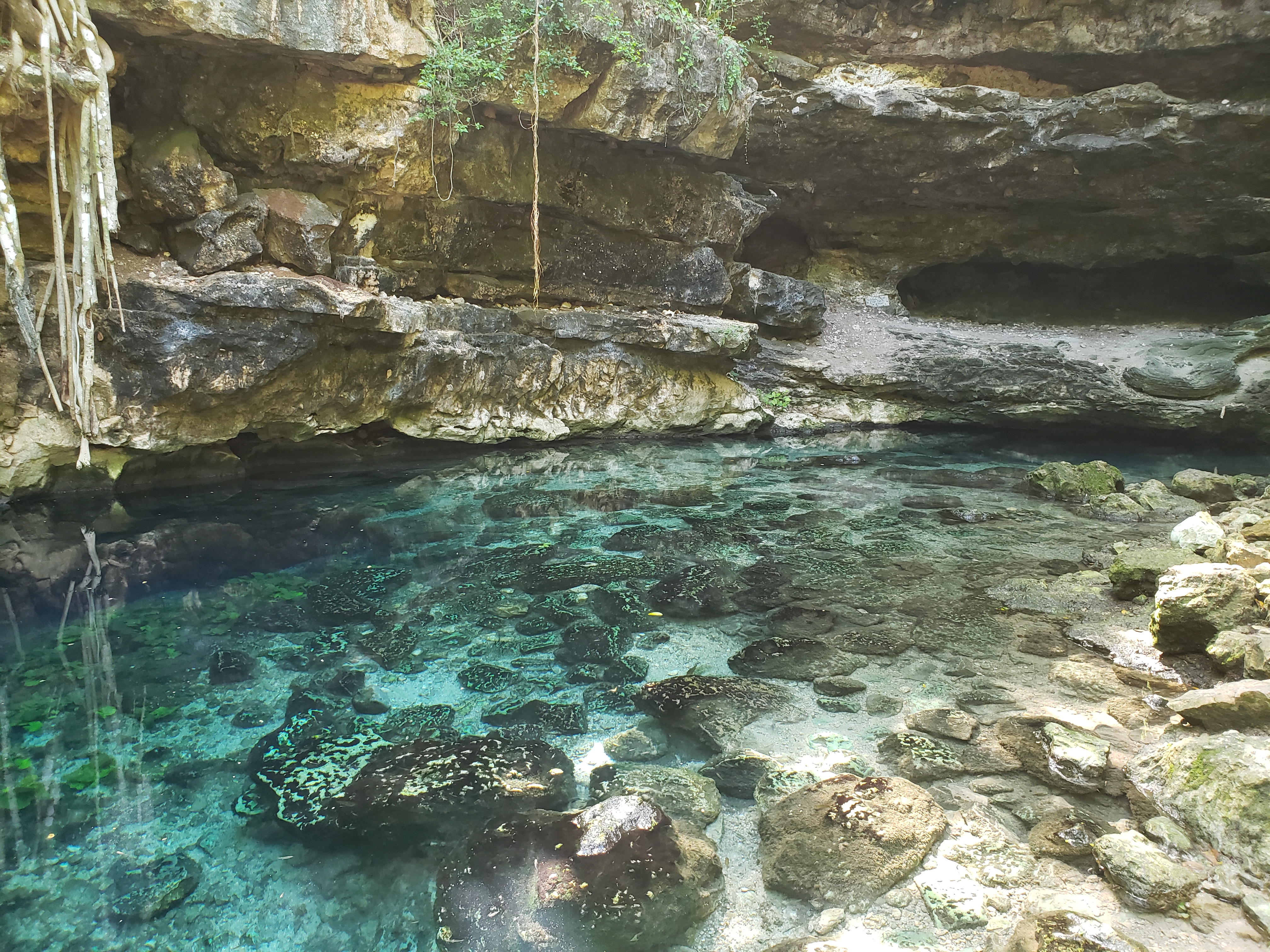
Cuzamá is already one of the more distinctive day trips from Mérida. In September, there is another reason to go.
The town's traditional celebrations in honour of the Virgen de la Natividad bring the plaza to life with a vaquería, music, community traditions, fair activity and a programme that extends across several days.
For a traveler, the useful part is geography: you can visit the Cuzamá cenotes during the cooler part of the day, change into dry clothes and return to town for the fiesta later.
That makes Cuzamá one of the easiest traditional September celebrations to combine with an established Yucatán day trip rather than requiring a separate journey solely for the event.
For 2026, the strongest date for visitors is likely Friday, September 4, when the formal fair programme begins and the traditional vaquería is scheduled for the evening.
If you are more interested in the religious side of the celebration, September 8 — the Feast of the Nativity of the Virgin Mary — is the date to watch, although religious times should be confirmed locally before making a special journey.
 Church in Cuzamá, Yucatán
Church in Cuzamá. Image: Donna Yates via Wikimedia Commons, CC BY-SA 4.0.
Cuzamá Fiesta 2026 dates
There are several date ranges circulating for the 2026 celebrations, largely because the religious observances and the public fair programme do not fit neatly into the same calendar.
The most detailed 2026 fair programme published immediately before the event lists festivities from September 4–8 and again September 13–14.
Other Yucatán event calendars describe the broader Virgen de la Natividad festivities as running approximately September 2–13.
Historically, the Government of Yucatán lists Cuzamá's annual traditional celebration in honour of the Nativity of the Virgin Mary as taking place around September 1–8.
For visitors, the practical dates are:
| Date | What is currently announced | Good for visitors? |
|---|---|---|
| Friday, September 4 | Opening traditions, siembra del ceibo, baxal toro, vaquería and coronations | Yes — strongest cultural night |
| Saturday, September 5 | Fair activity, first corrida and large popular dance | Yes, but expect larger crowds |
| Sunday, September 6 | Second corrida and evening disco/band programme | Good for nightlife |
| Monday, September 7 | Continuing traditional fair programme | Confirm details locally |
| Tuesday, September 8 | Feast of the Nativity of the Virgin Mary; fair period continues | Important patronal date |
| Sunday, September 13 | Later fiesta programme, including traditional arena activities | Confirm programme |
| Monday, September 14 | Final scheduled fair activities | Confirm programme |
2026 planning note: Smaller municipal fiestas can change timings, performers and individual activities at short notice. If one particular event matters to you, check the Ayuntamiento or Feria Tradicional de Cuzamá's latest posts before leaving Mérida.
Friday, September 4: the best day to combine cenotes and fiesta
The formal public programme begins on Friday, September 4 at 11 AM with the traditional siembra del ceibo in the centre of the plaza, followed by the baxal toro.
The evening is particularly interesting for travelers because Cuzamá holds its traditional vaquería.
The 2026 programme names three orchestras for the night:
- Orquesta Evolución de los Hermanos Collí
- Orquesta de Miguel Collí
- La Cuzamaeña
The evening also includes the coronation of Juana Guadalupe Garrido Cetzal as municipal ambassador and Aylin Nicole Couoh Canché as children's sovereign.
Unless you specifically want to see the morning opening traditions, there is no need to spend the whole day in the plaza.
A better visitor plan is to spend the morning around the cenotes and return to Cuzamá later.
 Jarana dancers at a traditional Yucatán celebration
Traditional vaquería in Yucatán. Image: Efraín Ziv García Mora Morales via Wikimedia Commons.
What is a vaquería?
If you have never attended a Yucatecan town fiesta, the vaquería is the part of the programme we would prioritise.
It is closely associated with jarana, regional dress and the traditional fiestas of Yucatán's towns and former hacienda communities.
This is different from watching a staged folkloric performance in a hotel or theatre.
A town vaquería remains part of the celebration itself. Families, musicians, dancers and local organisations are participating because it is their fiesta, not because a bus of tourists has arrived.
That distinction is what makes Cuzamá interesting.
Visitors are welcome, but behave as visitors.
Give dancers room, avoid standing directly in front of local families to take photographs and do not turn religious elements of the celebration into a backdrop for a photo shoot.
A good Cuzamá cenotes + fiesta itinerary
The mistake would be trying to squeeze every possible attraction into the same day.
Cuzamá's cenote circuit already takes time. Add September heat, wet clothes, a substantial lunch and several hours at an evening fiesta and the day becomes long.
A comfortable plan looks something like this:
7:30–8:00 AM — Leave Mérida
Drive southeast toward Cuzamá. Allow roughly an hour under normal conditions.
8:30–9:00 AM — Reach the cenote area
The classic Cuzamá experience is associated with the old henequen railway around Chunkanán, south of the town.
Do not assume every roadside cenote operator offers exactly the same route. Confirm the cenotes included and the complete price before boarding.
9:00 AM–1:00 PM — Cenote circuit
Allow several hours rather than treating this as a quick swim.
1:00–2:30 PM — Lunch and change
Eat before the evening gets busy. Bring a completely dry set of clothes rather than trying to spend the fiesta in the same clothes you wore underground.
2:30–5:00 PM — Keep the afternoon light
September is humid and this is the part of the day when thunderstorms become more likely.
Do not add another major excursion simply because there is an empty space on the itinerary.
Late afternoon — Return to Cuzamá town
Road access and parking can become more complicated as the fiesta fills the centre. Arriving before the main evening crowd gives you time to walk around and understand where activities are taking place.
Evening — Fiesta and vaquería
Eat from the stalls, watch the plaza change as families arrive and stay for the parts of the programme that interest you.
If you are returning to Mérida afterward, having your own vehicle or a pre-arranged driver makes the evening much easier.
The classic Cuzamá cenote experience
 Cuzama Yucatan Mayo 2014 Tranvia 2
Cuzamá's signature cenote experience is not simply the water.
It is the journey there.
Sections of the old narrow-gauge railway once associated with Yucatán's henequen industry are still used to carry visitors into the countryside. Simple carts run along the rails, traditionally pulled by horses.
The classic circuit is associated with three cenotes:
- Chelentún
- Chansinic'Ché
- Bolón-Chohol, also written Bolonchoojol or similar variations
Operators and routes can vary, so do not choose a roadside boarding point solely because a sign says cenotes de Cuzamá.
Ask which cenotes you are actually visiting.
Our full Cuzamá cenotes guide explains the different caves, rail-cart experience, access conditions and questions worth asking before paying.
 Cuzamá cenotes
Cave cenote in Cuzamá. Image: vokeron7 via Wikimedia Commons, CC BY 2.0.
Chelentún
Chelentún is generally the most straightforward introduction to the traditional circuit.
The Government of Yucatán describes it as a semi-enclosed cave cenote with a concrete stairway and platform leading toward its blue water.
That relatively manageable access does not make it a shallow swimming pool.
Treat all of Cuzamá's underground cenotes as deep-water environments and use a life jacket when required or when you are not completely comfortable swimming in deep natural water.
Chansinic'Ché
Chansinic'Ché provides another variation on the underground landscape, with light entering the limestone chamber from above.
Conditions inside cenotes depend heavily on the sun, clouds and season.
Do not build the visit around reproducing a particular photograph you saw online. The way light enters a cavern at 11 AM one month can be very different several weeks later.
Bolón-Chohol
Bolón-Chohol is normally the most adventurous of the traditional three.
Access can feel considerably steeper and more enclosed than at easier developed cenotes.
Look at the descent before committing.
This is particularly important for visitors with limited mobility, a strong fear of heights, very young children or anyone who simply does not feel secure on wet stairs or ladders.
There is nothing wrong with skipping a cenote.
 Decauville rail transport used to reach the Cuzamá cenotes in Yucatán
Decauville-style transport toward the Cuzamá cenotes. Image: Yodigo via Wikimedia Commons, CC BY-SA 3.0.
What happens during the rest of the 2026 fiesta?
The weekend after the September 4 opening becomes more centred on fair entertainment and the traditional arena.
On Saturday, September 5, the published programme includes the first corrida followed by a large popular dance. Performers announced for the evening include Par-Chiss, Luis Euan y su Tropiklísimo, Explosiva Banda R15, Kermith, Corona Verde and Sonora Dinamita, among others.
On Sunday, September 6, a second corrida is scheduled, followed by an evening programme with Explosiva Banda R15, Necesito Party and El Rey del Sun Kermith.
The overall programme continues through September 8, with further activities returning September 13 and 14. Published information also mentions a duelo de ganaderías and jaripeo as part of the wider programme.
Individual timings for all of those later activities were not yet consistently published when this guide was updated.
If you are mainly coming for music, food and local atmosphere, you do not need to attend the taurine events.
A note about the taurine programme
Traditional bull-related activities remain part of many municipal fiestas in Yucatán and feature prominently in Cuzamá's 2026 programme.
Visitors will have different views on them.
Cuzamá's municipal authorities have said that the 2026 events will be supervised under animal-welfare and safety measures intended to prevent unnecessary mistreatment.
If you do not want to watch a corrida or jaripeo, it is easy to structure your visit around the vaquería, church, plaza, music, food and other evening activity instead.
Check what is happening in the central area before bringing small children close to the arena or large crowds.
September 8 and the Virgen de la Natividad
The reason for the fiesta is not the fairground.
It is the Virgen de la Natividad.
September 8 is the Catholic feast of the Nativity of the Blessed Virgin Mary, and Cuzamá's traditional September celebration is held in her honour.
The Government of Yucatán has long recorded the town's annual patronal celebration around the beginning of September, traditionally from approximately September 1 to 8.
For travelers interested in Catholic traditions, gremios and the religious life behind Yucatán's fiestas, September 8 may be more meaningful than the bigger weekend dances.
However, do not assume a procession, Mass or gremio event begins at a particular time without checking.
Religious schedules and public-fair schedules are often published separately.
If entering the church during the fiesta, dress reasonably, keep voices low and avoid photographing people receiving Communion or praying at close range.
 Church in the centre of Cuzamá
Cuzamá's church. Image: Inri via Wikimedia Commons, CC0.
Getting to Cuzamá from Mérida
Cuzamá sits southeast of Mérida.
Allow approximately one hour by car, depending on your starting point in Mérida, traffic and the particular cenote boarding point you are using.
The town and the classic cenote departure area are not necessarily the same place.
If you are visiting the traditional circuit around Chunkanán, expect to continue beyond Cuzamá town before beginning the cenote experience.
For an ordinary morning cenote trip, public transport can be possible.
For a cenotes + evening fiesta day, it becomes much less attractive.
The problem is not reaching Cuzamá. It is depending on rural transport after the fiesta at night.
For September celebrations, we would choose:
- Rental car — simplest if you are comfortable driving after dark.
- Private driver — easiest if you want to stay late or have drinks with dinner.
- Organised transport or tour — useful if it specifically allows enough time at the fiesta.
- Public transport — workable only after confirming the return journey.
Do not assume a daytime colectivo schedule will still be useful when you leave the fiesta.
Parking during the fiesta
Do not expect to drive directly to the main plaza, park beside it and leave whenever you want.
Temporary closures, fair structures, crowds and local traffic can change access around the centre.
If central streets are busy, park a few blocks away and walk.
Avoid blocking driveways or treating the edge of somebody's house as festival parking simply because other vehicles are doing it.
Having your car slightly outside the busiest streets often makes departure easier anyway.
September weather matters
September is still firmly within Yucatán's rainy season.
Expect:
- high humidity
- intense heat during exposed parts of the day
- the possibility of afternoon or evening thunderstorms
- muddy ground around rural cenote access
- slippery cenote steps
- sudden heavy rain followed by sunshine
Go early for the cenotes.
The rail-cart journey is substantially more comfortable before the strongest heat of the day.
A waterproof bag for phones, documents and dry clothes is useful even if the forecast looks reasonable in the morning.
The fiesta itself may continue through ordinary rain, but lightning and severe weather are different matters.
What to bring for a cenote + fiesta day
This combination needs slightly more preparation than a normal cenote outing.
Bring:
- swimsuit
- towel
- completely dry underwear and clothes
- footwear with grip for the cenotes
- comfortable shoes or sandals for walking around town
- drinking water
- insect repellent
- waterproof pouch or dry bag
- power bank
- small umbrella or light rain layer
- cash in smaller denominations
Carry more pesos than you think you will need.
Cenote operators, small food stalls and temporary fair vendors should not be assumed to accept cards.
Do not rely on finding an ATM at the exact moment you need one.
Cenote etiquette before the fiesta
Cuzamá's water forms part of Yucatán's underground aquifer.
Follow local rules on showering and the use of sunscreen, oils and insect repellent before swimming.
If an operator asks you not to enter wearing sunscreen, respect it.
Life jackets are also not merely for weak swimmers. Cave cenotes can be deep, dark and disorientating, particularly after you have been swimming for a while.
The fiesta will still be there if you spend ten minutes less in the water.
Is this good for families?
It depends on the children.
Families comfortable with rustic cenote access can have a very good day in Cuzamá, but several parts of the experience require closer supervision than at a developed resort-style cenote.
Consider:
- steep cenote entrances
- deep water
- jolting rail carts
- heat between stops
- a long day if you remain for the evening
- loud music
- fireworks or voladores
- crowded streets
- bull-related events within the wider fiesta programme
With younger children, choose either a substantial cenote morning and a short early-evening visit to the fiesta, or the fiesta alone.
Trying to stay until late after several hours underground is likely to produce a tired family rather than a better experience.
Is the fiesta worth visiting without the cenotes?
Yes, if you are specifically interested in traditional Yucatecan culture.
Cuzamá is not a festival created primarily for tourists.
That is part of its value.
You are visiting a town celebrating its own religious and cultural calendar, with a mixture of devotion, music, dance, food, family gatherings and fair traditions.
But if you have only two or three days in Yucatán and still have major destinations you want to see, it is difficult to justify a special journey solely for a few hours at the fiesta.
The cenotes change that calculation.
They give the day a strong daytime experience and make the celebration a natural second half rather than the sole reason for travelling from Mérida.
Should you combine anything else with the day?
Probably not.
A full Cuzamá cenote circuit followed by the Virgen de la Natividad celebrations is already enough.
Adding another major cenote destination, archaeological site and distant town usually turns a good day into several rushed stops.
If you want one minor addition, make it lunch or a short roadside break rather than another attraction requiring tickets and fixed opening hours.
The fiesta rewards arriving with some energy left.
The best 2026 choices
If you have flexibility, choose the date according to what you actually want to experience.
Choose Friday, September 4 if you want the strongest combination of cenotes and traditional culture. Visit the cenotes in the morning and return for the vaquería.
Choose Saturday, September 5 if you prefer a larger fair atmosphere and popular dance. Expect more people and a programme that includes bullfighting.
Choose Sunday, September 6 for another busy fair day with substantial evening music.
Watch Tuesday, September 8 if the Virgen de la Natividad and religious meaning of the celebration interest you most. Confirm the church programme locally.
Choose September 13 or 14 only after checking the final programme, particularly if you are travelling specifically for one activity.
Is Cuzamá Fiesta worth the trip?
For the right traveler, yes.
The reason is not that Cuzamá has the biggest September fiesta in Yucatán.
It is that the town gives you an unusually sensible combination.
In the morning, old henequen rails carry you toward underground water. By evening, you can be back above ground in a small Yucatecan town as the plaza fills for a celebration that has little to do with conventional tourism.
Those two parts belong to the same place.
That makes the day feel coherent rather than assembled from unrelated attractions.
Read our complete Cuzamá cenotes guide before choosing an operator, and see what else is happening across Yucatán in September if your dates do not line up with Cuzamá.
For the easiest version of the day, leave Mérida early, do only the Cuzamá cenotes, carry dry clothes and cash, return to town before the evening crowd and arrange your transport home before the fiesta begins.
That is enough.