

Ticul is a working town in southern Yucatán, known locally as La Perla del Sur — the Pearl of the South. For travelers, its strongest reasons to visit are simple: handmade shoes, red-clay pottery, a calm town center, easy local food, and a useful position between Mérida, Uxmal, Maní, Oxkutzcab, and Tekax.
Ticul is worth visiting if you like craft towns, practical shopping, small plazas, market-style meals, and inland routes that feel more local than polished. It is not mandatory for every first-time Yucatán trip. Skip it if you only have one day and still have not seen Mérida, Uxmal, Chichén Itzá, or the coast.
For most visitors, Ticul works best as a half-day stop or as part of a fuller southern Yucatán day. Two to four hours is enough for the town center, shoe shopping, pottery browsing, and lunch. A full day makes sense if you combine it with Uxmal, Maní, Loltún, Oxkutzcab, Tekax, or the wider Ruta Puuc.
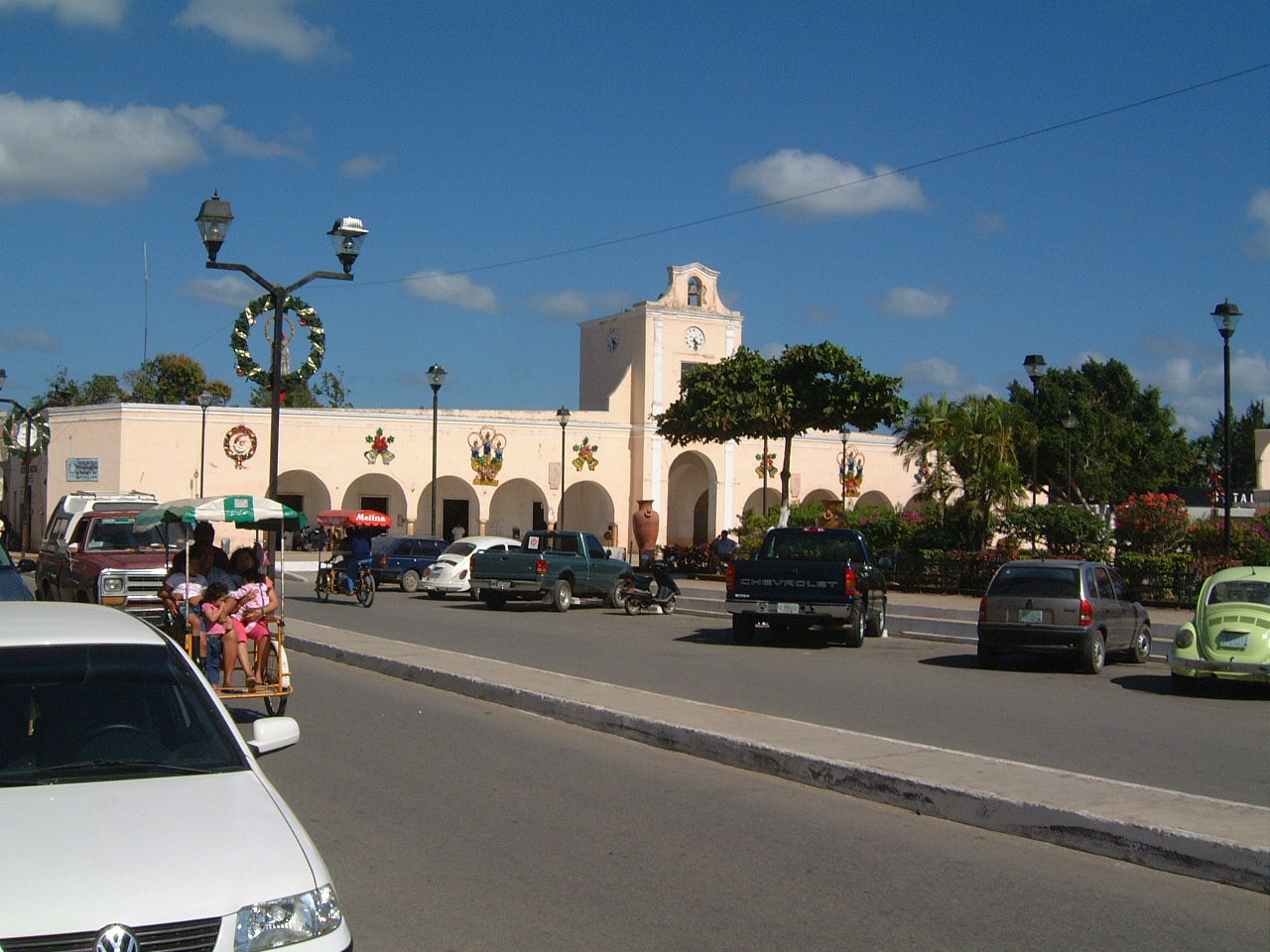 Ticul main square and city hall in southern Yucatán
Quick planning notes
| Detail | What to know |
|---|---|
| Best for | Shoes, huaraches, pottery, small-town food, craft shopping, Puuc-region routing |
| Not ideal for | Travelers short on time, beach-focused trips, or anyone expecting a polished tourist town |
| Time needed | 2–4 hours for Ticul only; full day when combined with nearby towns or ruins |
| From Mérida by car | Roughly 1.5–2 hours, depending on your starting point and route |
| Best transport | Rental car or private driver for a flexible multi-stop day |
| Public transport | Possible by bus or colectivo-style connections, but less flexible |
| Bring | Cash, water, sun protection, shoe measurements, and packing material for pottery |
| Best time | Morning, before the heat builds and before small shops pause or close |
Is Ticul worth visiting?
Ticul is worth visiting if the idea of buying directly in a craft town appeals to you.
The town is known for two everyday trades: footwear and pottery. You can browse shoe shops, look for huaraches and leather sandals, compare dress shoes or boots, then visit pottery sellers for barro rojo pieces, garden figures, decorative vessels, and household items.
This is not a staged artisan village. Some shops feel retail-focused, others feel closer to workshops, and opening hours can be flexible. That is part of the reality. Ticul is useful when you approach it as a working town, not as a curated attraction.
The town also has a practical location. It sits south of Mérida and close enough to Uxmal, Maní, Oxkutzcab, Tekax, and the Puuc hills to make it a natural stop on a southern Yucatán route.
It is less useful if you want a single headline sight. The best version of Ticul is slow: plaza, shoes, pottery, lunch, and a route that makes sense around it.
The shoe town: what to buy and how to choose well
Ticul has long been associated with footwear. Visitors usually come looking for value, selection, and local production rather than luxury branding.
You may find:
- Huaraches: woven or strapped leather sandals, usually casual and breathable
- Leather sandals: simpler daily sandals, dressier sandals, and family-friendly pairs
- Dress shoes: men’s and women’s shoes for formal occasions, weddings, or work
- Boots: casual boots, cowboy-style boots, work boots, and smarter leather boots depending on the shop
- Children’s shoes: useful if you are traveling with family or buying gifts
- Belts and small leather goods: not guaranteed everywhere, but often found near footwear shops
Do not buy the first pair you see unless it is exactly right. Browse a few shops, compare stitching and sole quality, and try shoes on slowly. Sizes can vary between makers, and Mexican sizing may not map perfectly to US or European sizing.
What to check before buying shoes
Fit: Try both shoes, not just one. Walk a little if the shop allows it. Check the toe box, heel grip, arch feel, and whether straps rub.
Sizing: Ask whether the size is Mexican, US, or European. If buying for someone else, bring foot measurements in centimeters and photos of a shoe size label they already wear.
Leather and material: Ask whether the upper is leather, synthetic, or a mix. Leather usually softens with wear, but it should not feel painfully stiff from the start.
Stitching: Look at the seams, straps, edges, and joins. Handmade does not mean machine-perfect, but stitching should look secure.
Soles: Bend the shoe gently. Look at how the sole is attached. Check grip if you plan to walk on wet stone, dusty streets, or old sidewalks.
Inside finish: Run a hand lightly inside the shoe. Rough seams or exposed glue can become uncomfortable in Yucatán heat.
Adjustments: Some shops may be able to punch extra holes, stretch a strap, or advise on fit. Do not assume same-day custom work unless they offer it clearly.
Useful Spanish questions for shoe shopping
- “¿Es piel?” — Is it leather?
- “¿Tiene media talla?” — Do you have half sizes?
- “¿Tiene otra horma?” — Do you have another last/fit?
- “¿Se puede ajustar la correa?” — Can the strap be adjusted?
- “¿La suela es cosida o pegada?” — Is the sole stitched or glued?
- “¿Aceptan tarjeta?” — Do you accept card?
- “¿Tiene cambio si no queda?” — Is exchange possible if it does not fit?
Bring cash in pesos. Some shops may take cards or transfers, but small businesses and workshop-style shops can be cash-first. If you are buying several pairs, ask politely about a package price, but avoid aggressive bargaining. These are local livelihoods, not disposable souvenirs.
Pottery in Ticul: barro rojo, decoration, and what to ask
Ticul is one of Yucatán’s better-known pottery towns. The most visible work is red clay — barro rojo — used for decorative vessels, planters, figures, lamps, replicas, and household pieces.
Pottery shopping here is not only about choosing something pretty. You need to think about use, weight, fragility, packing, and whether a piece is decorative or functional.
 Church of San Antonio de Padua in Ticul, Yucatán
Decorative pieces vs. functional pottery
Decorative pottery may include vases, masks, figures, wall pieces, garden sculptures, and Maya-inspired designs. These are best treated as display pieces unless the maker clearly says otherwise.
Functional pottery may include cups, plates, serving pieces, cooking vessels, planters, and storage jars. Ask before using anything with food, heat, water, or outdoor exposure.
A piece can look like tableware and still be intended only for decoration. Do not assume it is food-safe.
Food safety, glazing, and firing
For any pottery that will touch food or drink, ask:
- “¿Es para comida?” — Is it for food?
- “¿Se puede usar con agua?” — Can it be used with water?
- “¿Tiene esmalte?” — Is it glazed?
- “¿Se puede cocinar con esto?” — Can you cook with this?
- “¿Es solo decorativo?” — Is it only decorative?
Glazing, firing temperature, and finish matter. Some pieces are made for decoration and may not be suitable for acidic foods, hot liquids, ovens, direct flame, or frequent washing. When in doubt, use Ticul pottery as decoration rather than cookware.
Packing pottery for travel
Pottery is heavier and more fragile than it looks in the shop.
For small pieces, ask the seller to wrap them well, then add your own padding. Clothing, towels, and soft bags can help, but leave space so the item is not crushed. For larger pieces, think carefully before buying. A garden sculpture may look reasonable in Ticul and become awkward at the airport.
If you are on a road trip, keep pottery low in the car, away from luggage that can shift. If you are flying, choose compact pieces with simple shapes rather than tall, thin, or protruding forms.
Photo etiquette in pottery workshops
Ask before taking photos, especially inside workshops or when people are working. A quick “¿Puedo tomar una foto?” is enough. Some makers are happy to show their work; others may be busy, private, or cautious about designs being copied.
Buy something if you spend serious time asking questions or photographing a workshop. Even a small purchase shows respect.
The plaza and Parroquia de San Antonio de Padua
Ticul’s center is simple and useful. The main square gives you shade, benches, a meeting point, and a place to understand the town before you start shopping.
The main church is the Parroquia de San Antonio de Padua, a red-toned colonial church that anchors the town center. The pottery-themed fountain in front of the church is one of the clearest visual symbols of Ticul’s clay tradition.
This is a good short stop rather than a long museum-style visit. Walk the plaza, look at the church exterior, step inside quietly if it is open and no service is taking place, then continue into the surrounding streets.
Expect everyday movement: mototaxis, families, school traffic, people waiting in the shade, small shops, errands, and local food. Ticul feels more like a regional service town than a tourist showcase.
Food in Ticul
Ticul is a good place for simple Yucatecan eating, not a place where you need a ranked restaurant list.
Look for market-style food, loncherías, family-run places, and casual kitchens around the center. Depending on the day and hour, you may find panuchos, salbutes, tortas, tacos, poc chuc, cochinita, relleno negro, sopa de lima, fresh juices, aguas frescas, fruit, and simple set meals.
The practical approach is to eat where there is steady local movement and the food looks fresh. Lunch is usually easier than late dinner. If you have children, picky eaters, or a strict schedule, eat earlier and keep snacks in the car.
Do not plan Ticul like a Mérida restaurant day. Plan it like a southern Yucatán town day: arrive early, shop, stop for a simple meal, drink something cold, and continue your route.
Half-day Ticul plan
This is the easiest way to visit Ticul from Mérida or as a stop between Uxmal and Maní.
Morning arrival: Park near the center or arrange a drop-off close to the plaza. Start with the Parroquia de San Antonio de Padua and the main square while the heat is still manageable.
Shoes first: Visit two or three shoe shops before buying. Try sizes carefully and ask about materials, soles, and adjustments.
Pottery second: Continue to pottery shops or workshops. Focus on smaller pieces if you are flying, and ask whether items are decorative or food-safe.
Lunch: Eat something simple near the center or continue to Maní or Oxkutzcab if your route is built around lunch elsewhere.
Leave before the hottest part of the day: If you are returning to Mérida, leaving after lunch keeps the day easy. If you are continuing south or west, make sure your next stop is still open before driving.
Full-day route ideas from Mérida
Ticul is strongest when it helps connect other southern Yucatán stops. Do not try to force every option into one day. The distances look manageable on a map, but heat, shopping, meals, parking, and rural roads all add time.
Ticul plus Uxmal
This is the classic craft-and-ruins version.
Start early at Uxmal if ruins are the priority, then continue to Ticul for lunch, shoes, and pottery. If shopping is the priority, reverse it: Ticul first, Uxmal later, with the warning that Uxmal is hotter by midday and afternoon.
This route is much easier by rental car, private driver, or tour-style transport. Public transport makes the timing awkward.
Ticul plus Maní
Ticul and Maní pair well because they offer different things. Ticul is stronger for shoes and pottery. Maní is stronger for the convent, poc chuc, small-town atmosphere, and a more settled cultural stop.
A good day is Ticul in the morning, Maní for lunch and afternoon, then back to Mérida.
Ticul plus Loltún or the Ruta Puuc
Ticul can work as a southern base or lunch stop for the Ruta Puuc, especially if you are visiting Uxmal, Kabah, Sayil, Xlapak, Labná, or Loltún.
For Loltún, check current access and tour timing before you build the day around it. Cave access and schedules can change, and arriving without confirmation can waste a long drive.
Ticul plus Oxkutzcab
This is a practical market-and-craft route. Oxkutzcab is useful for fruit, local trade, and a more everyday southern Yucatán feel. Ticul adds shoes and pottery.
This is better for repeat visitors, slow travelers, photographers, and people interested in local markets. It is not the first route to choose if you only want major attractions.
Ticul plus Tekax
This is a longer southern route. Tekax works better for travelers who want caves, hills, viewpoints, and a more adventurous edge. Ticul adds the craft and shopping part of the day.
Start early, keep the itinerary loose, and avoid driving rural roads tired after dark. For a deeper southern route, read the Tekax guide before deciding whether it fits your trip.
Ticul plus Tekit
If you like craft towns, Ticul can pair with Tekit, Yucatán’s guayabera-making town. This becomes a shopping route: guayaberas in Tekit, shoes and pottery in Ticul.
It is a full day if you want to browse properly. Bring measurements, cash, and patience.
How to get to Ticul
For most travelers, a car or private driver is the best way to visit Ticul. Public transport is possible, but it is better for patient travelers with flexible plans.
For a broader overview of transport choices in the state, see our Getting Around Yucatán guide.
Driving from Mérida
From Mérida, expect roughly 1.5–2 hours by car, depending on your starting point, traffic, roadworks, and route. Many visitors route through Muna or connect Ticul with Uxmal, Maní, or Oxkutzcab.
Use a live map on the day. Roads are generally straightforward, but expect topes, town traffic, occasional slow vehicles, and limited shoulder space in rural sections.
Parking is usually manageable near the center on normal days, but local events, market activity, Sundays, and holidays can make the area busier. Do not block driveways or shop entrances.
Bus and colectivo options
Buses and shared transport can connect Mérida with Ticul and nearby southern towns, but departure points, frequency, and return timing can change. Confirm at the station close to your travel date rather than relying on old online comments.
This option works best if Ticul is your main destination and you are comfortable asking locally. It is less convenient if you want to combine Uxmal, Maní, Oxkutzcab, or Tekax in the same day.
If you go by public transport, confirm the last practical return before you start shopping. Carry cash, travel light, and leave more time than you think you need.
Mototaxis and taxis in town
Mototaxis are useful for short movements inside Ticul, especially in heat or if you are carrying purchases. Agree on the price before the ride if it is not clearly posted.
Local taxis can help with nearby transfers, but do not assume one will always be waiting exactly when you need it. If you are using Ticul as part of a larger route, a car or pre-arranged driver is calmer.
Private driver or guided route
A private driver makes sense if you are traveling with family, older relatives, pottery purchases, wedding shopping, or a multi-stop southern route. It also helps if you want to combine Ticul with Uxmal, Maní, Loltún, Oxkutzcab, Tekax, or Tekit without negotiating each leg separately.
For the next step, use the Plan hub to compare itineraries, transport and practical resources already available.
Practical tips for visiting Ticul
Bring cash: Small bills are useful for shoes, snacks, mototaxis, tips, and small pottery purchases. Cards may be accepted in some places, but do not rely on them.
Go early: Morning is cooler and usually better for shopping. By midday, walking between shops becomes less pleasant.
Expect flexible hours: Some shops may close for meals, family reasons, slow days, holidays, or Sunday schedules. If a specific workshop matters, confirm before going.
Sundays and holidays vary: The center may feel livelier, but some businesses can close or keep shorter hours. Do not make a long detour for one shop on a holiday unless you have confirmed it is open.
Watch the sidewalks: Sidewalks can be uneven, narrow, or interrupted. This matters for strollers, wheelchairs, older travelers, and anyone carrying pottery.
Accessibility is limited: The town center is fairly flat, but step-free access is not consistent. Mototaxis can reduce walking, though they are not suitable for everyone.
Family friendliness: Ticul can work with children if you keep the day short, bring water, use mototaxis when needed, and avoid too many stops. Kids may enjoy the plaza and pottery, but long shopping stretches can become tiring.
Artisan etiquette: Ask before taking photos, do not pressure makers for demonstrations, and remember that workshops are workplaces. A polite greeting and a small purchase go a long way.
Buying fragile items: Bring a tote bag, spare cloth, or bubble wrap if pottery is a main goal. Do not put ceramics loose in a backpack with water bottles or cameras.
Heat is real: Ticul is inland and can feel hotter than the coast. Wear a hat, carry water, and plan your longest walking before noon.
Final verdict
Ticul is not mandatory for every first-time Yucatán trip. If your time is short, prioritize Mérida, Uxmal, Chichén Itzá, Valladolid, a cenote route, or the coast first.
But for travelers who like working towns, handmade shoes, red-clay pottery, simple food, and practical southern routing, Ticul is a strong stop. It gives texture to the Puuc region and pairs well with Uxmal, Maní, Loltún, Oxkutzcab, Tekax, and Tekit.
Go early, bring cash, keep the route realistic, and treat Ticul as what it is: a useful, craft-heavy town in southern Yucatán rather than a polished attraction built for visitors.


