
Motul is one of Yucatán’s newer Pueblo Mágico destinations and one of the easiest small-town day trips from Mérida. It sits northeast of the city, in the old henequen country, close enough for breakfast and a walk, but layered enough to reward travelers who slow down.
Most visitors know Motul for huevos motuleños, the famous Yucatecan breakfast of eggs, tortilla, beans, tomato sauce, peas, ham, plantain, and habanero. That is a good reason to go. But Motul is also tied to some of Yucatán’s most important political history through Felipe Carrillo Puerto and Elvia Carrillo Puerto, two names that still carry weight across the state.
This is not a polished resort town. It is a working Yucatecan pueblo with markets, traffic, heat, uneven sidewalks, old buildings, a local cenote, and a strong morning rhythm. Go for breakfast, history, and a grounded look at everyday Yucatán.
 Parque and statue of Felipe Carrillo Puerto in Motul
Quick planning notes
| Detail | What to know |
|---|---|
| Best for | Breakfast, small-town wandering, local history, low-key day trips from Mérida |
| Not ideal for | Travelers wanting a full-day blockbuster attraction |
| Time needed | 2–3 hours for breakfast and the center; 5–7 hours with Cenote Sambulá or the coast |
| From Mérida by car | Usually around 35–45 minutes, depending on traffic |
| From Mérida by bus | Usually around 1 hour to 1 hour 20 minutes |
| Best time to go | Morning, especially if you want breakfast and cooler streets |
| Car needed? | Not for the town center, but helpful for Cenote Sambulá, haciendas, or the coast |
| Cash | Bring pesos, especially for market food, taxis, cenote entry, and small shops |
| Family-friendly? | Yes, but sidewalks and heat can make strollers awkward |
Is Motul worth visiting?
Motul is worth visiting if you are staying in Mérida and want a real Yucatecan town that is easy to reach, food-focused, and not too complicated.
It works especially well if you like:
- local markets
- regional food
- small plazas
- political history
- low-cost day trips
- combining a town visit with a cenote or coast stop
It is not the best option if you only have one or two days in Yucatán and still have not seen places like Mérida Centro, Uxmal, Izamal, Valladolid, or Chichén Itzá. Motul is quieter. Its value is in texture, not spectacle.
The best way to understand Motul is to treat it as a morning town. Arrive early, eat well, walk the center, visit the church or museum if open, then decide whether to continue to Cenote Sambulá, Aké, Tixkokob, Telchac Puerto, or San Crisanto.
Why Motul is a Pueblo Mágico
Motul received Pueblo Mágico status in 2023, joining Yucatán’s growing group of recognized small-town destinations. The label makes sense, but not because Motul feels like a staged tourist village.
Its strength is more local.
Motul has a long Maya and colonial history, a henequen-era backdrop, one of Yucatán’s most famous dishes, and a political legacy tied to the Carrillo Puerto family. This is a town where food, history, and daily life still sit close together.
Do not expect the same visitor infrastructure as Valladolid or Izamal. Motul is improving as a Pueblo Mágico, but it still feels practical and lived-in. That is part of the appeal.
What Motul is famous for
Motul is mainly known for three things.
First, huevos motuleños. This is the town’s signature dish and the main reason many visitors come.
Second, Felipe Carrillo Puerto, the Yucatecan governor and reformer born in Motul. His name is tied to land reform, Maya rights, education, and Yucatán’s early twentieth-century political movements.
Third, Elvia Carrillo Puerto, also from Motul, remembered as one of Mexico’s important feminist and suffrage figures.
There is also a local cenote, a central market, colonial-era religious architecture, and the surrounding henequen countryside.
Start at Mercado 20 de Noviembre
For most travelers, the best first stop is Mercado 20 de Noviembre.
This is where Motul feels most alive in the morning. You will find food stalls, local shoppers, fruit, tortillas, simple breakfast counters, and the practical pace of a Yucatecan market town.
The market is also where many visitors go looking for huevos motuleños, especially the well-known local stands associated with the dish. Go early if you want a better chance of a relaxed breakfast. Weekends can be busier.
 Mercado 20 de Noviembre in Motul
Bring cash. Do not expect every stall to take card. If you are ordering in Spanish, keep it simple: “huevos motuleños, por favor” will usually do the job.
If you are sensitive to heat, eat before the day gets heavy. By late morning, the market and surrounding streets can feel warm and busy.
Eat huevos motuleños where they belong
Huevos motuleños are one of Yucatán’s great breakfast dishes. The usual base is fried tortilla with refried black beans, topped with fried eggs, tomato sauce, peas, ham, plantain, and habanero on the side or on top.
Every place has its own version. Some are saucier. Some are sweeter from the plantain. Some are more generous with ham or peas. The dish is not light, but it is satisfying.
 Huevos motuleños served in Motul
A few tips:
- Go for breakfast, not late lunch.
- Ask for habanero separately if you do not want much heat.
- Pair it with coffee, agua fresca, or a cold drink.
- Do not rush the meal if the market is busy.
- Bring small bills.
This is the kind of food stop that works best when you keep expectations simple. You are not going for white-tablecloth service. You are going for the town’s own dish, eaten close to its source.
Walk the main plaza
After breakfast, walk to the central plaza around Parque Felipe Carrillo Puerto. This is the natural orientation point for Motul.
The plaza is not huge, but it gives you the town’s basic rhythm: benches, municipal buildings, local traffic, shade where you can find it, and people moving between errands.
 Parque Felipe Carrillo Puerto in Motul
The plaza area is best in the morning or late afternoon. Midday can be hot and flat, especially if there is little breeze.
This is also where Motul’s history becomes more visible. The town’s full name, Motul de Carrillo Puerto, honors Felipe Carrillo Puerto, and his presence is still part of the public landscape.
See the Palacio Municipal
The Palacio Municipal is one of the town center’s most recognizable buildings. It is not a long visit, but it is worth seeing while you are in the plaza area.
The building gives Motul some of its Pueblo Mágico identity: arcades, clock tower, civic scale, and a central position in daily life. It is a good place for a quick photo and a useful landmark if you are meeting a driver or navigating the center.
The streets around the palace can be busy. If you are driving, look for parking calmly and avoid blocking shopfronts, driveways, or market access.
Visit the church of San Juan Bautista
The Iglesia de San Juan Bautista is one of the main historic buildings in central Motul. Its weathered walls and heavy Yucatecan proportions feel very different from the brighter, more restored facades in some tourist towns.
 Iglesia de San Juan Bautista in Motul
Step inside if it is open, but be respectful if Mass, cleaning, or local activity is taking place. Churches in Yucatán are living spaces, not just visitor sites.
The church is a useful stop if you are interested in the older colonial towns of the region. It also helps make Motul feel less like a food-only visit.
Learn the Carrillo Puerto story
Motul’s deeper importance comes from the Carrillo Puerto family.
Felipe Carrillo Puerto was born in Motul and later became governor of Yucatán in the early 1920s. He is remembered for reforms connected to Maya rights, land, education, and social justice. His political life was brief and turbulent, and he was executed in Mérida in 1924.
Elvia Carrillo Puerto, also born in Motul, became one of Mexico’s important feminist and suffrage figures. Her work is part of a larger Yucatecan history that often gets missed by visitors moving quickly between ruins, beaches, and cenotes.
 Plaque at the house associated with Felipe Carrillo Puerto in Motul
If the museum or house connected to Felipe Carrillo Puerto is open, it is worth a stop. Opening hours can change, so do not build your whole day around it without checking locally first.
This is one of the places where Motul becomes more than a breakfast trip. The town sits inside the story of Yucatán’s henequen economy, Maya labor, socialist reform, women’s rights, and early twentieth-century political conflict.
Visit Cenote Sambulá
Cenote Sambulá is Motul’s local cenote and one of the easiest ways to add a swim to the day.
It is not usually the reason travelers go to Motul on its own, but it works well after breakfast and a walk through the center. Expect a local cenote experience rather than a polished attraction with resort-style facilities.
Go with cash, bring a towel, and wear shoes or sandals that can handle wet stone. As with many cenotes in Yucatán, stairs and surfaces may be damp, uneven, or slippery.
This stop is easier with a rental car, taxi, or private driver. If you arrive in Motul by bus, ask locally about taxi options before assuming you can move around easily.
Cenote Sambulá is a good addition for families, but only if children are confident around water and adults are ready to supervise closely.
GuideCenote Zací Guide: How to Visit Valladolid’s In-Town CenoteCenote Zací is an urban, semi‑open limestone cenote located in central Valladolid, about an 8–12‑minute walk east of the main plaza on Calle 36 between Calles 37 and 39. It is open during daylight hours, typically from around 9:00 am to 5:00 pm, though visitors should confirm the exact times on the day of travel. Admission costs MXN 150 for adults and MXN 75 for children; cash in pesos is recommended as card acceptance may vary. No car is needed if you are staying in Valladolid, and the walk from the plaza is flat though sidewalks can be uneven; from Mérida the drive takes roughly two hours, making the cenote best combined with other Valladolid attractions. A visit usually lasts between 45 minutes and two hours and includes access to the pool, the stone steps and pathways, and the on‑site restaurant area. Swimming is allowed, but the water is deep, so confident swimmers, life jackets for children, and careful supervision are advised. Bring a swimsuit, towel, sandals or water shoes with grip, and a dry bag for valuables; avoid sunscreen, oils or glass bottles in the water. Expect a busy, managed environment with slippery stone surfaces, and plan for cooler mornings or late afternoons to avoid heat and crowds. The cenote pairs well with nearby sites such as the main plaza, San Servacio Church, Mercado Municipal and Calzada de los Frailes, making it a convenient stop in a day exploring Valladolid.Open
Explore the henequen countryside
Motul sits in the old henequen zone, the region that helped shape modern Yucatán’s economy and architecture. Around the municipality and nearby towns, you will see traces of haciendas, old roads, rural chapels, and communities tied to that history.
This is not the easiest layer to explore independently unless you have a car or a driver. Many hacienda sites are private, partly restored, used for events, or only visible from the outside.
If this side of Yucatán interests you, Motul combines well with places like Aké, Tixkokob, or nearby hacienda routes. A private driver makes this much easier because you can move between small stops without depending on irregular local transport.
How to get to Motul from Mérida
Motul is one of the simpler Pueblo Mágico trips from Mérida.
By car
Driving is the easiest option. From central Mérida, the trip is usually around 35–45 minutes, depending on traffic and your starting point.
A car is useful if you want to:
- visit Cenote Sambulá
- continue to Telchac Puerto or San Crisanto
- combine Motul with Aké or Tixkokob
- avoid waiting for local taxis
- travel with children or older relatives
Roads are generally straightforward, but drive carefully through towns and watch for topes.
By bus
You can visit Motul without a car. Buses from Mérida commonly use the regional bus network, with services from the Noreste/Centro side of downtown Mérida depending on the operator and route.
The bus is a good budget option if your plan is simple: breakfast, plaza, market, church, maybe a short taxi ride.
It is less convenient if you want to add cenotes, haciendas, or the coast on the same day.
Schedules can change, so check the latest departure and return times before committing. Always confirm where the final bus back to Mérida leaves from.
By private driver
A private driver is the most comfortable option if you want Motul to be part of a bigger route.
Good combinations include:
- Motul + Cenote Sambulá + Telchac Puerto
- Motul + Aké + Tixkokob
- Motul + San Crisanto
- Motul + Izamal, if you want a longer inland Pueblo Mágico day
This is especially useful for families, groups, wedding guests, or travelers who do not want to manage local buses in the heat.
For a simple breakfast-only visit, a private driver is probably more than you need. For a custom half-day or full-day route, it can make the day smoother.
Suggested half-day itinerary from Mérida
This is the easiest way to visit Motul if you are short on time.
Morning route
8:00 am — Leave Mérida
8:45 am — Arrive in Motul and go to Mercado 20 de Noviembre
9:00 am — Eat huevos motuleños
10:00 am — Walk the plaza and see the Palacio Municipal
10:30 am — Visit Iglesia de San Juan Bautista
11:00 am — Check the museum or Carrillo Puerto sites if open
12:00 pm — Return to Mérida or continue to a nearby stop
This works well for travelers who want a low-pressure trip without turning the day into a long excursion.
Suggested full-day route with cenote or coast
If you have a car or driver, Motul can become the first stop in a larger day.
Option 1: Motul + Cenote Sambulá
Start with breakfast in Motul, walk the center, then swim at Cenote Sambulá before returning to Mérida.
This is the simplest extended route.
Option 2: Motul + Telchac Puerto
Eat breakfast in Motul, walk the center, then continue north toward Telchac Puerto for a quiet coast stop.
This works best if you want a beach-town lunch and sea air after the market. It is easier by car.
Option 3: Motul + San Crisanto
This is a stronger nature day if you want mangroves, coastal air, and a slower village feel.
Go early. Motul first, then continue to San Crisanto. Do not attempt this by local bus unless you are comfortable with slow, flexible travel.
Option 4: Motul + Aké + Tixkokob
This is a better choice for history and henequen landscape. Aké gives you archaeology and hacienda context, while Tixkokob adds hammock-making and small-town craft culture.
A private driver or rental car is recommended.
What to combine with Motul
Motul works best as part of a northeast Yucatán route.
Aké
Aké is one of the most useful combinations if you want archaeology without the crowds of the major ruins. It sits west/southwest of Motul depending on route and can be paired with Tixkokob.
Tixkokob
Tixkokob is known for hammocks and makes sense if you are interested in crafts, textiles, or a slower inland route.
GuideTixkokob, Yucatán: Hammocks, History & Practical Town GuideTixkokob is a small town in the Yucatán, about 25–40 minutes north of Mérida, known as the region’s hammock‑making capital and a convenient base for a visit to the nearby Aké archaeological zone. Entry to the town is free and the public spaces are open 24 hours; most hammock workshops and shops operate from roughly 9:00 AM to 6:00 PM, Monday to Saturday, while the municipal market is busiest in the morning and winds down by early afternoon. Bus or colectivo rides from Mérida cost about 27–40 MXN and take 25–35 minutes, the Tren Maya stops at a local paradero with a 15‑minute ride to Mérida Teya, and self‑driving via Highway 80 is also an option, with street parking available near the square. A typical visit lasts 3–5 hours for shopping, lunch and a short side trip, or a full day if the Aké ruins are added. Cash in small bills is essential; some larger stores accept cards, but ATMs are scarce. Visitors can expect to see artisans weaving cotton or nylon hammocks on simple wooden frames, browse colorful stalls for hammocks, chairs and swings, and enjoy inexpensive local foods such as panuchos, salbutes and cochinita. The plaza is relaxed, with families, bikes and mototaxis moving about; the parish church of San Bernardino de Siena offers a cool interior for a brief break. Tips: arrive between 8:30 and 10:00 AM to catch the market at its peak and avoid the midday heat; bring sun protection, a reusable water bottle, comfortable shoes and a tape measure if buying a hammock; ask permission before photographing artisans; keep an eye on personal belongings and use marked mototaxis. A short 15–25 minute ride brings you to the low‑crowd Aké site, making a combined cultural and craft day easy to plan.Open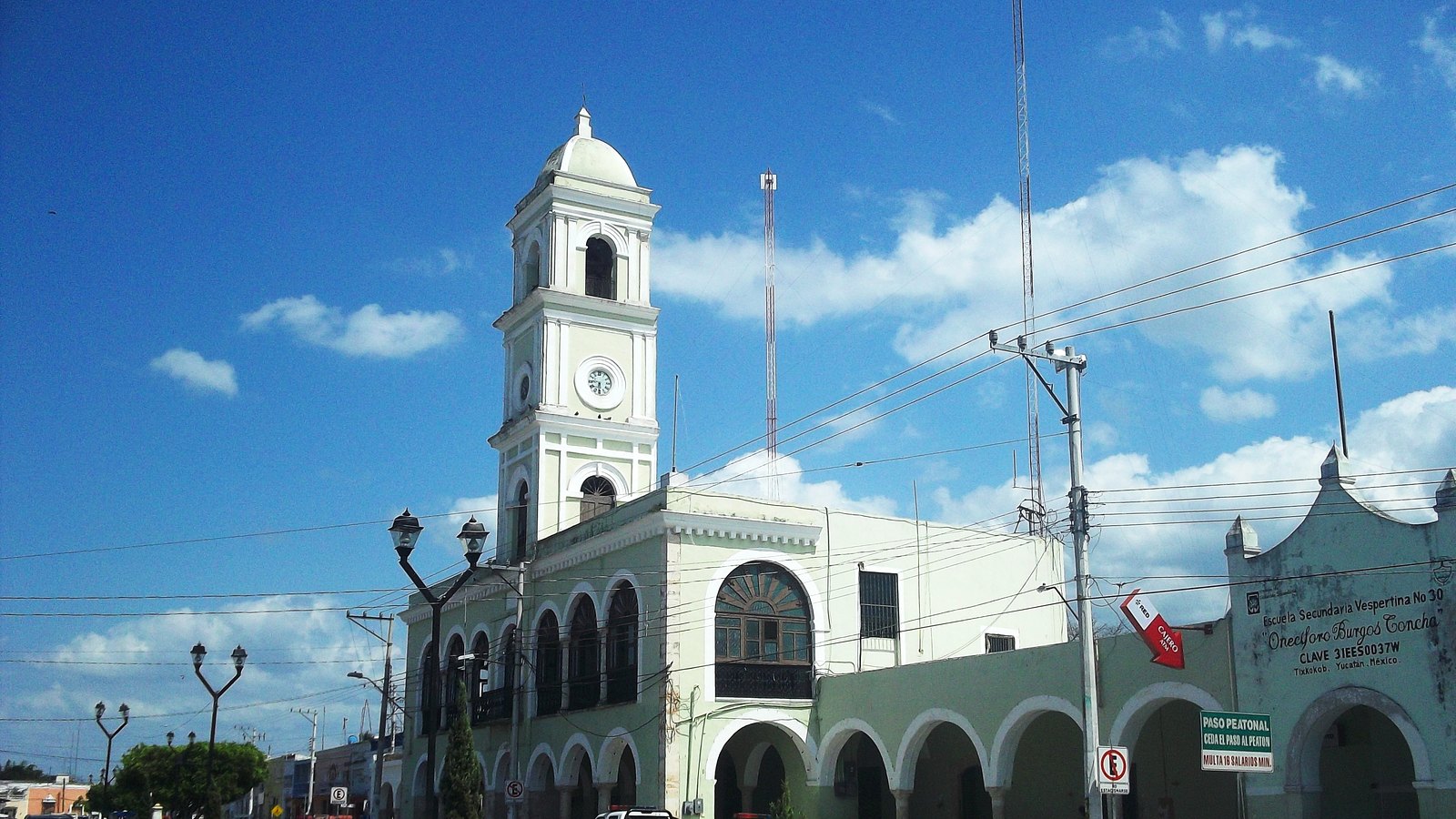
Telchac Puerto
A quiet coastal town north of Motul. Good for a simple seafood lunch, a walk near the pier, and a less crowded beach mood.
GuideXcambó: Salt-Road Temples on Yucatán’s Emerald CoastXcambó is a small coastal Maya archaeological site in the municipality of Dzemul on Yucatán’s Emerald Coast, set between mangroves and the pink salt flats of Xtampú, a few minutes inland from Telchac Puerto. The site is open typically from 8:00 AM to 5:00 PM, and entry costs about 90–100 MXN, payable in cash; a small fee may also be required for parking or salina access. It is a short drive of 1–1.5 hours from Mérida, 45–60 minutes from Progreso and 15–25 minutes from Telchac Puerto; visitors can reach it by car following the coastal road toward Telchac Puerto and then a spur inland, or by taxi from Progreso or Telchac Puerto where public transport is limited. A visit usually lasts 45–90 minutes for the ruins plus another 30–60 minutes for the nearby salinas, making a total of about one to two hours. The site includes restored low stepped pyramids, a central plaza, and an active colonial‑era chapel; the salinas provide pink‑tinged evaporation pans. Paths are flat with some steps, not wheelchair accessible, and basic restrooms are sometimes available. Bring sun protection, plenty of water, closed‑toe shoes, small cash, and a polarizing filter for photos; the best light for the temples is early morning, while the salinas are most vivid at midday. Respect the chapel’s devotion, keep hats and gear secure in the coastal wind, and obtain an INAH permit if you plan to use a drone.Open
San Crisanto
Better for travelers who want mangroves, nature, and a slower coastal community.
Izamal
Possible, but it makes the day longer. If Izamal is your main goal, go directly there. If you have already seen Izamal, Motul gives a different kind of Pueblo Mágico experience.
GuideIzamal: The Yellow City GuideIzamal is a small colonial town painted yellow, located east of Mérida in central Yucatán, about one hour to one hour 15 minutes by road from Mérida Centro and roughly 1½ hours from Valladolid. It is most often visited as a half‑day or full‑day day trip from Mérida, using a rental car, private driver, or the cheapest option—a bus from Mérida’s Noreste/Oriente terminals; a Tren Maya connection exists but the station is not in the main plaza. The essential sights can be covered in 4–6 hours, or a full day if you include a leisurely lunch, extra photography time and a slower pace. Entry to the Convento de San Antonio de Padua is free (donations welcome) and the Kinich Kakmó pyramid can be climbed at no charge; the cost of the visit is therefore limited to transport, meals and any optional guide or carriage hire. Visitors should expect a walkable historic centre with a wide convent atrium, the climb of Kinich Kakmó (uneven stone steps, bring proper shoes and water), and the chance to wander yellow‑washed streets, small markets and craft shops. Early morning (before 10 am) or late afternoon (after 4 pm) offers softer light for photography and cooler temperatures; midday can be very hot and the stone of the pyramid becomes scorching. Dress modestly for the convent, bring a hat for the exposed atrium, and carry cash for meals—restaurants such as Kinich and Zamná serve traditional Yucatecan dishes, while smaller loncherías are cheaper but may not accept cards. Horse‑drawn carriages are available but should be used after checking the animal’s condition. The town’s layered Maya, colonial and modern character makes it a relaxed, family‑friendly alternative to larger archaeological sites.Open
Where to eat in Motul
The main food goal is huevos motuleños. Start at the market.
Look for:
- huevos motuleños
- panuchos
- salbutes
- empanadas
- aguas frescas
- local coffee or simple breakfast drinks
- fresh fruit from market stalls
If you are traveling with picky eaters or children, the market is still manageable, but keep the plan flexible. Some stalls are very simple, and service may be busy during peak breakfast hours.
Do not expect Mérida-style brunch cafés on every corner. Motul is better for local breakfast than polished dining.
Best time to visit Motul
Morning is best.
Aim to arrive between 8:00 am and 10:00 am if breakfast is your priority. You will get cooler weather, a livelier market, and more time to continue somewhere else.
Midday is the hardest time to enjoy Motul. The heat can make the plaza and streets feel tiring, especially from March through September.
Weekdays are calmer. Sundays can be lively, but also busier around food and town-center activity.
During rainy season, usually late May through October, carry a light rain layer or umbrella. Afternoon showers can build quickly.
How long to spend in Motul
For most visitors, 2–3 hours is enough for:
- breakfast
- the market
- the plaza
- church exterior/interior if open
- a short walk around the center
Allow 4–5 hours if you want to add the museum and Cenote Sambulá.
Allow 6–8 hours if you are combining Motul with the coast, Aké, Tixkokob, or another Pueblo Mágico.
Do not overpack the day. Motul is better when you let the morning breathe.
Do you need a car?
You do not need a car for central Motul. The main plaza, market, church, municipal palace, and Carrillo Puerto sites are close enough to manage on foot once you arrive.
A car becomes useful if you want to go beyond the town center.
Use a car or driver for:
- Cenote Sambulá
- coastal combinations
- hacienda routes
- Aké
- Tixkokob
- family travel
- tight schedules
Use the bus if:
- you are on a budget
- you only want breakfast and a town walk
- you are comfortable checking local return times
- you do not mind a slower day
Is Motul family-friendly?
Yes, Motul can work well for families, especially as a short morning trip from Mérida.
Children may enjoy the market, plaza, snacks, and cenote if you include one. The main challenge is heat. Keep the day short, bring water, and avoid walking too much at midday.
Strollers may be awkward on uneven sidewalks, curbs, and market areas. A carrier or simply keeping the route short can be easier for younger children.
For older relatives, Motul is manageable if you stay near the center, use a driver, and avoid too much sun.
Safety and practical notes
Motul is generally a normal small-town visit, but use the same common sense you would use anywhere.
- Keep cash split between pockets or bags.
- Watch traffic when crossing streets near the market.
- Be careful on uneven sidewalks.
- Do not leave valuables visible in a parked car.
- Ask before photographing people closely in the market.
- Keep water with you.
- Confirm opening hours for museums or cenotes before making them essential to the day.
The biggest practical issue is not safety. It is heat, timing, and transport.
What to avoid
Avoid arriving late and expecting the town to feel lively in the same way it does at breakfast. Motul’s strongest visitor moment is morning.
Avoid treating Cenote Sambulá like a polished cenote park. Go with local expectations.
Avoid building a complicated bus-based itinerary that includes Motul, the cenote, and the coast unless you are comfortable with waiting, asking locally, and changing plans.
Avoid comparing Motul too directly with Izamal or Valladolid. Those towns are more visually immediate for first-time visitors. Motul is more modest and more local.
Good route ideas from Mérida
Easy food-focused route
Mérida → Motul breakfast → plaza walk → return to Mérida
Best for travelers who want a simple local morning.
Food and swim route
Mérida → Motul breakfast → Cenote Sambulá → return to Mérida
Best with a car, taxi, or driver.
Coast route
Mérida → Motul breakfast → Telchac Puerto or San Crisanto → Mérida
Best for travelers who want breakfast, pueblo life, and sea air in one day.
History route
Mérida → Aké → Motul → Tixkokob → Mérida
Best for travelers interested in henequen history, archaeology, and smaller towns.
Who should visit Motul
Motul is a good fit for:
- travelers staying several days in Mérida
- food-focused visitors
- people interested in Yucatán history
- families wanting a short, low-cost outing
- travelers with a rental car looking for a gentle route
- repeat visitors who have already seen the major towns
Motul may not be the best fit for:
- first-time visitors with only one day in Yucatán
- travelers wanting dramatic ruins or big cenotes
- people who dislike markets or simple local food settings
- visitors expecting a highly polished Pueblo Mágico experience
A practical Motul packing list
Bring:
- cash in pesos
- water
- hat or cap
- sunglasses
- light clothing
- comfortable walking shoes
- swimsuit and towel if visiting Cenote Sambulá
- small dry bag for cenote stops
- phone battery or power bank
- basic Spanish phrases or translation app
You do not need much. This is an easy day if you keep it simple.
Should you book a tour?
Most travelers do not need a formal tour just to visit Motul.
Go independently if you only want breakfast, the market, and a town walk.
Consider a driver or custom route if you want to combine Motul with cenotes, coast, haciendas, Aké, or Tixkokob. That is where planning makes the difference.
For the next step, use the Plan hub to compare itineraries, transport and practical resources already available.
FAQ
Is Motul officially a Pueblo Mágico?
Yes. Motul became part of Mexico’s Pueblo Mágico program in 2023. It is one of Yucatán’s Pueblo Mágico towns, along with places such as Izamal, Valladolid, Maní, Sisal, Espita, and Tekax.
What is Motul known for?
Motul is best known for huevos motuleños, its central market, and the Carrillo Puerto family. Felipe Carrillo Puerto and Elvia Carrillo Puerto are both important names in Yucatán’s political and social history.
How far is Motul from Mérida?
Motul is roughly 40–45 km from Mérida, depending on your starting point and route. By car, it is usually around 35–45 minutes. By bus, allow around 1 hour to 1 hour 20 minutes.
Can I visit Motul without a car?
Yes. You can visit central Motul by bus from Mérida. Once you arrive, the market, plaza, church, and main historic sites are walkable. A car or driver is better if you want to add Cenote Sambulá, the coast, or nearby towns.
Where should I eat huevos motuleños in Motul?
Start at Mercado 20 de Noviembre. Several visitors go there specifically for huevos motuleños. Go in the morning, bring cash, and keep expectations local and simple.
Is Cenote Sambulá worth visiting?
Yes, if you are already in Motul and want to add a swim. It is not necessarily worth a special trip from Mérida on its own unless you are building a cenote-focused day. Treat it as a local cenote, not a luxury attraction.
Is Motul better than Izamal?
No, not for most first-time visitors. Izamal is more visually striking and easier to recommend as a first Pueblo Mágico trip. Motul is better for food, local history, and a quieter morning from Mérida.
Is Motul good for kids?
Yes, as long as you keep the day short and avoid the worst heat. The market, plaza, and cenote can all work for families. Bring water and do not overplan.
Final take
Motul is not the loudest Pueblo Mágico in Yucatán, and that is exactly why it works.
Come for huevos motuleños, stay long enough to understand the Carrillo Puerto history, then decide whether to add a cenote, coast, or henequen-country route. It is easy from Mérida, low-cost, and useful for travelers who want to see Yucatán beyond the most obvious stops.
Go early. Bring cash. Keep the day simple.

