
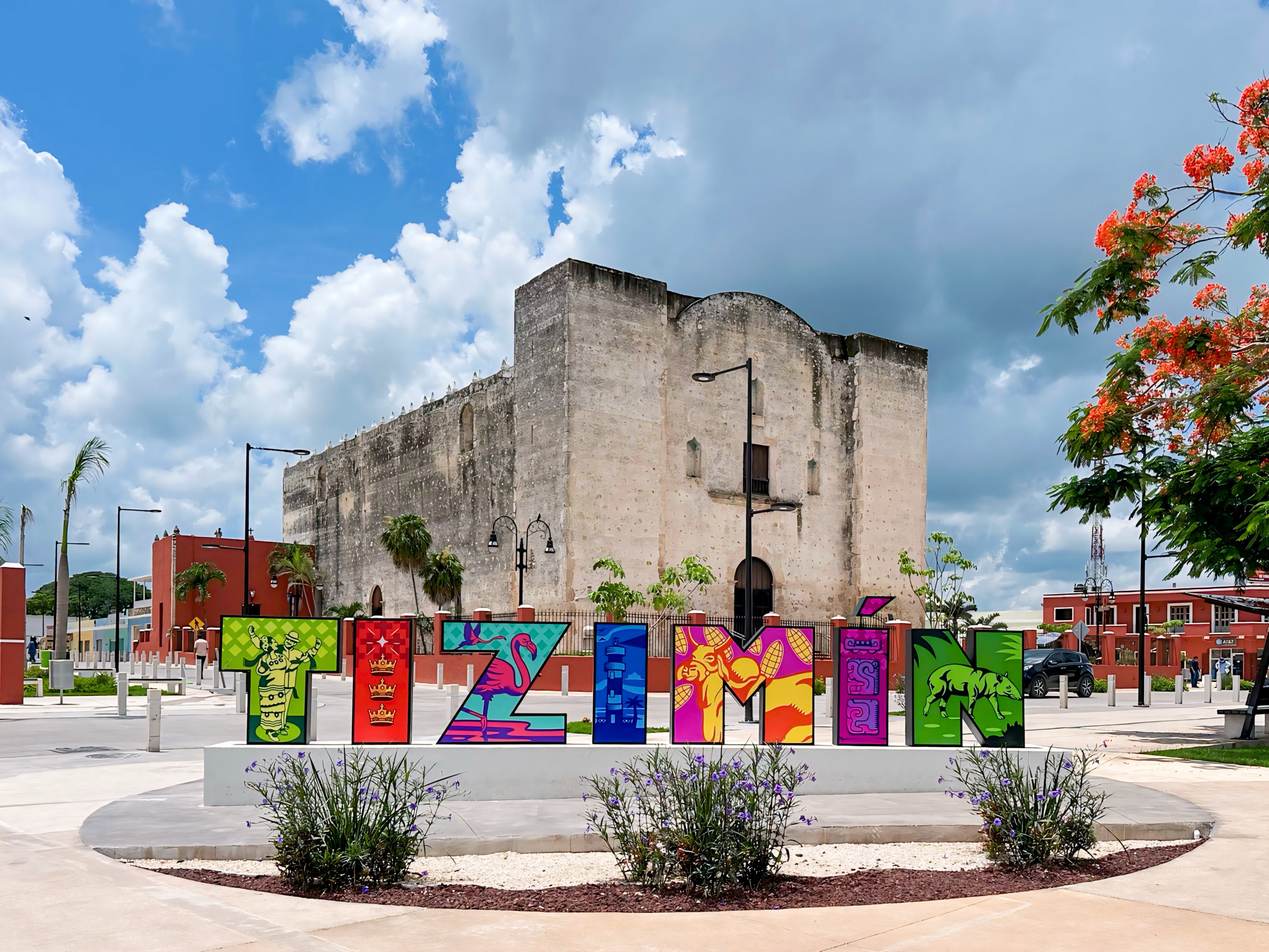
Tizimín is worth visiting when you want to understand northeastern Yucatán rather than simply pass through it. This is a working regional city shaped by cattle ranching, market trade, Catholic pilgrimage and the annual Feria de Reyes. It is also the practical inland junction for routes toward Río Lagartos, Cenote Kikil, Kulubá and El Cuyo.
Outside festival season, Tizimín is not a town of polished monuments or a long checklist of attractions. Allow two to four hours for the centre, church and market. Stay longer when you add lunch, Cenote Kikil or an overnight stop before the coast. During the Feria de Reyes, the city becomes a destination in its own right and requires more careful planning.
Tizimín suits travellers interested in living regional culture, religious traditions, ranch country and less-touristed routes. It is not the strongest choice for a first-time visitor with one spare day who still needs to see Valladolid, Chichén Itzá or Ek Balam.
Tizimín at a glance
| Question | Practical answer |
|---|---|
| Is Tizimín worth visiting? | Yes for the Feria de Reyes, regional culture, market food and northeast road trips |
| How long do you need? | Two to four hours in town; half a day with lunch; one night for the fair or onward coastal travel |
| Do you need a car? | Not for the centre, but a car or driver is much easier for Kikil, Kulubá and the coast |
| Best time of year | Late December and January for the Feria de Reyes; November to February for cooler town walking |
| Best time of day | Morning for the market and lower heat; evening for the plaza during festival season |
| Main sights | Santuario de los Santos Reyes, central plaza, market and everyday commercial centre |
| Best nearby stop | Cenote Kikil, around 10 to 15 minutes north by road |
| Best onward route | Río Lagartos, Las Coloradas, San Felipe or El Cuyo |
| Main drawback | Limited conventional sightseeing outside the fair and few visitor-oriented explanations |
| Family suitability | Good for a short town visit; swimming and rural sites need closer supervision and planning |
| Cash or card? | Carry pesos and small notes for markets, taxis, cenotes and rural stops |
Is Tizimín worth visiting?
Tizimín is worthwhile for the right route and the right expectations.
The city makes sense when:
- You are attending the Feria de Reyes or its religious celebrations.
- You are driving from Mérida or Valladolid toward Río Lagartos, San Felipe or El Cuyo.
- You want to swim at Cenote Kikil.
- You are interested in working markets, churches and ordinary inland-Yucatán city life.
- You want a practical base with fuel, food, banks, pharmacies and transport before entering more rural areas.
- You are exploring the ranching culture of northeastern Yucatán.
- You are returning to Yucatán and have already covered the major archaeological and colonial destinations.
Tizimín is less worthwhile when:
- You have only one free day and have not visited Valladolid, Chichén Itzá or Ek Balam.
- You expect a carefully restored colonial centre similar to Valladolid or Izamal.
- You are relying on a long list of museums and ticketed attractions.
- You want a beach day without an inland stop.
- You are travelling without a car and need several rural connections to run on a strict timetable.
- You plan to arrive around midday, walk quickly through the heat and leave without visiting the market or church.
For many travellers, Tizimín works best as a meaningful stop within a larger northeast route, not as a standalone day trip from Mérida. The major exception is the Feria de Reyes, when the city itself becomes the purpose of the journey.
Who should visit Tizimín?
Tizimín suits:
- Travellers interested in regional towns that function for residents rather than tourists.
- Catholic pilgrims and visitors interested in popular religious traditions.
- Food travellers who enjoy municipal markets and straightforward local restaurants.
- Road trippers heading toward Río Lagartos, Las Coloradas, San Felipe or El Cuyo.
- Families who want a simple town stop followed by Cenote Kikil.
- History travellers interested in the Maya, Franciscan and railway layers of eastern Yucatán.
- Photographers who prefer lived-in plazas, markets and festival scenes over polished heritage districts.
- Repeat visitors building a wider route around Valladolid, Ek Balam, Espita and the north coast.
It is less suitable for:
- Travellers seeking nightlife, boutique shopping or a broad restaurant scene.
- People who need every attraction to publish dependable English-language hours.
- Visitors with limited mobility who expect consistent pavements and step-free access.
- Anyone attempting Tizimín, Río Lagartos, Las Coloradas, Ek Balam and a cenote in one relaxed day.
- Travellers uncomfortable confirming rural attractions and return transport locally.
Why Tizimín is called the City of Kings
Tizimín is commonly called La Ciudad de los Reyes, the City of Kings, because of its devotion to the Three Kings: Melchior, Gaspar and Balthazar. Their images are housed in the main church, and the annual celebration around Epiphany is the city’s defining cultural event.
The title is more than a tourism slogan. The Santos Reyes tradition shapes the calendar, the identity of the church, the large winter fair and the movement of pilgrims through the city. During the main celebration, Tizimín changes from a regional service centre into one of Yucatán’s busiest religious and popular gathering places.
The fair also reflects the modern economy of the region. Religious devotion in the centre is accompanied by agricultural, livestock, commercial and entertainment programming at the fairgrounds. Understanding Tizimín means seeing both sides: the sanctuary and processions, and the ranching city beyond the plaza.
 Ex-Convento de los Santos Reyes in Tizimín
A short history of Tizimín
Before the Spanish conquest, the area belonged to the Maya province of the Cupules. The name Tizimín is generally connected to tzimin, commonly translated as tapir, giving the place the meaning “place of the tapir.” The animal remains part of the city’s visual identity even though it no longer forms part of the ordinary local landscape.
Local historical tradition also connects the site with pre-Hispanic Maya pilgrimage. Accounts associated with Franciscan chroniclers describe annual devotion to three important forces or deities connected with rain, agriculture and wind. Later interpretations often present the colonial Three Kings devotion as replacing or absorbing this earlier pattern. The connection is culturally important, but travellers should treat simplified claims of a direct one-for-one substitution with caution. Religious change in colonial Yucatán was complex and unfolded over generations.
Franciscans established a religious presence in the 16th century, and the church-convent complex developed into the physical and spiritual centre of the settlement. The Santos Reyes celebration grew around it during the colonial period and became the most recognisable tradition of the city.
Tizimín later developed as a commercial centre for northeastern Yucatán. Cattle ranching, agriculture and trade brought workers, buyers and services into the city from surrounding municipalities. That role continues today: Tizimín is where many regional journeys begin, end or change direction.
The railway reached Tizimín in 1913, connecting the city more closely with the inland network. The old station survives as a reminder of that era, although it should be treated as an exterior heritage stop rather than a formal railway museum.
Another unusual chapter came in 1975, when Queen Elizabeth II visited Tizimín and inaugurated the zoological and botanical park later known as La Reina. The city was formally elevated to city status in 1981.
Tizimín is also associated with the Chilam Balam of Tizimín, one of the important colonial-era Maya manuscripts known collectively as the Books of Chilam Balam. These texts combine history, prophecy, calendrical knowledge, Christian-era material and Maya intellectual traditions. The manuscript is historically important, but it is not presented as a conventional visitor attraction in the city.
Feria de Reyes: when Tizimín becomes a destination
The Feria de Reyes is the strongest reason to make a dedicated trip to Tizimín.
The religious core traditionally builds from the final days of December toward Epiphany on January 6. The broader fair programme may extend beyond those dates and can include concerts, livestock events, commercial exhibitions, food stalls, rides and public entertainment. Exact schedules, venues and closing dates vary each year.
Do not plan from an old programme. Check the current announcements from the municipality, parish and fair organisers shortly before travelling.
What happens during the Feria de Reyes?
The celebration has several overlapping parts:
- Religious observance: Masses, pilgrimages, devotional visits and events centred on the images of the Three Kings.
- Processions and public ritual: Streets around the sanctuary can become crowded as religious groups and families gather.
- Livestock and agricultural exhibition: This reflects Tizimín’s position at the centre of Yucatán’s cattle region.
- Food and commerce: Temporary stalls, regional food, household goods and local products appear across the fair areas.
- Entertainment: Concerts, dances, rides and public programming vary from year to year.
- Family visits: Many people return from elsewhere in Yucatán and Quintana Roo, so the fair is also a period of reunion.
The church and civic centre provide the symbolic heart of the celebration, while much of the larger expo and entertainment activity takes place at the fairgrounds outside the compact central square.
How to plan the fair properly
Book accommodation early if you intend to stay during the busiest nights. Tizimín has hotels, but the supply is smaller than in Mérida or Valladolid and rooms can fill during major events.
Arrive with a transport plan. Road traffic, parking demand and taxi pressure rise sharply during popular concerts and religious dates. A hotel within reasonable walking distance of the centre can be more valuable than a newer room on the edge of town.
Carry cash in small notes. Temporary stalls and local transport may not accept cards, and mobile payment terminals can struggle when networks are busy.
Wear closed shoes if you expect to move between the centre, fairgrounds and livestock areas. The event is not limited to smooth paved streets.
Keep children close. Crowds, rides, food stalls and traffic create a very different environment from an ordinary weekday in Tizimín.
Respect the religious part of the event. Processions and devotional visits are not simply performances for visitors. Avoid blocking church entrances, stepping into a procession for photographs or using flash close to worshippers.
If your interest is mainly cultural rather than entertainment, arrive in daylight, visit the sanctuary, eat in the centre and choose one evening event. Trying to remain from early morning until the end of a major concert can make the day unnecessarily tiring.
Santuario de los Santos Reyes
The stone church facing the central plaza is Tizimín’s essential landmark. It is often described as the former Franciscan convent and parish of the Santos Reyes. Its heavy façade and thick masonry differ from the bright painted churches found in some other Yucatán towns.
The building remains an active religious space. Entry depends on services, ceremonies, maintenance and parish activity rather than museum-style opening hours.
Allow time for both the exterior and interior when the church is open. The most important objects are the images of the Three Kings, especially during the winter celebration. Visit quietly, dress respectfully and step aside during Mass, baptisms, funerals or private prayers.
Photography may be restricted during services. Even when photographs are allowed, avoid flash and do not stand directly in front of worshippers.
 Ex-convent and church of the Santos Reyes in Tizimín
The central plaza
The plaza is the easiest place to begin. It brings together the church, municipal life, shops, food, taxis and the daily rhythm of central Tizimín.
Outside the fair, the centre is most comfortable in the morning and after the heat drops in the late afternoon. Midday can feel quiet and exposed, especially from April through June.
A town walk does not require a formal route. Start at the church, circle the plaza, continue toward the market and look at the surrounding commercial streets. Tizimín’s value lies in observing how the city works rather than moving between a set of ticketed monuments.
The centre is generally flat, but pavements can be narrow, broken, high at the kerb or interrupted by driveways. Watch for motorcycles, bicycles and turning vehicles.
 The Santos Reyes church seen from central Tizimín
The municipal market
Visit the market in the morning. This is when produce, meat, prepared food and everyday trade are most active.
The market is useful for breakfast or an early lunch, but it is a working public space rather than a curated food hall. Some stalls open early and finish before the hottest part of the day. Others operate according to supply, family schedules and local demand.
Look for familiar Yucatecan market dishes such as:
- Tacos or tortas of cochinita pibil.
- Lechón al horno.
- Panuchos and salbutes.
- Tamales.
- Escabeche oriental.
- Beans with pork.
- Eggs with chaya.
- Fresh fruit drinks and aguas frescas.
- Regional breads and sweets.
- Grilled or stewed meat dishes reflecting the ranching economy.
Ask the price before ordering when it is not displayed. Carry small notes and do not assume every stall can break a MXN 500 bill.
Busy stalls with steady local turnover are usually the simplest choice. Ask before photographing vendors or their work area.
Food and ranching culture
Tizimín is one of the main service and trading centres of Yucatán’s cattle country. The surrounding region produces beef, milk and cheese, and the agricultural fair gives livestock a central public role.
This does not mean every restaurant is a specialist ranch kitchen. It means grilled meats, beef dishes, cheese and practical family restaurants are more central to the city’s identity than they are in a town built mainly around tourism.
A good Tizimín meal does not need to be elaborate. Look for a busy local restaurant or market stall serving regional food to local families and workers. At lunch, ask what is available that day rather than relying only on a large printed menu.
During the Feria de Reyes, food choices expand but consistency varies. Popular stalls can be excellent, while others depend on volume. Choose places with visible turnover, covered ingredients and clean preparation areas.
Tizimín is also a useful place to buy water, snacks and supplies before a drive toward rural ruins or the coast. Do not wait until you reach a small community to look for a specific pharmacy item, child supply or cash machine.
Las Catacumbas
Las Catacumbas is associated with cave-like or underground spaces where local artisans have created figures and decorative scenes. It appears in many lists of Tizimín attractions, but visitors should not treat it as a dependable museum with nationally standardised hours.
Ask locally whether it is currently open, where the entrance is and whether a guide or contribution is expected. Conditions can change, and some descriptions online are old.
This stop is best for travellers already in the centre who are interested in local craft and popular art. It is not worth restructuring a tight day unless opening has been confirmed.
The former railway station
The old station recalls the railway line that reached Tizimín in 1913. It is relevant to the city’s growth as a regional trading centre, but the building has not consistently functioned as a formal visitor attraction.
Treat it as an exterior architecture and history stop. Do not enter fenced, abandoned or damaged areas. Conditions around disused railway property can change, and there may be little interpretation on site.
The station is most worthwhile for travellers interested in transport, industry and the development of inland Yucatán. It is optional on a short first visit.
Parque Zoológico y Botánico La Reina
La Reina is historically notable because Queen Elizabeth II inaugurated the park during her 1975 visit to Tizimín.
However, do not build your itinerary around the zoo without checking its current status directly. The park was temporarily closed following a PROFEPA inspection in October 2025 after concerns about animal care and management. Opening conditions, access and the state of individual facilities may have changed since then.
Even if current municipal information says the park is operating, families should review recent conditions and decide whether the visit meets their expectations for animal welfare. Tizimín has enough cultural and regional interest that the zoo does not need to be treated as an essential stop.
Cenote Kikil
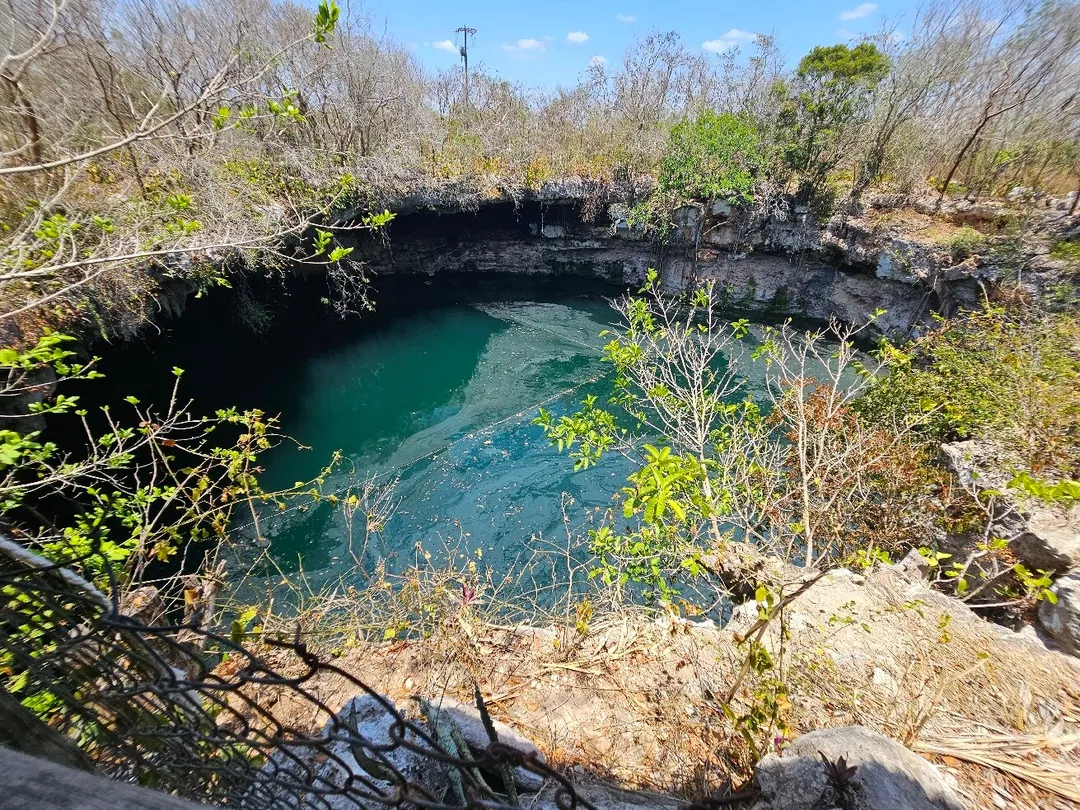
Cenote Kikil is the easiest natural addition to a Tizimín visit. It lies in the small community of Kikil, around 6 kilometres north of the city on the road toward Río Lagartos.
The cenote is open to the sky, with deep water below limestone walls and wooden stairs leading down to the swimming area. It is a rustic community stop rather than a large commercial cenote park.
Kikil works well when:
- You are staying in Tizimín.
- You want a swim after walking the city.
- You are driving toward Río Lagartos or San Felipe.
- You prefer a regional community project to a large tour-bus cenote.
- You have two or three hours available, including changing and food.
It is less suitable for toddlers, visitors who cannot manage stairs or anyone expecting a shallow beach-style entry. The water is deep. Ask about life-jacket rules and supervise children continuously.
Carry cash and confirm current hours before making a tightly scheduled journey. The cenote’s published operation, restaurant service and admission can change.
 Ex-convent in Kikil village near Cenote Kikil
Kulubá archaeological site
Kulubá is one of northeastern Yucatán’s most interesting Maya sites, with substantial palace architecture in low forest east of Tizimín.
The archaeological importance is real, but visitor access has changed during periods of excavation, restoration and planned opening. Do not assume that an old map pin, blog or historical opening time guarantees entry.
Before travelling, verify:
- Whether the site is formally open to the public.
- Current admission and hours.
- Whether a caretaker or registration process is operating.
- Road conditions after rain.
- Whether a normal low-clearance car is suitable.
- Whether toilets, water or shade are available.
- The latest time visitors are admitted.
A rental car or private driver is strongly recommended. Mobile service can weaken, and the final roads may be rough or muddy in the rainy season.
Kulubá is not a casual extra after a late lunch. Give it its own half day, leave early and carry water. Avoid arriving near closing time or attempting unfamiliar rural roads after dark.
 Kulubá ruins in the jungle
 Stone structures at Kulubá
Getting to Tizimín from Mérida
Tizimín is around 164 to 167 kilometres from Mérida. A realistic drive usually takes approximately 2 hours 10 minutes to 2 hours 30 minutes, before long meal or fuel stops.
The main route uses Federal Highway 176 through the northeast of the state. It is generally straightforward, but it is not a motorway. Expect two-lane sections, towns, topes, slower vehicles, motorcycles and occasional livestock near the road.
Read the dedicated Mérida to Tizimín transport guide for bus, transfer, pickup and onward-route planning.
A same-day return from Mérida is possible, but it creates four to five hours of driving. Make the journey worthwhile by attending the fair, adding Kikil or continuing toward the coast. For an ordinary weekday town walk alone, the distance is hard to justify.
Getting to Tizimín from Valladolid
Tizimín is around 50 kilometres north of Valladolid. Allow approximately 55 minutes to 1 hour 15 minutes, depending on traffic, road conditions and your starting point.
The route follows Federal Highway 295 through Temozón and Calotmul. This is a practical connection for travellers based in Valladolid who want a half-day regional drive or an onward journey to Río Lagartos.
A strong route is:
- Leave Valladolid in the morning.
- Stop in Tizimín for the church, market and lunch.
- Continue to Kikil or Río Lagartos.
- Stay near the coast rather than returning late at night.
Tizimín can also follow an early visit to Ek Balam, but adding Ek Balam, Tizimín, Kikil and Río Lagartos creates a long day. Choose two major components and leave room for delays.
Getting to Tizimín by bus
Regional buses connect Tizimín with Mérida, Valladolid and other towns. The bus is a sensible option when Tizimín itself is your destination and you are travelling light.
The bus becomes less convenient when you want to continue to a cenote, rural archaeological site or coast on the same day. Local connections may involve vans, taxis or separate departure points, and the final return service may not match an online schedule.
Before boarding, confirm:
- The exact arrival terminal in Tizimín.
- Whether your onward service leaves from the same location.
- The final return departure.
- Whether tickets are sold in advance or only before departure.
- Whether luggage is stored below or kept with you.
- Whether the service is direct or makes frequent stops.
Do not arrive late in the afternoon assuming a convenient connection to El Cuyo, Kulubá or a rural cenote will still be available.
Rental car or private driver?
A rental car is the best choice for independent travellers comfortable with two-lane roads and rural route planning. It gives you control over Kikil, Ek Balam, Río Lagartos and overnight stops.
A private driver is better when:
- You are travelling with young children or older relatives.
- You want to combine several places without managing parking and directions.
- You are attending a busy fair night.
- You want a driver to wait during a cenote visit.
- You are transferring between Mérida, Valladolid and the coast with luggage.
- You do not want to drive after dark.
For Kulubá, confirm that the driver understands the road and is willing to wait. A standard point-to-point taxi may not be appropriate for remote archaeological access.
Getting around Tizimín
The church, plaza, market and central commercial streets are walkable. Park once and explore the centre on foot.
For destinations elsewhere in the city, taxis are straightforward. Agree on the fare before a longer journey and save the driver’s number if you need a return pickup.
Tizimín also has local public transport, but short-term visitors rarely need to learn the network for a compact central visit. Walking and taxis are simpler.
Driving in the centre is manageable outside major events. During the Feria de Reyes, temporary closures, crowds and parking pressure make navigation slower. Follow local traffic directions rather than insisting on the route shown by a map app.
Avoid leaving luggage, cameras or shopping visible inside a parked car, particularly when the vehicle is carrying everything for an onward trip.
Where to stay in Tizimín
Stay in Tizimín when:
- You are attending the fair over more than one evening.
- You want an early start toward Río Lagartos or Kulubá.
- You are visiting family or conducting regional business.
- You prefer a practical inland base to a smaller coastal village.
- You are breaking a long drive between Mérida, Valladolid and El Cuyo.
For most ordinary sightseeing trips, one night is enough.
Choose a hotel by location and parking rather than expecting a resort experience. During the fair, a central hotel can reduce the need for late-night taxis. Outside the fair, secure parking and easy road access may matter more.
Ask before booking:
- Whether parking is private, gated or street-based.
- Whether reception remains staffed after your expected arrival.
- Whether hot water and air conditioning are available in the specific room category.
- Whether festival noise reaches the room.
- Whether breakfast starts early enough for a coastal departure.
- Whether stairs are required.
Valladolid remains the stronger base for travellers prioritising restaurants, architecture and organised excursions. Río Lagartos or El Cuyo is better when the coast is the main purpose of the trip.
What to combine with Tizimín
Tizimín and Cenote Kikil
This is the easiest half-day combination.
Visit the church and market in the morning, eat in Tizimín, then drive 10 to 15 minutes north for a swim. It provides a good balance of culture, food and nature without excessive driving.
Confirm Kikil’s hours and bring dry clothes.
GuideCenote Kikil: Hours, Price and Swimming Near TizimínCenote Kikil is an open, green‑water cenote located at kilometre 4.5 on the Tizimín–Río Lagartos road, just north of the village of Kikil in the municipality of Tizimín, eastern Yucatán. The entrance fee is modest and paid in cash; exact prices are not listed and may vary, so check locally. The cenote is generally open from late morning to early afternoon, but hours can change without notice, so confirm before you go. The easiest way to reach it is by rental car, private driver, or taxi from Tizimín, a ten‑minute drive; other drive times are about 1 h 15 min from Valladolid, 50–60 min from Río Lagartos, 45–55 min from San Felipe, 1 h 15 min from El Cuyo, 2 h 30 min from Mérida and 2 h 45 min from Cancún. A visit typically lasts 1–2 hours, longer if you eat at the on‑site restaurant. Facilities may include parking, bathrooms, showers, changing areas, a palapa‑style eating area and occasional life jackets, but they are not guaranteed. Visitors can expect a rustic setting with stone walls, stairs down to a platform, and deep water that is best enjoyed with a life jacket if you are not a strong swimmer. Bring cash, a towel, dry clothes, sandals, water, and a waterproof bag; sunscreen should be rinsed off before entering. Arriving late morning offers cooler weather and fewer people. Drive slowly on wet steps, hold railings, and avoid swimming alone or after alcohol. The cenote works well as a quiet swim stop on routes that already include Tizimín, Río Lagartos, Las Coloradas, San Felipe or El Cuyo, but it is not ideal for a standalone day trip from Mérida or Valladolid.OpenTizimín and Río Lagartos
This is the strongest onward route.
Río Lagartos lies north of Tizimín and is the main base for boat trips in the Ría Lagartos Biosphere Reserve. Wildlife tours are usually better early in the day, so the order depends on where you sleep.
When based on the coast:
- Take an early boat trip.
- Eat in Río Lagartos.
- Swim at Kikil if timing allows.
- Walk Tizimín in the late afternoon.
When based in Tizimín:
- Leave early for Río Lagartos.
- Take the boat trip.
- Return through Kikil.
- Finish in Tizimín or continue south.
Do not sacrifice an early wildlife departure merely to fit in a town walk first.
GuideRío Lagartos Travel Guide: Flamingos, Boat Tours, Las Coloradas and Where to StayRío Lagartos is a tranquil fishing town on Yucatán’s north coast that serves as the main gateway to the Ría Lagartos Biosphere Reserve, a UNESCO‑recognized wetland famous for flamingo colonies, mangrove estuaries and crocodiles. There is no entry fee to the town; reserve access is usually included in boat tours, though some operators charge a small conservation fee of about 54 MXN on site. Shared or small‑group wildlife and Las Coloradas boat tours cost roughly $70–$95 USD per person, while private boats are priced per vessel for 2–4 hours. Boat tours run from 6:00 to 17:00 for daytime wildlife viewing, with night mangrove/crocodile tours offered around 19:30–21:30 for 1.5–2 hours. Cash in pesos is essential, as ATMs are unreliable and most businesses prefer cash. From Mérida the drive is 205–230 km and takes about 2.5–3 hours via Tizimín; from Cancún it is 225–255 km, roughly 3–3.5 hours; from Valladolid it is 105 km, about 1.5–2 hours. Buses go to Tizimín, then a local bus or colectivo reaches Río Lagartos. The pink salt ponds of Las Coloradas lie 24 km away, a 20–25 minute drive. A typical day includes a 2–4 hour boat safari through mangrove channels to see flamingos, herons, spoonbills, ospreys and, with luck, crocodiles, often with a beach stop and optional Mayan‑clay mud mask. Night tours let visitors watch crocodile eyeshine and nocturnal birds. Visitors should bring cash, sun protection, insect repellent, binoculars, a dry bag and a dark swimsuit for mud baths. Keep noise low, respect nesting zones, use life jackets, and avoid drones. Mid‑day is best for the pinkest hues at Las Coloradas, while early morning and late afternoon are optimal for wildlife. The dry season (December–April) offers comfortable weather; November nortes can bring wind and rougher water, so book morning departures when possible.Open
Tizimín and Las Coloradas
Las Coloradas can be included as part of a north-coast route, but access rules, tour arrangements and the appearance of the pink water vary.
Treat Tizimín as the inland service stop rather than the main attraction on this day. Fill the tank, withdraw cash and carry water before continuing north.
Trying to add a full boat tour, Las Coloradas, Tizimín and a cenote to a same-day return to Mérida is too much for most travellers.
GuideRio Lagartos & Coloradas: Safari flamingos & crocodiles plusRio Lagartos & Coloradas is a three‑hour eco‑safari in the Yucatán that takes visitors to the pink flamingo and crocodile zones, the lagoons of Las Coloradas, a beach and includes a clay‑exfoliation experience, with an educational component that lets guests interact with local wildlife. The tour is offered by GetYourGuide for $126 USD per person and lasts about three hours; the article does not specify opening hours or how to reach the site, nor does it detail any additional items such as transport or meals that might be included. Participants can expect to see large flocks of pink flamingos, observe crocodiles in their natural habitat, walk along the striking pink lagoons of Las Coloradas, relax on a nearby beach and finish with a clay‑exfoliation treatment. The experience is described as educational, allowing direct interaction with the wildlife. Because the article provides no specific logistical advice, travelers should verify transport arrangements and any timing constraints when booking, and confirm whether the price covers all activities mentioned.Open
Tizimín and El Cuyo
El Cuyo is best treated as an overnight destination or transfer, not an afternoon side trip from central Tizimín.
The road journey is long enough that a quick beach visit creates unnecessary backtracking. Use Tizimín for lunch, fuel and supplies, then continue to El Cuyo with enough daylight to navigate the final road calmly.
This route is easier with a rental car or pre-arranged transfer. Do not depend on improvising a late connection after arriving in Tizimín.
GuideEl Cuyo Travel Guide: Beaches, Kitesurfing, Hotels and How to Get ThereEl Cuyo is a small Gulf‑side beach town at the northeastern tip of Yucatán, set on the edge of the Ría Lagartos Biosphere Reserve where flamingos, sea‑turtle nesting and reliable winds make it a quiet eco‑destination. The town and its public beach are free to enter and are open 24 hours a day. The best periods for kitesurfing are November to June, for flamingos April to September, and for turtle nesting May to October; the dry season runs December to April. By car, El Cuyo is about 2½–3½ hours from Cancún Airport and 3–4 hours from Mérida, using paved inland highways; fuel and cash should be taken before the final stretch and parking is on sand near the beach. Public transport involves an ADO or Oriente bus to Tizimín from Mérida (2½–3½ hours) followed by a colectivo/minivan to El Cuyo, or a longer Cancún‑to‑El Cuyo connection via Kantunilkín or Valladolid, taking roughly 4–5 hours total. Visitors can expect a long, natural beach backed by dunes, mangroves and pastel wooden houses, gentle Gulf swells, and steady breezes that attract kitesurfers of all levels. Amenities are modest: a few groceries, seafood shacks, a pharmacy, a clinic and one ATM that may be out of cash, so bring pesos. Wi‑Fi and mobile data are unreliable, and many places prefer cash. Tips include keeping at least 60 m from flamingo colonies, avoiding lights and touching turtles during nesting season, using reef‑safe sunscreen, carrying a flashlight, water and insect repellent, and driving cautiously on roads with speed bumps and occasional potholes. Day trips to the flamingo‑rich Ría Lagartos, the pink lakes of Las Coloradas, or the colonial town of Valladolid are popular, and several local schools offer kitesurf lessons and equipment rentals.Open
Tizimín and Ek Balam
Ek Balam lies southwest of Tizimín and works well for travellers travelling between Valladolid and the northeast.
Visit Ek Balam near opening time, then continue to Tizimín for lunch and a town walk. This creates one major archaeological visit and one living regional city without forcing too many stops into the day.
Adding Kikil is possible if you finish Ek Balam early. Adding a Río Lagartos boat tour is better saved for the next morning.
GuideEk Balam Guide: Climbing the Acropolis and Swimming Cenote XcanchéA complete guide to visiting Ek Balam in Yucatán: climb the Acropolis for jungle views, see the preserved stucco carvings, and cool off in Cenote Xcanché. Includes entrance fees, transport from Valladolid, and practical tips.Open
Tizimín and Espita
Espita and Tizimín offer different views of eastern Yucatán.
Espita is smaller, quieter and more architectural. Tizimín is larger, busier and more important as a service, trade and transport centre. Together they make sense for travellers interested in ordinary town life, churches and regional food.
A car or driver is recommended. Do not rely on a direct rural road shown by a map without checking the actual paved route; practical connections may require travelling through established highways and nearby towns.
GuideBest Hotels in Espita, YucatánA practical guide to the best places to stay in Espita, Yucatán, including the town's boutique option, simple guesthouses, transport advice, and nearby day trips.Open
Tizimín and Kulubá
This is the strongest combination for travellers interested in lesser-visited Maya archaeology, but only when access has been confirmed.
Begin early, carry water and avoid adding the coast on the same day. Road and site conditions matter more than the short straight-line distance shown on a map.
Suggested Tizimín itineraries
Two-hour town stop
This works during a transfer when time is limited.
- Park near the central plaza.
- Visit the Santos Reyes church if open.
- Walk the plaza and nearby streets.
- Eat a quick market breakfast or lunch.
- Continue toward Valladolid, Kikil or the coast.
Do not add the railway station or Las Catacumbas unless opening and location are already confirmed.
Half-day Tizimín and Kikil
This is the most balanced first visit.
- Arrive in Tizimín between 8:00 and 9:00 AM.
- Visit the market while it is active.
- Walk the plaza and church.
- Eat an early lunch.
- Drive to Cenote Kikil.
- Swim for 1.5 to 2 hours.
- Continue to Río Lagartos or return to Valladolid before dark.
Full day from Valladolid
- Leave Valladolid early.
- Visit Ek Balam near opening time.
- Continue north to Tizimín.
- Eat lunch and walk the centre.
- Choose either Kikil or an early arrival at Río Lagartos.
- Stay near the coast or return to Valladolid before night driving becomes tiring.
This is not the day to add Kulubá as well.
Feria de Reyes overnight
- Arrive before afternoon traffic builds.
- Check into a central or well-connected hotel.
- Visit the sanctuary in daylight.
- Eat before the busiest evening period.
- Attend one religious or cultural event.
- Visit the fairgrounds later if it suits your group.
- Sleep in Tizimín rather than driving a long rural route after midnight.
- Continue to Kikil or Río Lagartos the next morning.
Family travel in Tizimín
Tizimín can work well for families because the central visit is short and can be combined with food and a swim.
The main considerations are heat, traffic and deep cenote water.
For younger children:
- Visit the market and plaza early.
- Carry more water than you expect to need.
- Use sun hats and light clothing.
- Avoid an extended midday walk.
- Choose a restaurant with toilets rather than relying entirely on street stalls.
- Use life jackets at Kikil and supervise continuously.
- Keep children close during the fair.
- Do not plan an unfamiliar rural drive after bedtime.
The central plaza may look open and calm, but traffic moves around it. Do not allow children to run from the park into surrounding streets.
Accessibility and mobility
Central Tizimín is mostly flat, but it is not consistently step-free.
Expect:
- High kerbs.
- Uneven or narrow pavements.
- Driveways interrupting pedestrian routes.
- Church steps or thresholds.
- Limited seating away from the plaza.
- Busy crossings during the fair.
A traveller using a wheelchair or walking aid may find the plaza manageable with assistance, but surrounding pavements require patience.
Cenote Kikil normally involves a long wooden stairway to the water and is not suitable for everyone. Kulubá has uneven ground and rustic access. Confirm conditions directly before including either place.
A private driver can reduce walking between dispersed stops and provide a place to rest in air conditioning.
Practical information
- Visit length: Two to four hours in the centre; half a day with lunch; full day with one nearby attraction.
- Entry: The town centre and plaza are public. Individual attractions and cenotes charge separately.
- Best season: November to February for more comfortable walking. Feria dates bring crowds and higher demand.
- Heat: March to June can be extremely hot. Start early and avoid a long midday walk.
- Rain: Summer and autumn showers can affect rural roads and archaeological access.
- Cash: Carry Mexican pesos and small notes.
- ATMs: Available in the city, but withdraw before heading to rural communities.
- Fuel: Tizimín is the sensible place to fill up before the coast or Kulubá.
- Food: The market is strongest in the morning; local restaurants are more reliable for a later lunch.
- Language: Spanish is useful for transport, stalls, rural attraction confirmation and taxi arrangements.
- Mobile service: Usually workable in the city but can weaken on rural roads.
- Clothing: Light, breathable clothing and respectful dress for the sanctuary.
- Shoes: Comfortable town shoes; grippy footwear for cenotes and archaeological terrain.
- Safety: Use normal precautions, protect valuables and avoid leaving luggage visible in a car.
- Night driving: Rural roads can be dark and may include animals, bicycles, motorcycles and vehicles without strong lighting.
Common mistakes to avoid
Treating Tizimín like Valladolid
Tizimín is not a polished colonial tourism city. Its value lies in the sanctuary, market, ranching identity and position within the northeast.
Arriving only at midday
The market is quieter, the heat is stronger and the town can feel less active. Arrive in the morning.
Using an old Feria programme
Dates and events vary. Check the current year’s municipal, parish and fair announcements.
Assuming every listed attraction is open
Las Catacumbas, the zoo, Kulubá and rural projects require current confirmation.
Trying to see the whole northeast in one day
Tizimín, Ek Balam, Río Lagartos, Las Coloradas, El Cuyo and a cenote do not make one relaxed itinerary.
Depending on a late rural connection
Arrange the final bus, taxi or transfer before leaving the city centre.
Driving to Kulubá without checking access
Site status and road conditions can change. Verify both.
Treating Kikil like Ik Kil
Cenote Kikil is near Tizimín. Cenote Ik Kil is near Chichén Itzá. They are different places.
Leaving fuel and cash until the coast
Use Tizimín’s services before continuing to smaller communities.
Tizimín FAQ
Is Tizimín worth a day trip from Mérida?
Usually only for the Feria de Reyes, a specific cultural interest or a larger route that includes Kikil or the north coast. The return drive is long for a simple town walk.
How long should I spend in Tizimín?
Allow two to four hours for the centre, church, market and lunch. Add two or three hours for Kikil. Stay overnight during the fair or before an early coastal journey.
Can I visit Tizimín without a car?
Yes. Regional buses reach the city, and the centre is walkable. A car or driver becomes much more useful for Kikil, Kulubá, El Cuyo and flexible coastal travel.
Is Tizimín a Pueblo Mágico?
No. Tizimín is a regional city with its own history and traditions. Nearby Espita and Valladolid hold Pueblo Mágico status.
What is Tizimín famous for?
It is best known for the Santos Reyes devotion, the Feria de Reyes and its role at the centre of Yucatán’s ranching region.
When is the Feria de Reyes?
The religious core traditionally runs from the end of December toward January 6. The larger fair programme may continue beyond that date. Check the current annual programme before booking.
Is the Tizimín zoo open?
Do not assume so. The park was temporarily closed after a PROFEPA inspection in October 2025. Confirm current status and conditions directly before visiting.
Is Tizimín safe for visitors?
Most travellers use normal precautions without difficulty. Protect valuables, avoid leaving luggage visible, use well-lit central streets at night and take extra care on rural roads.
Can I combine Tizimín with Río Lagartos?
Yes. This is one of the most practical combinations. Prioritise an early boat trip in Río Lagartos and fit Tizimín before or after according to where you sleep.
Can I combine Tizimín with El Cuyo?
Yes as an onward transfer or overnight route. El Cuyo is not a quick beach add-on from Tizimín.
What should I eat in Tizimín?
Start with the market and look for Yucatecan breakfast and lunch staples, grilled meats and simple family restaurants. Ask what is available that day.
Planning your visit
Use independent transport when you are comfortable with two-lane roads, offline maps and confirming rural access yourself.
Use a private driver when you want to connect Valladolid, Ek Balam, Tizimín, Kikil and the north coast without worrying about parking, luggage or return transport. Families and groups attending the Feria de Reyes also benefit from arranging the journey before the busiest dates.
For the next step, browse Tours & Experiences or continue with the relevant destination guide.
Tizimín rewards a practical approach: arrive early, visit the sanctuary and market, eat locally and add one well-planned stop. During the Feria de Reyes, stay overnight and let the city be the destination. Outside the fair, use Tizimín as the strong inland link that makes the wider northeast easier to understand.