

Espita is worth visiting when you want a quiet eastern Yucatán town, regional food, old civic architecture and a slower alternative to the better-known Pueblos Mágicos. It is not a major attraction town, and that is the point. The centre can be explored in two or three hours, while a full day makes sense only when you add lunch and a pre-arranged cenote, hacienda or rural experience.
The town sits roughly between Valladolid and Tizimín, about 50 kilometres from Valladolid and 27 kilometres from Tizimín. A rental car or private driver makes the visit much easier. Public transport is possible, but services and connections are less straightforward than the routes between Mérida, Valladolid and Cancún.
Espita works best for travellers who already have time for the main eastern Yucatán sights and want to see a smaller town on its own terms. It is not the best option if you have only one free day and still need to visit Chichén Itzá, Ek Balam or Valladolid.
Espita at a glance
| Question | Practical answer |
|---|---|
| Is Espita worth visiting? | Yes for architecture, food, photography and quiet small-town travel |
| How long do you need? | Two to three hours for the centre; half a day with lunch; a full day with a booked rural experience |
| Do you need a car? | Strongly recommended |
| Best base | Valladolid, Tizimín or an overnight stay in Espita |
| Best time of day | Morning, then return to the square near sunset if staying overnight |
| Main sights | San José Temple, Municipal Palace, Parque Melchor Ocampo and the traditional market |
| Local foods to look for | Kots’ob, xupik, tamales, panuchos, salbutes and market breakfasts |
| Main drawback | Limited visitor infrastructure and uncertain transport or attraction schedules |
| Family suitability | Good for a short town visit; rural cenotes require closer planning |
| Cash or card? | Carry pesos and small notes |
Who should visit Espita?
Espita suits:
- Travellers interested in the smaller towns of inland Yucatán
- Photographers who prefer weathered architecture and lived-in streets
- Food travellers willing to visit the market in the morning
- Repeat visitors who have already seen Valladolid and the major archaeological sites
- Couples wanting a quiet overnight stop
- Drivers building a route through Valladolid, Ek Balam, Tizimín and the north coast
- Travellers interested in community-run cenotes or rural projects
Espita is less suitable for:
- First-time visitors with a very short Yucatán itinerary
- Travellers relying on frequent, clearly published bus schedules
- People expecting museums, guided monuments and polished visitor services
- Anyone trying to include Espita, Ek Balam, Río Lagartos and Valladolid in one relaxed day
- Travellers who need step-free access at every stop
- Visitors who prefer a wide choice of restaurants, shops and nightlife
The town should not be treated as a substitute for Valladolid. Valladolid is larger, easier without a car and better supplied with hotels, restaurants and organised excursions. Espita offers something quieter and less visitor-facing.
Why Espita is called the Athens of Yucatán
The area belonged to the pre-Hispanic Maya province of the Cupules before the Spanish conquest. Espita later became an encomienda in 1549 and developed around its parish, civic centre and surrounding agricultural estates.
During the 19th century, the town benefited from productive maize haciendas and became an important cultural centre in eastern Yucatán. Its reputation for education, newspapers, arts and civic life led to the nickname La Atenas de Yucatán — the Athens of Yucatán.
The decline and closure of many haciendas changed the local economy during the 20th century. The slower growth that followed also left Espita with an unusually coherent historic centre of churches, arcades, masonry homes, parks and public wells.
Espita joined Mexico’s Pueblo Mágico programme in 2023. The designation has brought more attention, but the town still feels substantially quieter than Valladolid or Izamal.
What to see in central Espita
Most of the central visit is walkable. Park near the main square, begin with the church and palace, then move through the market and surrounding streets.
Go early if you want cooler weather and active market stalls. The centre becomes very hot and quiet around midday.
San José Temple
The Parroquia de San José is Espita’s main landmark. Construction began in the early 17th century. A major fire in 1738 and later rebuilding shaped much of the structure seen today, while the atrium was added during the 19th century.
Its weathered limestone façade, tall towers and heavy proportions feel different from the brighter restored churches found in more polished tourism towns.
The building remains an active parish. Entry depends on services, events and local opening arrangements rather than fixed museum hours.
Visit quietly. Avoid walking through during Mass, funerals or private ceremonies. Dress respectfully and do not use flash around worshippers.
 Iglesia de Espita, Yucatán, México
Allow around 20 to 30 minutes for the church exterior, nearby parks and photographs. This is not a formal attraction with interpretation panels, so read a little about the town before arriving.
Parque Melchor Ocampo
The main square is the easiest place to understand Espita’s rhythm. It sits between the church, Municipal Palace, market and surrounding civic buildings.
The square is quietest early in the day. In the evening, families, vendors and residents return as the heat drops.
Do not treat the park only as a photograph stop. Sit for a while, look at the arcades and watch how the surrounding buildings relate to one another. Espita’s appeal lies more in the complete townscape than in any single monument.
Municipal Palace
The yellow-and-white Municipal Palace is one of the centre’s strongest buildings. Construction began in 1841 and was completed in 1855, with later changes to the central tower and clock.
The arcaded façade is particularly attractive in softer morning or late-afternoon light. Access to internal civic areas can depend on municipal activity, so do not assume the building operates like a museum.
The palace, church and market form a compact architectural group. You do not need a vehicle between them.
The traditional market
The Mercado Municipal Juan José Méndez is more useful in the morning, when prepared-food stalls and produce vendors are active. It is a working local market rather than a styled visitor attraction.
Look for:
- Panuchos and salbutes
- Tamales
- Cochinita pibil
- Beans with pork
- Chaya with eggs
- Fruit drinks and aguas frescas
- Regional sweets
- Seasonal produce
- Small household and food businesses
Carry small notes. Some stalls may not accept cards, and vendors may not have change for large bills.
Ask before photographing people or individual stalls. Spanish is the practical language here, and a simple greeting goes a long way.
 Market and bullring area in Espita
Historic streets and public wells
Beyond the central block, Espita has masonry houses, simple arcades, old shopfronts and quieter residential streets. Some façades are restored; others show age, moisture and changing layers of paint.
Several historic public wells once served as water sources and neighbourhood meeting points. A local restoration effort has worked to preserve some of them as part of the town’s urban history.
Walk with awareness. Pavements can be narrow, broken or absent, and traffic may pass close to the edge of the road. Private houses are not photography sets. Do not stand in doorways or photograph residents without permission.
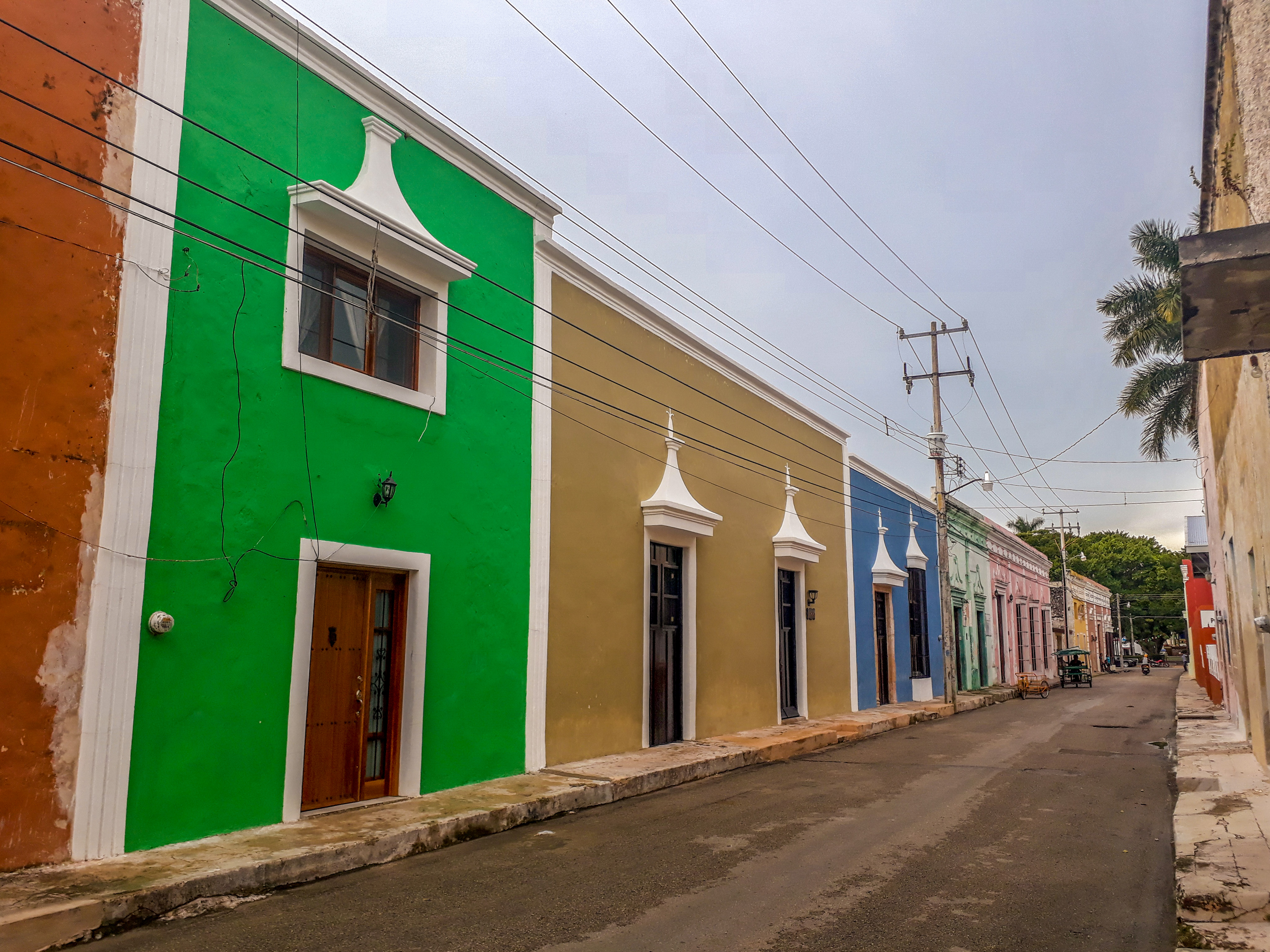 Historic houses in Espita
The old railway station
Espita’s former railway station is a reminder of the transport links that once connected inland towns and agricultural estates more closely.
Treat it as an exterior architecture stop rather than a formal museum. Conditions and access can change, and abandoned or unrestored areas may not be safe to enter.
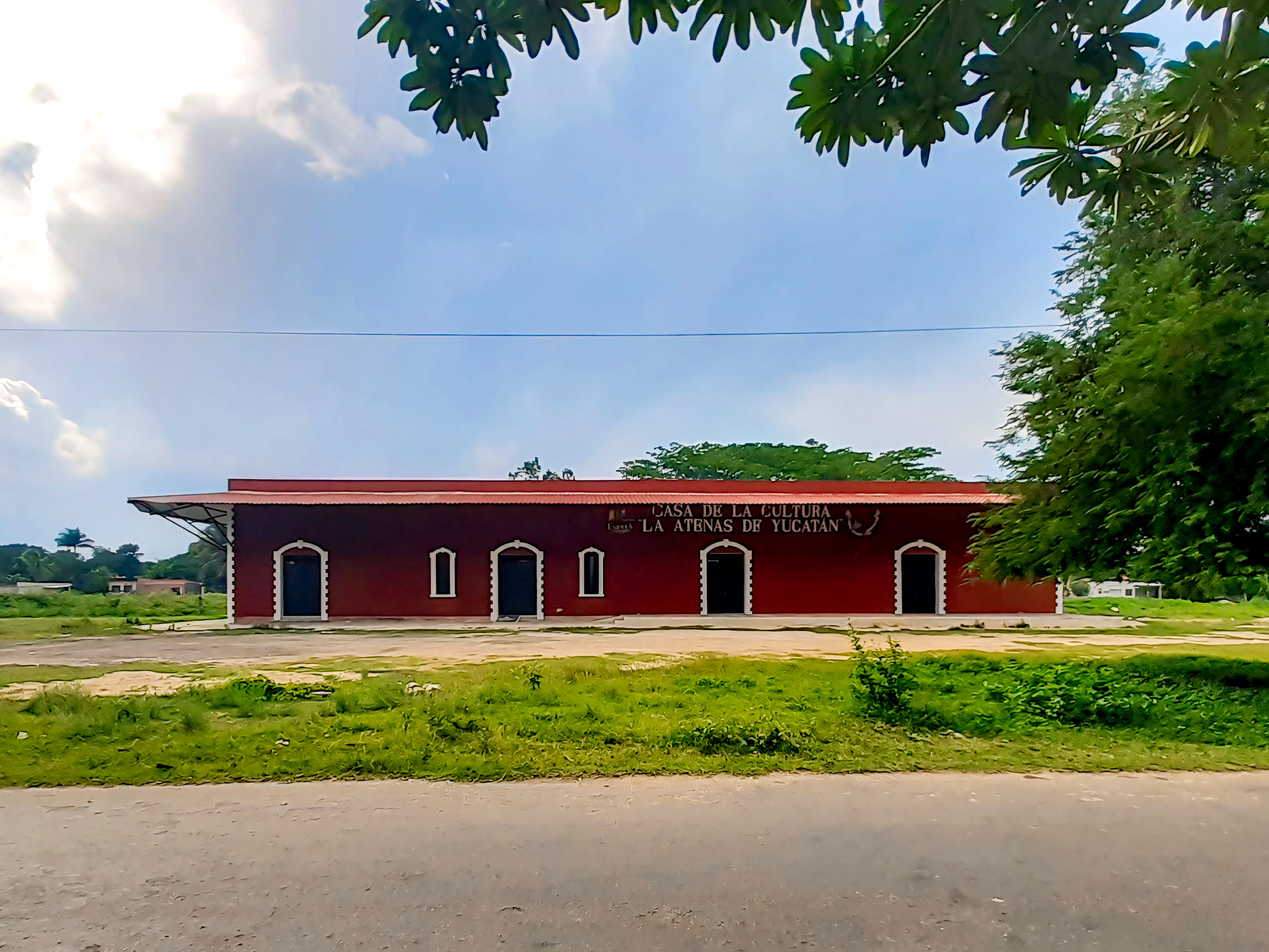 Former railway station in Espita
This works best for travellers interested in industrial or transport history. It is not essential for a short first visit.
Obelisk of the Quince Grandes
A local obelisk commemorates fifteen Espita defenders associated with fighting in 1848 during the wider Maya Social War, often called the Caste War.
The monument represents local civic memory. The wider conflict was long, violent and historically contested, so the monument should not be treated as a complete account of the war or its Maya causes.
 Obelisk of the Quince Grandes in Espita
Parque de la Madre
Parque de la Madre is a smaller public space near the church and can be included naturally during a central walk.
It is not a separate major attraction. Its value lies in seeing how Espita’s church, parks and neighbourhood streets fit together.
 Parque de la Madre in Espita

Crafts and locally made goods
Espita is associated with bejuco basketry, woodwork, honey products, cross-stitch embroidery and hammocks. Availability is less concentrated than in towns with a large formal craft market.
Ask where an item was made and who produced it. For embroidery, ask whether the work is hand or machine stitched. A genuine hand-produced piece should cost more than a mass-produced souvenir.
Do not expect every shop or artisan workshop to keep visitor hours. Ask locally, arrange in advance or allow your accommodation to make an introduction.
Cenotes and rural experiences near Espita
The strongest full-day version of Espita combines the town centre with one rural experience. These sites should be treated as book-ahead or confirm-ahead stops, not as guaranteed walk-in attractions.
Hours, road access, admission, food and swimming arrangements can change. Contact the operator shortly before travelling, especially on weekdays or during the rainy season.
Hacienda and Cenote Kancabá
Kancabá is a restored rural property with lodging and cenote access. Historical accounts associate the estate with agricultural production, while the property now functions as a visitor and accommodation stop.
This can work for travellers who want to connect a historic property with a swim or an overnight stay. Confirm whether day visitors are currently accepted, what the admission includes and whether meals require advance notice.
Do not arrive late in the day without a reservation. Rural properties may close gates, reduce staffing or prepare food only for confirmed guests.
GuideCenote Oxman Guide: Hacienda Cenote Near ValladolidCenote Oxman, also called Cenote San Lorenzo Oxman, is an open‑air sinkhole set on the grounds of Hacienda San Lorenzo Oxman just outside Valladolid in the Yucatán. The cenote is generally open daily from about 7:00 am to 5:00 pm, though hours may change for maintenance, private events, weather or holidays, so checking the current listing is advised. Entrance costs roughly 200–400 MXN per adult, with the exact price depending on whether you choose the basic cenote entry or a package that adds pool use or restaurant credit; children pay a lower rate. Cash in small pesos bills is recommended because card acceptance can vary. From Valladolid centre the site is a 10–15 minute drive; you can reach it by taxi, rental car, scooter, bicycle, private driver or as part of an organized tour. Driving times from other major points are 45–55 minutes from Chichén Itzá, 35–45 minutes from Ek Balam, about 2 hours from Mérida or Cancún, and 1.5–2 hours from Tulum. A typical visit lasts 1.5–3 hours, depending on whether you stay only to swim or also use the pool, restaurant and changing facilities. Visitors should expect a deep, cool pool with hanging roots, platforms and a rope swing that makes the water lively and noisy when groups arrive. Arriving early, before larger day tours, gives calmer water, better light for photos and less waiting for the swing. The stairs down to the water are moderate and can be wet, so they are not ideal for limited mobility; bring swimwear, towels, sandals or water shoes, sunscreen for before and after swimming, a waterproof phone pouch and cash in pesos. Life jackets may be required for weaker swimmers, and children need close supervision. The hacienda provides bathrooms, changing areas, a restaurant/bar and, depending on the ticket, pool access. For families, the pool offers a safer alternative to the deep cenote, while older children often enjoy the rope swing. Early morning is the best time for photography, especially from the staircase and rim platforms. Combining Oxman with a Valladolid cultural walk, nearby cenotes such as Suytun, or ruins like Chichén Itzá makes for a convenient half‑day itinerary.Open
Ya’axché Senderos Celestes
Ya’axché is promoted as a family-oriented nature project with cabins, camping and access to Cenote Hats’uts. It is a better fit for travellers who want more than a quick roadside swim.
Ask about:
- Current opening days
- Road condition after rain
- Swimming access
- Life jackets
- Toilets and changing areas
- Cabin or camping availability
- Food and drinks
- Pet rules
- Guide language
- Payment method
This is easier with your own car or a driver who agrees to wait.
Rancho Santa María Aktun T’oh
This rural experience centres on a guided descent to a small underground spring or cave pool. The visit may involve uneven ground, steps, low light and contact with natural clay.
It is not the right choice for everyone. Confirm the physical access before booking if anyone in the group has limited mobility, balance problems, claustrophobia or difficulty with stairs.
Wear footwear with grip and bring a change of clothes.
Cenote Dzonotoch
Dzonotoch is described as a semi-open cenote with cave formations. It is associated with a local project focused on natural resources and sustainable development.
Before visiting, confirm:
- Whether swimming is currently allowed
- Water depth and life-jacket rules
- Access for children
- Stair and platform condition
- Guide requirements
- Opening times
- Cash price
- Whether outside food is permitted
For general swimming guidance, read Are cenotes safe?.
Jardines Ixchel
Jardines Ixchel is presented as a garden and relaxation venue with a pool, hammocks, outdoor seating and activities such as massage, dance or yoga.
It suits travellers wanting a slower rest day more than those seeking a dramatic natural cenote. Services may operate by arrangement, so confirm exactly what will be available during your visit.
What to eat in Espita
Espita’s food is one of the stronger reasons to stop, but timing matters. The market and traditional kitchens are most reliable earlier in the day.
Kots’ob
Kots’ob is the dish most closely associated with Espita. The name refers to rolling or wrapping. It is a maize-dough preparation filled with ingredients such as ground seeds, ibes and other seasonings, then wrapped in xmakulán, also known as hoja santa.
It may not appear every day at every stall. Ask in the market or at a traditional kitchen whether it is available.
Xupik
Xupik, also called xpak’ ik, is a chicken dish prepared with a chile-based adobo. It is another local speciality worth asking for rather than assuming it will appear on every printed menu.
Market breakfast
A simple market breakfast is often the easiest food plan:
- Arrive between 8:00 and 10:00 AM
- Walk the central square before the heat builds
- Eat panuchos, salbutes, tamales or eggs with chaya
- Ask whether kots’ob or xupik is available later
- Buy water before leaving for a rural site
Restaurant choices become thinner outside normal meal periods. Do not plan a late lunch without checking that your chosen kitchen will still be serving.
A practical two-hour visit
Use this plan when Espita is a short stop between larger destinations.
- Park near Parque Melchor Ocampo
- Walk around San José Temple
- Cross the square to the Municipal Palace
- Visit the market
- Walk two or three surrounding streets
- Have a drink, snack or early lunch
- Continue before the hottest part of the afternoon
This is enough to understand the centre without turning the stop into a checklist.
A practical half-day itinerary
Morning
- Arrive around 8:30 or 9:00 AM
- Visit the market while stalls are active
- Eat breakfast
- Walk the church, square and palace
- Explore nearby residential streets and public wells
Late morning
- Shop for local food or crafts
- Have an early lunch
- Leave before the centre becomes very hot
A half day works well before continuing to Tizimín or returning to Valladolid.
A full day in Espita
A full day requires one confirmed activity outside the centre.
Morning
- Market breakfast
- San José Temple
- Municipal Palace
- Historic-centre walk
Midday
- Early lunch
- Drive to one booked cenote, hacienda or nature project
Afternoon
- Swim or take the arranged tour
- Change into dry clothes
- Return to Espita or continue to your next base before dark
Do not try to visit several rural properties in one afternoon. Access roads, check-in, swimming and changing take longer than they appear on a map.
Getting to Espita
From Valladolid
Espita is about 49 to 50 kilometres from Valladolid. Allow roughly 50 to 65 minutes by car.
The clearest route is north on Federal Highway 295 through Temozón toward Calotmul, then west from Calotmul on the state road to Espita.
Highway 295 is mainly a two-lane road. Shoulders can be narrow or absent. Drive during daylight and allow extra time behind slow vehicles.
GuideBest Day Tours from Valladolid: Ruins, Cenotes, Wildlife, and Small TownsCompare the most useful day trips from Valladolid, including Chichén Itzá, Ek Balam, cenotes, Río Lagartos, Las Coloradas, Izamal, and smaller Yucatán towns.Open
From Tizimín
Espita is about 27 kilometres from Tizimín. Allow roughly 30 to 40 minutes.
Travel south on Highway 295 toward Calotmul, then turn west for Espita. Tizimín is the nearest larger service centre for banks, fuel, shops and onward transport.
Read our Tizimín visitor guide when building a longer eastern route.
From Mérida
Espita is about 165 kilometres from Mérida. Driving commonly takes around two and a half hours, depending on route, roadworks and traffic.
This is a long round trip for a town-only visit. It makes more sense when Espita is part of an overnight route through Izamal, the interior, Valladolid, Tizimín or the north coast.
Use live navigation on the day rather than relying on a memorised sequence of small roads. Fill the tank before leaving the main highways.
GuideCelestún Beach Guide: Flamingos, Boat Tours & How to Visit from MéridaCelestún is a working fishing town on the far western edge of Yucatán, where a wide Gulf beach meets the Ría Celestún Biosphere Reserve, famous for its flamingo habitat. The destination is about 90–110 km west of Mérida and requires roughly 1.5–2 hours each way by car; a rental car, private driver, organized tour or public bus can be used, with the bus being the cheapest but less flexible. A full‑day visit from Mérida is typical, beginning with a morning boat tour of the mangrove channels and reserve, followed by a long seafood lunch under a palapa and optional beach time. Boat tours are priced per boat rather than per person, include life jackets and usually cover flamingo viewing areas, mangrove passages and occasional stops at freshwater springs; English‑speaking guides are not guaranteed, so confirm in advance. The best flamingo season is November to February, especially December to February, though sightings vary daily. Visitors should expect a wide, soft‑sand beach with calm but sometimes murky water, a relaxed malecón with palapa restaurants, and more locals on weekends and holidays. Bring cash for small vendors, arrive early for cooler weather and better boat‑tour timing, and respect wildlife distance as flamingos are sensitive to close approaches.Open
From Ek Balam
Espita is around 35 kilometres from Ek Balam, depending on the exact route. Allow roughly 40 to 50 minutes.
This is one of the most sensible combinations:
- Visit Ek Balam at opening
- Continue to Espita for lunch and a walk
- Return to Valladolid or continue toward Tizimín
Do not add Río Lagartos unless you began very early and are comfortable with a long, tightly managed day.
GuideBest Ek Balam Tours from Valladolid: How to Choose the Right Day TripCompare the practical ways to visit Ek Balam from Valladolid, including guided, private, cenote-combination, and independent options.Open
Public transport
Espita is possible without a car, but it is not the easiest independent day trip.
Regional buses, vans and colectivos can change routes and departure points. Some journeys may require travelling toward Tizimín or Calotmul and arranging a final taxi or local connection.
Before leaving:
- Confirm the departure point in person
- Ask for the final return service
- Carry cash and small notes
- Build in waiting time
- Avoid relying on the last service of the day
- Save a local taxi number
- Confirm whether service runs on Sundays or holidays
From Valladolid, Tizimín-bound transport may be useful for reaching Calotmul, but the final connection to Espita should be confirmed before you travel. From Tizimín, ask at the local terminal or colectivo stands for the current direct option.
A rental car or private driver is the more dependable choice, especially when adding a cenote or rural property.
Parking and walking
Street parking is usually available around the centre, but restrictions can change during festivals, market activity and civic events.
Do not block:
- House entrances
- Shop shutters
- Loading areas
- Church access
- Taxi or colectivo space
- Temporary festival structures
The centre is flat, but accessibility is inconsistent. Expect high kerbs, broken paving, narrow sidewalks and occasional steps. Wheelchair users and travellers with limited mobility should confirm access at any rural attraction and consider a driver who can stop close to each site.
Where to stay
Most travellers can visit Espita from Valladolid or Tizimín without staying overnight.
An overnight makes sense when:
- You want a quiet evening and early market visit
- You have booked a rural property
- You are travelling slowly through eastern Yucatán
- You prefer small hotels over larger city accommodation
- Espita breaks up a route toward Tizimín or Río Lagartos
Casona Los Cedros is the town’s best-known design-led hotel, set in a restored property with a small number of rooms. Hacienda Kancabá may suit travellers who want a more rural stay.
Check current availability, restaurant arrangements, air conditioning, parking, child policies and late check-in before booking. Espita does not have the depth of accommodation found in Valladolid.
Stay in Valladolid instead when you need:
- A larger hotel choice
- Frequent restaurant options
- Easier bus access
- Organised tours
- More dependable evening taxis
- A base for Chichén Itzá and several cenotes
Espita with children
A short central visit can work well for families. The square provides space to pause, and the market offers simple food choices.
The main difficulty is heat. Arrive early, carry water and avoid expecting children to walk for hours through similar streets.
For rural cenotes, ask about:
- Life jackets in child sizes
- Barriers around open water
- Stair steepness
- Toilets
- Changing areas
- Water depth
- Staff supervision
- Mobile signal
- Emergency arrangements
Do not assume a community cenote has the same infrastructure as a developed swimming complex.
Best time to visit
November through February generally brings the most comfortable walking weather. March and April can still work, but temperatures rise. May is often extremely hot. The summer and early autumn bring humidity, afternoon storms and the possibility of rougher rural roads.
Go early throughout the year.
During the rainy season:
- Confirm access roads
- Carry an umbrella or light rain layer
- Protect phones and documents
- Expect mosquitoes near vegetation
- Avoid entering caves during severe weather
- Follow local instructions after heavy rain
For a broader seasonal comparison, read The best time to visit Yucatán.
December festivities
Espita’s largest annual celebration takes place around the Natividad del Niño Dios, traditionally from 19 to 26 December, with fair activity sometimes continuing later in the month.
The programme may include:
- Religious processions
- Gremios
- Vaquerías
- Music and dancing
- Food stalls
- Fairground activity
- Bullfighting events
December provides the liveliest version of Espita, but it also changes parking, traffic, noise and accommodation demand. Book early and check the current programme.
Travellers who prefer to avoid bullfighting should review the event schedule and plan their visit around the religious, music or food activities instead.
A smaller religious observance for San José takes place in March.
What to combine with Espita
Espita and Ek Balam
This is the strongest first-time combination.
Visit Ek Balam early, then continue to Espita for lunch and a town walk. It gives you one major archaeological experience and one living town without excessive backtracking.
GuideBest Hotels in Espita, YucatánA practical guide to the best places to stay in Espita, Yucatán, including the town's boutique option, simple guesthouses, transport advice, and nearby day trips.Open
Espita and Tizimín
This works well for regional food, churches and ordinary town life.
Tizimín offers more services and is the practical gateway toward Río Lagartos. Espita provides the quieter historic stop.
GuideBest Hotels in Espita, YucatánA practical guide to the best places to stay in Espita, Yucatán, including the town's boutique option, simple guesthouses, transport advice, and nearby day trips.OpenEspita and Valladolid
Stay in Valladolid, visit Espita as a half-day drive, then return for dinner.
This is the easiest arrangement for travellers who want strong accommodation and restaurant choices without missing Espita.
GuideBest Hotels in Espita, YucatánA practical guide to the best places to stay in Espita, Yucatán, including the town's boutique option, simple guesthouses, transport advice, and nearby day trips.OpenEspita and Río Lagartos
Espita can be included on a transfer toward the coast, but it should not delay a morning wildlife trip.
For birding and boat tours, reach Río Lagartos early or stay overnight near the coast. Wildlife activity and boat conditions matter more than squeezing in another town.
GuideBest Hotels in Espita, YucatánA practical guide to the best places to stay in Espita, Yucatán, including the town's boutique option, simple guesthouses, transport advice, and nearby day trips.OpenEspita and a rural cenote
Choose one confirmed site near Espita. This is more relaxed than driving back toward the heavily visited cenotes around Valladolid.
A private driver is useful when the road is unfamiliar or the attraction does not provide a dependable return taxi.
GuideBest Hotels in Espita, YucatánA practical guide to the best places to stay in Espita, Yucatán, including the town's boutique option, simple guesthouses, transport advice, and nearby day trips.OpenCommon mistakes to avoid
Arriving at midday
The heat can make the centre feel empty and uncomfortable. Arrive in the morning.
Expecting a Valladolid-sized attraction list
Espita is a small-town visit. Its value lies in the market, architecture, food and pace.
Turning up at rural sites without confirmation
Community projects may not keep fixed walk-in hours. Contact them first.
Depending on an unverified return colectivo
Always confirm the final return option before leaving Valladolid, Tizimín or Calotmul.
Trying to combine too much
Espita, Ek Balam, a cenote, Tizimín and Río Lagartos make a rushed day. Choose two main components.
Driving rural roads after dark
Unlit roads, animals, bicycles, motorcycles and limited shoulders make daylight travel easier.
Assuming every business accepts cards
Carry pesos and small notes.
Photographing people without asking
Markets and residential streets are community spaces, not staged attractions.
Practical information
- Visit length: Two to three hours in the centre; half a day with food; full day with one booked rural activity
- Entry: The town centre is public; individual rural projects charge separately
- Cash: Recommended for food, taxis, small purchases and admissions
- ATMs: Do not rely on finding or using one at the last minute; withdraw in Valladolid or Tizimín
- Fuel: Fill up before a long rural route
- Language: Spanish is useful for markets, transport and reservations
- Clothing: Light, breathable clothes and respectful dress for church entry
- Shoes: Comfortable walking shoes; grippy footwear for cenotes
- Water: Carry more than you expect to need
- Swimming: Bring a towel, dry clothes and a waterproof bag
- Mobile service: Can weaken outside town
- Photography: Best early or late; ask before photographing people
- Safety: Use normal precautions and avoid leaving luggage visible in a parked car
Espita FAQ
Is Espita worth visiting from Valladolid?
Yes, when you want a quieter town and have at least half a day. It is less worthwhile when your limited time is needed for Chichén Itzá, Ek Balam or Valladolid itself.
How long should I spend in Espita?
Allow two to three hours for the historic centre. Add lunch for a half day. Add one booked cenote or rural project for a full day.
Can I visit Espita without a car?
Yes, but it requires more planning. Regional transport may involve a connection, and return schedules should be confirmed locally. A car or driver is easier.
Is Espita walkable?
The central sights are close together and the terrain is mostly flat. Pavements and kerbs are inconsistent, so walking is not completely accessible.
Is Espita good for an overnight stay?
It can be, especially for couples, photographers and slow travellers. Most first-time visitors will find Valladolid more practical as a base.
What food is Espita known for?
Look for kots’ob and xupik, as well as market staples such as tamales, panuchos, salbutes, cochinita pibil, beans with pork and chaya with eggs.
Are the cenotes near Espita open every day?
Do not assume so. Confirm directly before travelling. Some are community or rural projects with changing hours and reservation requirements.
Is Espita suitable for families?
Yes for a short morning visit. Cenotes and cave experiences require careful checks on stairs, depth, life jackets and supervision.
Is Espita a Pueblo Mágico?
Yes. Espita received the designation in 2023.
Can I combine Espita with Río Lagartos?
Yes as part of a transfer or overnight route. For a same-day wildlife trip, prioritise an early arrival in Río Lagartos and avoid overloading the schedule.
Planning your visit
Use independent transport when you are comfortable driving rural roads, checking reservations and adapting the day.
Use a private driver when you want to combine Espita with Ek Balam, a rural cenote, Tizimín or a transfer toward the coast without worrying about parking and return transport.
For the next step, browse Tours & Experiences or continue with the relevant destination guide.
Espita rewards a modest plan: arrive early, eat locally, walk the centre slowly and add only one countryside experience. That is enough.

