
Cuzamá is one of the better places in Yucatán to slow down, but it is not a conventional hotel destination. The town is known for its cenotes and for the old rail-bed journeys that carry visitors into the countryside, not for a large supply of full-service hotels. That distinction matters when you are choosing a room. The closest bed is not automatically the most convenient base, and a stylish stay farther away may work better if you want air conditioning, a pool, a proper dinner, or easy access by car.
For most travelers, there are four sensible choices: stay in or very close to Cuzamá for a quiet, early start; stay in nearby Homún for a broader selection of cenote-oriented lodging; choose a countryside hacienda or glamping property around Tecoh and the cenote route; or sleep in Mérida and make Cuzamá a day trip. The right answer depends less on a star rating than on how you are traveling and what you want the next morning to look like.
 Cuzamá cenotes
Quick answer: where should you stay?
If you want the simplest decision, use this guide:
| Your priority | Best base | Why it works | Main compromise |
|---|---|---|---|
| Be close to the traditional Cuzamá cenote route | Cuzamá or a nearby small guesthouse | You can begin locally and avoid a longer morning drive | Limited inventory and fewer services |
| Have more cenote lodging choices | Homún | Homún has many family-run cenote properties and is part of the same inland circuit | It is not the same town, so check the exact driving route |
| Sleep in a rural setting with a pool and on-site activities | Hacienda or glamping property near Tecoh and the cenote corridor | More of a destination stay, with space and quiet | Usually requires a car or pre-arranged transfer |
| Keep a comfortable city base | Mérida | The widest choice of hotels, food, transport, and services | A day trip means an early start and a return drive |
| Combine cenotes with a slower cultural itinerary | Tecoh, Acanceh, or a nearby inland base | Makes it easier to add towns, haciendas, or archaeological sites | Small-town accommodation changes frequently |
The most important point is to confirm the property’s location rather than relying on a search result that says “near Cuzamá.” Some booking pages group a wide area under the attraction name. A room in Tecoh, Homún, or Mérida can be a good choice, but it is a different travel plan from sleeping in Cuzamá itself.
What makes Cuzamá different from a normal hotel destination?
Cuzamá sits in Yucatán’s interior, southeast of Mérida, in a landscape shaped by porous limestone, underground water, former henequén fields, and small villages. The famous experience is a route through several cenotes, traditionally reached by a small cart running on old narrow-gauge tracks. The exact operation, access conditions, prices, and transport arrangements can change, so confirm locally before setting out.
The cenotes are not all the same. Some are open to the sky, while others are cave-like or reached by steep stairs. That variety is one reason to stay overnight: you can visit when the heat is still manageable, take your time at the water, and avoid turning a swim into one rushed stop on a long loop from Mérida. An overnight also makes sense if you are driving onward toward Homún, Izamal, Valladolid, or the Ruta de los Conventos.
It is equally reasonable not to stay nearby. Cuzamá is close enough to Mérida for a planned day trip, and Mérida remains the easiest base for travelers without a car. The town’s accommodation supply is modest, while Mérida offers more dependable choices for different budgets, late arrivals, dietary needs, and transport arrangements.
The best accommodation areas near Cuzamá
1. Cuzamá: closest to the classic route
Choose Cuzamá when the cenote route is the main reason for your visit and you value being nearby more than having a long list of hotel amenities. A local room, guesthouse, or small countryside property can give you a calmer morning than a Mérida departure. You can also spend time in the town itself rather than treating it as a roadside attraction.
The trade-off is that “hotel” may mean something more modest than travelers expect from a city booking site. Ask in advance about air conditioning, private bathrooms, hot water, Wi-Fi, parking, breakfast, check-in after dark, and whether the property can help arrange a local visit. Do not assume that a property described as a lodge includes restaurant service or a staffed reception all day.
Cuzamá works best for:
- Travelers with a rental car.
- Couples who prefer quiet, rural accommodation.
- Families who want to avoid an early drive from Mérida.
- Visitors planning more than one day among Cuzamá, Homún, and nearby villages.
- Photographers and swimmers who want flexible timing rather than a fixed tour schedule.
It is less convenient for travelers arriving late by bus, people who need a wide choice of restaurants, or anyone who wants a fully serviced resort without checking details first.
GuideCuzamá Cenotes Guide: Horse-Drawn Rail Carts and Three Underground PoolsRide the old henequen railway into the countryside near Cuzamá, where wooden horse-drawn carts lead to cave cenotes. This guide explains the classic three-cenote route, how to visit responsibly, and what to confirm before you go.Open
2. Homún: the practical cenote village alternative
Homún is not Cuzamá, but it is close enough to consider when searching for a room near the cenote region. The town has developed a strong network of family-run cenote sites and small accommodation businesses. Depending on the property, you may find cabins, simple rooms, camping, or stays built around a particular cenote.
Homún is often the better base if your plan is not limited to the classic Cuzamá three-cenote route. You can compare different cenote experiences, ask local operators about current access, and build a second day around Homún rather than driving back to Mérida. It is also useful for travelers who want a more community-based trip and are comfortable with a smaller-scale style of hospitality.
The practical caution is distance. A booking platform may display Homún accommodation under a “Cuzamá Cenotes” search even when the property is in a different village. Put the property name into a map, check the route in daylight, and ask whether the host recommends arriving before dark. Roads between rural communities can feel straightforward on a map but less obvious once you leave the main highway.
Homún works best for:
- Repeat visitors who want several cenote days.
- Travelers seeking small local stays rather than a conventional chain hotel.
- Families who want outdoor space and a pool, subject to the property’s actual facilities.
- People using a car or a pre-arranged driver.

3. The Tecoh and henequén countryside
The area around Tecoh offers a different kind of stay: hacienda accommodation, rural resorts, and properties surrounded by gardens or former henequén landscapes. This is not the closest base to every Cuzamá cenote, but it can be the most memorable option for travelers who want the lodging itself to be part of the trip.
Hacienda Viva Sotuta de Peón is the clearest documented example in this category. Its official accommodation information describes cabins, a pool, gardens, air conditioning, Wi-Fi, and access to a cenote, while its setting connects the stay to Yucatán’s henequén history. The property is in the Tecoh area, not in Cuzamá, so treat it as a rural base for a broader itinerary rather than as a walkable Cuzamá hotel. Confirm the current room, meal, activity, and cenote arrangements directly before booking.
 A cenote in Yucatán, showing the type of limestone landscape travelers encounter around the inland route
Other countryside listings may appear under names such as hacienda, glamping, eco-lodge, or cenote resort. One frequently documented example is Hameki Glamping y Cenotes, described by Mexican travel coverage as being east of Cuzamá. Treat that description as a starting point, not a guarantee of current availability or facilities. Ask whether the tents or cabins have private bathrooms, electricity, air conditioning or fans, meals, swimming access, and a reliable route for your vehicle.
This area works best for:
- Couples looking for a rural escape.
- Travelers combining cenotes with hacienda history.
- Visitors who prefer a pool and gardens after a hot day outside.
- Families who are comfortable with a property-led stay and limited nearby dining.
It is not the best fit if you want to walk from your hotel to several cenotes or if you are arriving without a firm transfer plan.
4. Mérida: the dependable base
Mérida is inland, not a beach town, but it is the easiest base for many Yucatán itineraries. Staying in the city gives you the broadest selection of accommodation, markets, restaurants, pharmacies, car-rental offices, guides, and transport. From Mérida, Cuzamá is a realistic day trip for visitors who start early and are comfortable with a substantial outing.
A Mérida base is especially sensible when Cuzamá is one of several day trips. You might spend one day in the historic center, another at Progreso or Sisal, another at Uxmal, and one day in the cenote region. It is also the least stressful option for a short trip, a late arrival, or a traveler who does not want to change hotels every night.
The downside is timing. You will spend part of the day traveling, and the return journey can be tiring after swimming and walking in humid weather. A private driver or organized excursion can solve the driving problem, but the day remains longer than it would from a local room.
Mérida works best for:
- First-time visitors with a short Yucatán itinerary.
- Travelers without a car.
- People who want evening food and city life after a day outside.
- Anyone who needs accessible services or a predictable hotel setup.
- Travelers combining Cuzamá with several unrelated day trips.

Named stays worth investigating
The accommodation around Cuzamá changes more quickly than the major Mérida hotel market. Rather than presenting a ranking that pretends every room is comparable, use the following properties as starting points for direct checks.
Hacienda Viva Sotuta de Peón
This is the strongest option for travelers who want a documented hacienda-style stay near the broader cenote and henequén zone. The property’s own accommodation page describes around thirty cabins, with room categories that include private terraces or balconies; it also lists air conditioning, coffee facilities, Wi-Fi, safes, and access to gardens, a pool, and a cenote. Its location is in the Tecoh area, and the property is a destination in its own right.
Choose it when you want a quiet rural setting, on-site food, historical context, and a place to spend time without filling every hour with driving. It is also attractive for travelers who want a more comfortable base after a day in Cuzamá or Homún. Before committing, verify the current route, whether the room rate includes meals, which activities are available to overnight guests, and whether the cenote access is open during your dates.
Do not choose it expecting to stroll into Cuzamá’s town center. A car or arranged transport is the practical assumption.
Hameki Glamping y Cenotes
Hameki is worth investigating if you want a closer-to-nature stay built around cenotes rather than a conventional hotel room. Published travel information places it east of Cuzamá and describes glamping, cenote access, and wellness-oriented activities. Because glamping properties can change their tent categories and operating seasons, confirm the details that matter to you: bed type, bathroom arrangement, electricity, cooling, mosquito protection, meals, and whether the cenote is on the property or reached by transfer.
This style of lodging is a good match for a couple or small group that sees the landscape as part of the accommodation. It is a poorer fit for travelers who need quiet climate control, a fully equipped room, or flexible late-night arrival.
Small guesthouses and local rooms in Cuzamá or Homún
Search platforms may show individual rooms with sparse information, while local recommendations can identify simple stays that are not well indexed online. These can be the best answer for an early cenote visit, but only if you confirm the basics directly. Ask for the exact location, arrival instructions, parking, bathroom type, air conditioning, water availability, and payment method.
Do not send a deposit to an unverified listing just because it has attractive photos. Use a recognized booking platform when possible, check that recent reviews match the property, and make sure the contact person can answer specific questions about your arrival. In a rural area, clear communication is part of the accommodation quality.
GuideHomún Cenotes Guide: Best Cenotes, Map, Prices & How to VisitThe article is a guide to exploring the underground cenotes of Homún, a small town in the Yucatán Peninsula of Mexico. From Mérida you can reach Homún by taking a colectivo or by renting a bicycle; once there you may hire a local guide, although the guide is optional. Entrance fees are paid in cash at each cenote, and the cost varies by site, but the article does not give exact prices. No specific opening hours are mentioned, so visitors should assume the cenotes are accessible during daylight. A typical visit to a cenote lasts a few hours, depending on the activities chosen, such as swimming, diving or simply admiring the scenery. The guide notes that swimwear, water shoes, biodegradable sunscreen and a waterproof camera are useful items to bring, and that cash is needed for the entrance fees. Visitors can expect an underground, often dimly lit environment that differs from open‑air cenotes. Early morning visits are recommended to avoid crowds, and interacting with locals can provide insight into the history and legends of each site. Some cenotes permit diving, but safety guidelines must be checked in advance; shallow areas are available for non‑swimmers, though life jackets are advisable. The article stresses respecting the ecosystem by not leaving waste, avoiding contact with underwater formations, and using sun protection despite the shade.OpenMérida hotels
Mérida is too large to name one “best” hotel for every Cuzamá traveler. Pick a neighborhood based on the rest of your trip. Centro suits visitors who want walkable plazas, markets, museums, and evening food. Areas farther north may offer newer buildings, larger rooms, and easier parking, but they require taxis or a car for central sights. Near the airport can be practical for an arrival or departure night, but it is not the most useful base for exploring Mérida on foot.
For a Cuzamá day trip, prioritize secure parking if you are driving, an early breakfast or coffee option, clear check-out procedures, and a reception that can help with a taxi if your plan changes. A beautiful room does not compensate for a difficult departure at dawn.
How to decide between Cuzamá, Homún, and Mérida
Think about the shape of your day rather than the distance on a search page.
| Question | Stay near Cuzamá | Stay in Homún | Stay in Mérida |
|---|---|---|---|
| Do you want an early start without a long drive? | Best | Good | Weakest |
| Do you want several cenote choices? | Good | Best | Depends on transport |
| Do you want city restaurants and services? | Limited | Limited | Best |
| Do you need a car? | Strongly recommended | Strongly recommended | Optional |
| Do you want a polished hotel experience? | Variable | Variable | Easiest |
| Do you want a quiet rural night? | Good | Good | Depends on neighborhood |
| Are you changing regions the next day? | Check the direction carefully | Often useful for an inland route | Convenient for returning to Mérida |
If the cenotes are your central purpose, sleep close enough to begin early. If they are one item in a packed itinerary, remain in Mérida. If you want two or three days of inland water, villages, and small roads, choose Homún or a rural property and accept that the stay will be less standardized.
What facilities matter most?
Air conditioning and ventilation
Yucatán is hot for much of the year, and humidity can make a simple room feel warmer than expected. Air conditioning is not a minor luxury after a day of swimming, walking, and driving. Confirm whether it is available in the room rather than only in a common area. If a glamping stay uses fans instead, decide whether that is comfortable for your travel dates.
Pool versus cenote access
A property with a pool is not necessarily one with a cenote, and a property advertising a cenote may have access limited by hours, weather, maintenance, or an additional fee. Ask whether the water is on-site, whether swimming is permitted to overnight guests, and whether life jackets or changing facilities are available. Do not assume that an on-site cenote is a private swimming hole.
Meals
Rural accommodation may have a restaurant or may operate meals by advance request. There may not be a useful alternative within walking distance. Confirm breakfast timing if you plan an early departure and ask whether dinner must be reserved. If you have allergies or dietary restrictions, communicate them before arrival rather than relying on a last-minute conversation.
Parking and arrival
A car is helpful, but a rural parking area can be unpaved, poorly lit, or separate from the rooms. Ask where you leave the vehicle and whether the last section of road is suitable for a normal rental car. If arriving after sunset, request written directions and a contact number that will be answered during your arrival window.
Wi-Fi and mobile signal
Do not treat Wi-Fi as guaranteed just because it appears in a listing. Rural service can be intermittent, and mobile coverage may vary. Download maps, reservation details, and important contact information before leaving Mérida. This is particularly useful if you are driving between Cuzamá and Homún without a local data connection.
Getting to Cuzamá from Mérida
The most straightforward option is a rental car. The route from Mérida heads through the inland towns toward the Cuzamá and Homún area. Navigation apps can help, but use them as a supplement rather than your only plan. Download the route, keep enough fuel, and allow extra time for town traffic, road work, and finding a property entrance.
A private driver is useful if you want to combine several cenotes, do not want to drive after swimming, or have a group that can share the cost. Agree on the day’s scope before leaving. Ask whether the driver waits while you visit the cenotes and whether the quoted service covers rural detours. A taxi from Mérida without a clear return arrangement can become expensive and inconvenient.
Public transport is possible for experienced travelers, but it requires patience and local coordination. You may need a bus or colectivo toward the relevant town, followed by a local taxi or another connection. Departure times, pickup points, and return availability should be checked locally. This is not the best plan if you have a fixed hotel check-in, a flight, or children who need a predictable schedule.
Organized day tours remove much of the transport uncertainty. Compare what the tour actually includes: entry fees, guide, meals, swimming time, hotel pickup area, and whether the itinerary visits the classic Cuzamá route or a different group of cenotes. A tour is often better than an improvised public-transport day when you have only one chance to visit.
 A map showing Cuzamá’s position in Yucatán, useful for understanding why a rural base or car helps
Getting around once you arrive
Cuzamá’s cenote experience has historically included small carts on old tracks, sometimes called trucks in local descriptions. The arrangement is part of the regional story, but conditions and operating practices can change. Ask who operates the visit, how long the route takes, where you swim, and what happens if weather interrupts service.
Do not treat the cart ride as a theme-park transfer. Follow the operator’s instructions, keep hands and loose bags secure, and be patient if the route runs at a local pace. The old tracks and countryside are part of the experience, but they are not designed like a modern rail attraction.
If you are visiting other cenotes independently, verify the road and entrance conditions before driving there. Some sites are reached by narrow rural lanes, and not every place is suitable for a large vehicle. Local operators can often explain the current access better than a stale pin on a map.
How many nights should you book?
One night
One night is enough if you are building a route through the interior and want a more relaxed cenote morning before moving on. Arrive in daylight, swim or explore according to your check-in time, sleep nearby, and visit another site early the next day. This works especially well between Mérida and Valladolid or on a loop that includes Izamal.
Two nights
Two nights make more sense when Cuzamá and Homún are the focus. You can devote one day to the classic Cuzamá route and another to different Homún cenotes or a slower village itinerary. This reduces the temptation to rush through multiple sites simply because you have driven a long way to reach them.
Three or more nights
Book longer only if the accommodation itself offers enough to do or if you are deliberately taking a quiet rural break. A countryside stay can be restorative, but it may not have a broad restaurant scene, nightlife, or many indoor activities. Make sure that is what you want before committing to several nights.
When to visit
The dry season is often preferred for comfortable road conditions and clearer planning, while the hottest months demand more attention to shade, water, and midday heat. The rainy season does not automatically cancel a cenote trip; cave water remains appealing in rain, and showers can pass quickly. Still, heavy weather can affect rural roads and outdoor operations.
Weekdays are usually calmer than weekends, particularly when local families are visiting. Holiday periods can be busy, and popular cenotes may feel crowded around the middle of the day. Staying nearby gives you more control: go early, return to your room during the hottest hours, and swim again later if the property allows it.
Before booking a non-refundable room, check the forecast and the property’s cancellation terms. Weather is only one factor; local maintenance, community events, or changes in access can also affect a cenote day.
What to bring from your hotel
Pack swimwear, a towel if the property does not provide one, water shoes or secure sandals, drinking water, a dry bag, and a change of clothes. Cenote steps can be wet and slippery. Avoid bringing unnecessary valuables, and keep phones in a waterproof case rather than balancing them on a ledge.
Use only products that the cenote operator permits. Sunscreen, insect repellent, hair products, and body oils can affect underground water. Many cenotes ask visitors to shower before entering and may prohibit standard sunscreen. Follow the local rules even when they differ between sites.
Bring cash in small denominations because rural entrance points and local services may not accept cards. Do not assume that an ATM will be available in the village at the moment you need it. At the same time, do not carry more cash than necessary; keep it divided and secure.
Accessibility and family considerations
Cuzamá is not a universally easy destination. Several cenotes involve steep stairways, uneven ground, low ceilings, or vertical descents. Ask for an honest description of the entrance before choosing a site. A child who swims well may still need help on wet steps, and a traveler with limited mobility may prefer an open cenote with a gradual entry or a property pool.
For families, a room with air conditioning, a private bathroom, and reliable food may be more important than being closest to the first cenote. Schedule water and rest breaks rather than trying to visit every site in one circuit. Children should remain within arm’s reach near edges, ladders, and deep water, even when life jackets are available.
Older travelers and anyone with vertigo should ask whether the access is by a long staircase or a ladder. A guide can help, but a guide cannot change the physical layout of the cave. Choose the cenote first, then choose the accommodation that makes that visit manageable.
Common booking mistakes
Booking by attraction name alone
“Near Cuzamá Cenotes” can cover a broad search radius. Check the town, map position, and route to the actual entrance. A low nightly price may not remain low after adding taxis, meals, or a long transfer.
Assuming every rural property has a restaurant
Many countryside stays are intentionally self-contained, but meal service may be limited or require advance notice. Ask about dinner before you arrive hungry at night.
Ignoring the next day’s direction
A property south of Cuzamá may be excellent for Tecoh and the Ruta de los Conventos but awkward if you are heading east to Valladolid. Sketch the whole route before booking separate nights.
Arriving after dark without instructions
Rural roads, unmarked turns, and weak signals make late arrival harder. Choose a city hotel for an arrival night if your flight lands late, or arrange clear directions and a contact person before committing to a countryside room.
Treating old reviews as current facts
Cenote prices, opening arrangements, transport methods, and accommodation facilities can change. Use reviews to understand the character of a place, not as a guarantee of today’s hours or services.
Good combinations with a Cuzamá stay
A Cuzamá night fits naturally into an inland itinerary. You can pair the cenotes with Homún, then continue toward Izamal for its yellow-painted historic center and convent complex. Another option is a southern loop through Tecoh and the Ruta de los Conventos, with time for markets, churches, and small-town plazas rather than only major attractions.
If you are heading east, consider moving toward Valladolid after the cenote region. That creates a more coherent route than returning to Mérida simply because the original booking was there. If you are heading west or south, a Tecoh-area hacienda can make a practical bridge between the cenotes and the Puuc region.
Avoid forcing Cuzamá into a day that already includes Chichén Itzá, a distant coastal town, and several other major stops. Yucatán’s roads can look easy on a map, but heat and activity time add up. One strong cenote visit is better than a checklist of rushed entrances.
A sample overnight plan
Day one: arrive and settle into the interior
Leave Mérida after breakfast or earlier if your schedule allows. Drive toward your chosen property in daylight, stop for provisions if the accommodation is rural, and confirm the next morning’s cenote plan with the host or operator. If you are staying at a hacienda, use the afternoon for its gardens, pool, or historical activities rather than trying to add a distant attraction.
Have dinner at the property or in the nearest town according to the plan you confirmed. Keep the evening quiet. A cenote day is more enjoyable when you are not trying to solve transport, cash, and breakfast at the last minute.
Day two: visit the cenotes early
Start with the route that best matches your mobility and interest. Take water, a dry bag, and only the equipment you will use. Follow local instructions about swimming, photography, showering, and life jackets. After the main visit, eat locally if a trustworthy option is available and continue to your next base without adding an unrealistic number of stops.
If the weather turns, switch to a more sheltered cenote or spend the afternoon at the accommodation. Flexibility is one of the main benefits of sleeping nearby.
FAQ
Is there a large selection of hotels in Cuzamá?
No. The immediate area has a smaller and more variable supply than Mérida or Valladolid. You will find local rooms, rural stays, glamping, and nearby hacienda-style options, but you should verify facilities and location directly.
Is Homún close enough to use as a base for Cuzamá?
Often, yes, depending on the specific cenote and property. Homún is a separate town with its own cenote network. Check the actual driving route rather than assuming that every Homún listing is close to every Cuzamá entrance.
Can I stay in Mérida and visit Cuzamá in one day?
Yes. It is a common plan, especially with a rental car, private driver, or organized tour. Start early, allow time for swimming and lunch, and do not schedule a late-night drive after a full day in the heat.
Is Hacienda Viva Sotuta de Peón in Cuzamá?
No. It is in the Tecoh area, within the broader inland cenote and henequén region. It can be a good rural base, but it is not a walkable Cuzamá hotel.
Do I need a car to stay near Cuzamá?
A car is strongly useful for most rural properties. A private driver or pre-arranged transfer can work, but confirm return transport before booking. Public transport requires more time and local coordination.
Are Cuzamá cenotes suitable for non-swimmers?
Some may be, but access and depth vary. Ask the operator about entry, life jackets, shallow areas, ladders, and supervision. Never enter water simply because other visitors are swimming; follow the site’s safety instructions.
Check Cuzamá-area accommodation
- Compare Hacienda Viva Sotuta de Peón and Hameki Glamping y Cenotes for the named rural stays.
- Browse Cuzamá, Homún, and Mérida to compare the three base areas in this guide.
The practical recommendation
For a first visit, stay in Mérida if you have only one free cenote day or are traveling without a car. Choose Homún if you want several local cenote experiences and do not mind simple, small-scale accommodation. Choose a Cuzamá-area room when an early start and a quiet village night matter most. Choose Hacienda Viva Sotuta de Peón or another well-documented rural property when the accommodation, gardens, history, and on-site water are part of the reason for the trip.
Cuzamá rewards a little planning. Confirm the room’s exact location, arrive with cash and downloaded directions, ask about meals and cenote access, and leave enough space in the itinerary for weather and local timing. The best stay is the one that lets you reach the water without rushing, then return to a room that genuinely suits the way you travel.
 A Yucatán cenote landscape, illustrating the underground-water country around Cuzamá and Homún
 Cenote de Aké in Yucatán, another example of the open limestone water landscapes found across the state
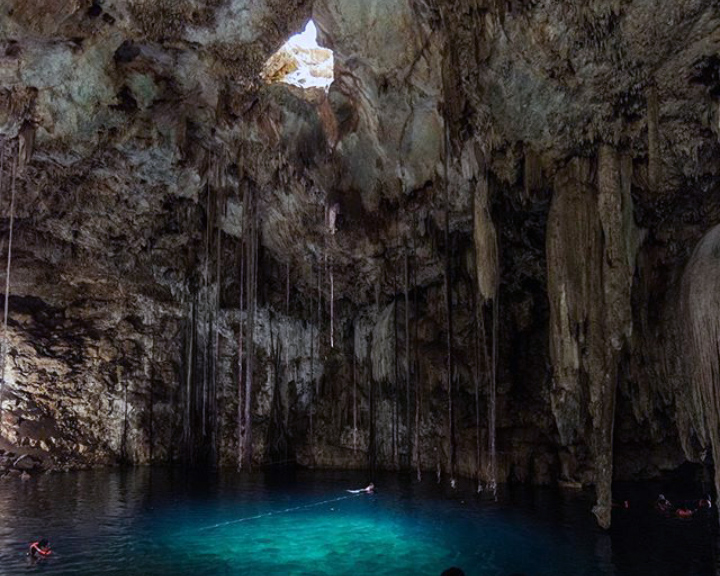 Cenote Chulul in Yucatán, a contrasting inland cenote setting for understanding the region’s variety

