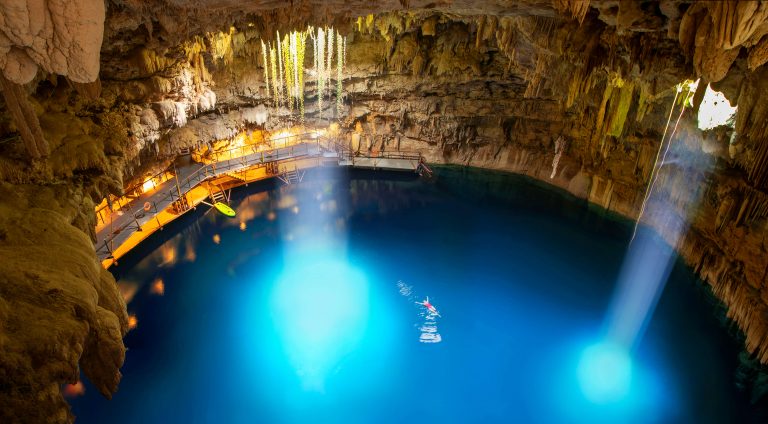
Cenote Xcanahaltun is a large cave cenote in the countryside northeast of Valladolid, near Yalcobá. It is known for clear blue water, dense limestone formations and shafts of sunlight entering through openings in the roof.
This is a good choice for travelers who want a quieter and more natural swimming stop than the busiest cenotes immediately around Valladolid. It feels rural, the cave is substantial, and the wooden platform gives you a broad view across the water before you swim.
The main drawback is transport. Xcanahaltun is not beside a major highway or within easy walking distance of Valladolid. It works best with a rental car, scooter, private driver or organized cenote route.
Go early for the calmest swim. Visit closer to midday if seeing the strongest light inside the cavern matters more than having the place to yourself.
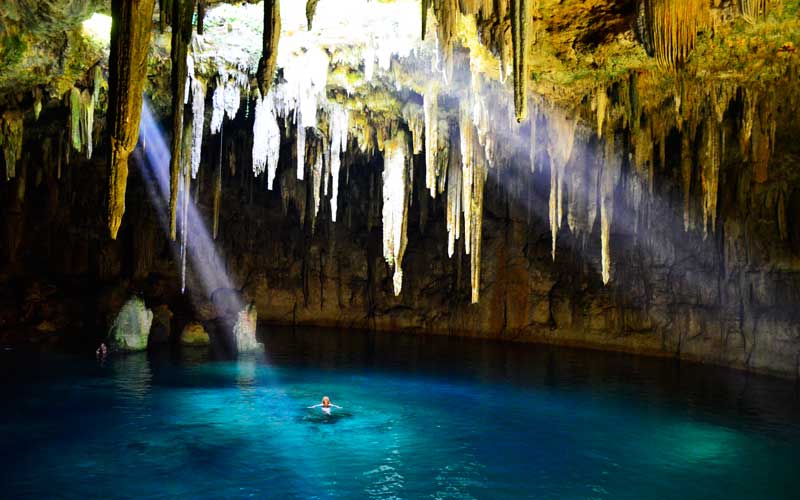 Sunlight illuminating the blue water inside Cenote Xcanahaltun
Cenote Xcanahaltun at a glance
| Detail | Practical note |
|---|---|
| Location | Rural area near Yalcobá, northeast of Valladolid |
| Distance from Valladolid | Around 30 km |
| Typical drive | Roughly 35–45 minutes, depending on the route and road conditions |
| Cenote type | Cave cenote with natural roof openings |
| Best for | Swimming, cave formations, photography and quieter cenote routes |
| Less suitable for | Travelers without transport, limited-mobility visitors and rushed itineraries |
| Typical adult price | Budget around $250–$280 MXN |
| Typical hours | Usually around 9:00 am–5:30 pm |
| Time needed | Around 1–1.5 hours |
| Facilities | Parking, showers, changing areas, bathrooms, lockers and simple food |
| Activities | Swimming, snorkeling and sometimes kayaks or rappel |
| Payment | Bring cash in Mexican pesos |
| Family suitability | Better for older children who are comfortable with deep water and stairs |
| Accessibility | No step-free route into the cenote |
| Good pairings | Palomitas, Agua Dulce, Sac Aua, Ek Balam, Temozón and Valladolid |
Hours, ticket prices and optional activities can change. Confirm shortly before visiting, especially if kayak rental or rappel is important to your plans.
Is Cenote Xcanahaltun worth visiting?
Xcanahaltun is worth visiting when the cave itself is part of the appeal.
The cavern is broad enough to feel substantial rather than cramped. Stalactites hang above the water, pale rock formations rise from the pool, and natural light changes the colour of the water as you move between the brighter and darker parts of the cave.
It is particularly well suited to:
- Travelers staying at least two nights in Valladolid
- People with a rental car or private driver
- Confident swimmers
- Photographers interested in cave light
- Couples looking for a quieter rural stop
- Families with older children
- Travelers building a route around Yalcobá and Ek Balam
- Visitors who prefer community-scale places over large cenote parks
It is not the most practical option when you only have an hour or two in Valladolid. Cenote Zací, Cenote Oxman or the Dzitnup cenotes are easier for a short visit.
Xcanahaltun also makes little sense as a standalone excursion from Mérida. The drive is too long for one swim when Homún, Cuzamá and other cenote areas are much closer.
What Cenote Xcanahaltun is like
Xcanahaltun is sometimes described as a closed cenote and sometimes as semi-open. In practical terms, it feels like a cave cenote with openings in the limestone ceiling.
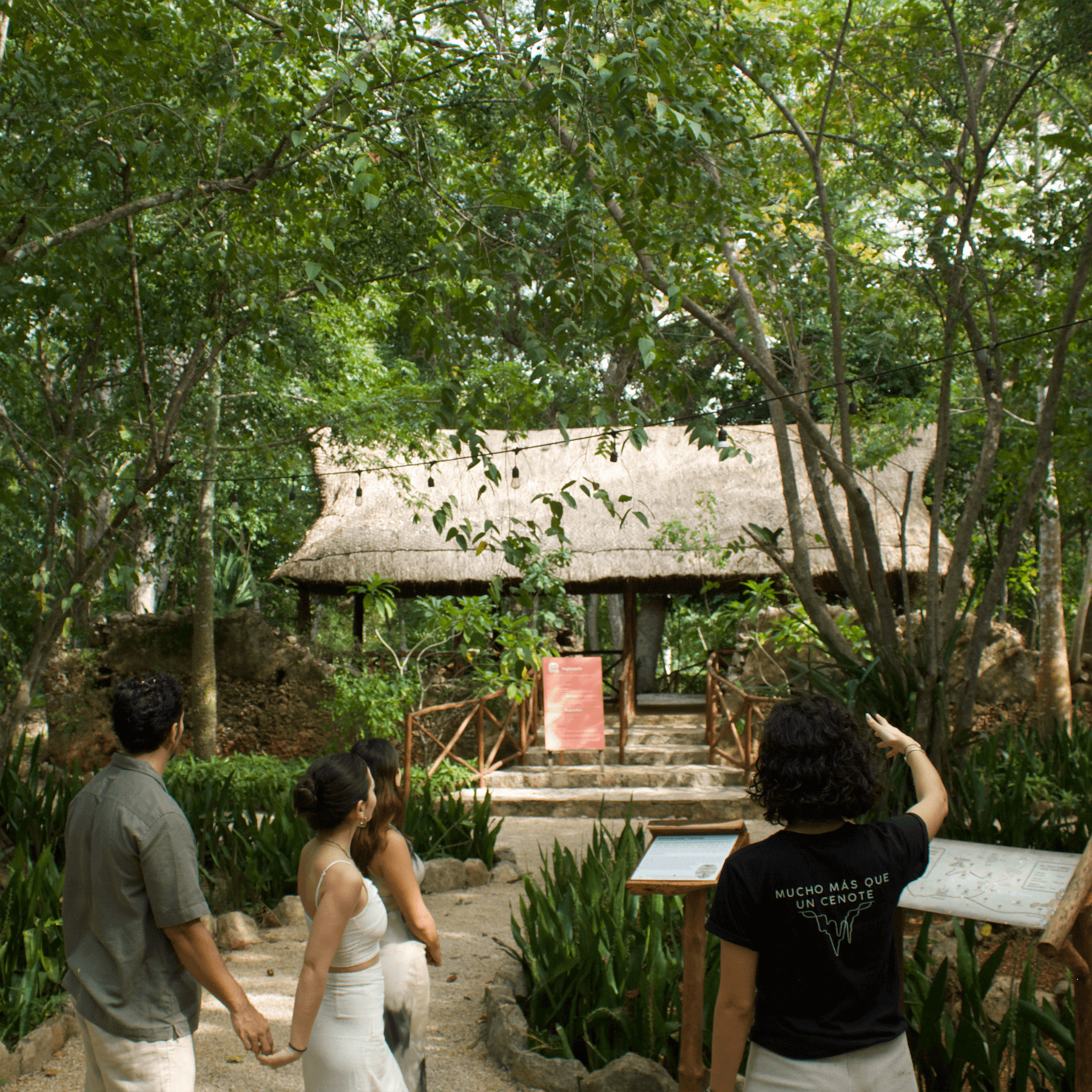
Visitors enter through a small surface opening and descend on a wooden staircase. At the bottom, a wooden platform projects over the water and provides space to prepare before entering the pool.
The chamber is filled with stalactites, limestone curtains and other formations built gradually by mineral-rich water. Openings above allow sunlight to enter in narrow bands, illuminating sections of the water while the rest of the cavern remains dark.
The visual effect changes throughout the day. Bright sunlight can create blue and turquoise patches across the pool. On cloudy days, the cave is darker and more muted.
 Wooden platform overlooking the cave pool at Cenote Xcanahaltun
Swimming at Xcanahaltun
The water is cool, clear and deep.
This is not a shallow cenote where children can stand near the edge. Most swimmers will be floating over water with no easily visible bottom beneath them.
Life jackets are therefore sensible even for reasonably capable swimmers. They allow you to move slowly through the cave, look upward at the formations and rest without returning constantly to the platform.
Snorkeling can be worthwhile because the water is often clear and small fish may be visible. Bring your own mask if snorkeling matters to you, as equipment availability should not be assumed.
The surface can become darker as you move away from the shafts of sunlight. Anyone uncomfortable with deep water, caves or low-light swimming should consider a more open cenote.
Tickets and current price guidance
Recent listings place adult admission at roughly $250–$280 MXN per person.
Child prices are normally lower, but published figures vary. Life jackets, lockers, kayaks, food and adventure activities may be included, rented separately or unavailable on the day.
Before paying, ask:
- Is the life jacket included?
- Is kayak use included or separate?
- Are lockers included?
- Is rappel operating today?
- What time is the last entry?
- Is the restaurant open?
- Is there a lower price for children?
- Can payment be made by card?
Bring enough cash for admission, equipment, drinks and food. Card payment should not be relied upon at a rural cenote.
For the latest information, you can message Cenote Xcanahaltun on WhatsApp.
Opening hours
Xcanahaltun is commonly listed as opening daily at around 9:00 am and closing at approximately 5:30 pm.
Operating hours can shift because of maintenance, private groups, weather or local decisions. Avoid arriving during the final hour unless you have confirmed the closing time directly.
An early visit is better for swimming. A late-morning visit can produce stronger natural light inside the cavern, but this depends on cloud cover, season and the sun’s position.
GuideChichén Itzá Opening Hours and Tickets: 2026 Prices, Last Entry and TipsCurrent Chichén Itzá opening hours, 2026 ticket prices, last-entry time, parking costs, Sunday rules, night-show tickets, and practical advice for an easier visit.Open
Best time of day to visit
Choose your arrival time according to what matters most.
For fewer people
Arrive close to opening.
The water is usually calmer, the platform is easier to use, and you have more flexibility if the final approach takes longer than expected.
For photography
Late morning into the middle of the day can produce stronger shafts of light through the roof.
There is no guaranteed hour. The effect shifts with the season and can disappear quickly when clouds pass overhead.
For a larger cenote route
Visit Xcanahaltun first, then continue to Palomitas, Agua Dulce or Sac Aua.
This keeps you from arriving at the most remote stop late in the afternoon.
How long to spend
Most visitors need around 1 to 1.5 hours.
That gives you enough time to:
- Change clothes
- Shower before entering
- Descend carefully
- Swim without rushing
- Take photographs
- Dry off and change again
Allow closer to two hours if you plan to rent a kayak, eat at the site, travel with children or wait for a group to leave the swimming platform.
Two cenotes are normally enough for a relaxed half day. Visiting four or five caves in quick succession can become repetitive.
Facilities
Xcanahaltun has more visitor infrastructure than a completely rustic cenote, but it remains a small countryside operation.
Facilities commonly include:
- Parking
- Bathrooms
- Showers
- Changing areas
- Lockers
- Life jackets
- Hammocks
- Picnic-style seating
- A small restaurant or simple food service
- Occasional kayak rental
- Occasional rappel activities
Facilities should be treated as basic rather than polished. Bring your own towel, drinking water and change of clothes.
Food service may be limited on quiet days. Do not make lunch central to the plan unless the restaurant has confirmed it will be operating.
 Entrance sign at Cenote Xcanahaltun in the Yucatán countryside
Stairs and accessibility
The cenote is reached using a narrow wooden staircase descending through the rock.
The steps can be damp, and the platform beside the water may also become slippery. Hold the rail, move slowly and keep both hands available when possible.
Xcanahaltun is not a good choice for:
- Wheelchair users
- Visitors who cannot manage stairs
- People with significant balance difficulties
- Anyone uncomfortable on wet wooden steps
- Travelers needing an easy, level entrance to the water
Parents should not expect to carry a toddler, towels, bags and swimming equipment down the staircase comfortably at the same time.
For a traveler with limited mobility, a more developed cenote complex with wider steps and clearer handrails may be easier.
Is Cenote Xcanahaltun good for families?
Xcanahaltun can work well for families with older children who are comfortable in deep water.
Children may enjoy the scale of the cavern, small fish and occasional kayak rental. Life jackets should be used, and adults should remain close to children throughout the swim.
It is less suitable for toddlers and very young children because:
- The descent uses a steep staircase
- The water is deep
- There is no shallow beach-style entrance
- Wet surfaces require constant supervision
- The cave can feel dark or intimidating
For an easier family day, compare Xcanahaltun with Cenote Hubiku, which has a larger visitor complex, or choose a cenote closer to Valladolid.
Kayaking and rappel
Kayaks have been offered at Xcanahaltun, allowing visitors to cross the pool without swimming the entire chamber.
This can be enjoyable for children, photographers and visitors who prefer staying above the water. Availability, pricing and paddles should be confirmed before buying your ticket.
Rappel has also been advertised at the site. Do not assume it operates every day. Adventure activities may depend on staffing, equipment checks and advance reservations.
Book a structured tour if rappel is the main reason for visiting.
Photography advice
Xcanahaltun can produce striking photographs, but the lighting is difficult.
Bright sunlight enters through the roof while much of the cave remains dark. A phone may expose the water correctly while turning the formations black, or brighten the cave and wash out the light beam.
For better photographs:
- Visit during late morning or near midday
- Keep your lens dry and clean
- Use a phone that handles low light well
- Lower exposure slightly when photographing the sunbeam
- Photograph the platform to show the scale of the cave
- Use a waterproof pouch near the water
- Avoid blocking the staircase or swimming entrance
- Do not place equipment on wet limestone formations
The strongest image is often a wide view across the cavern rather than a close photograph of the water.
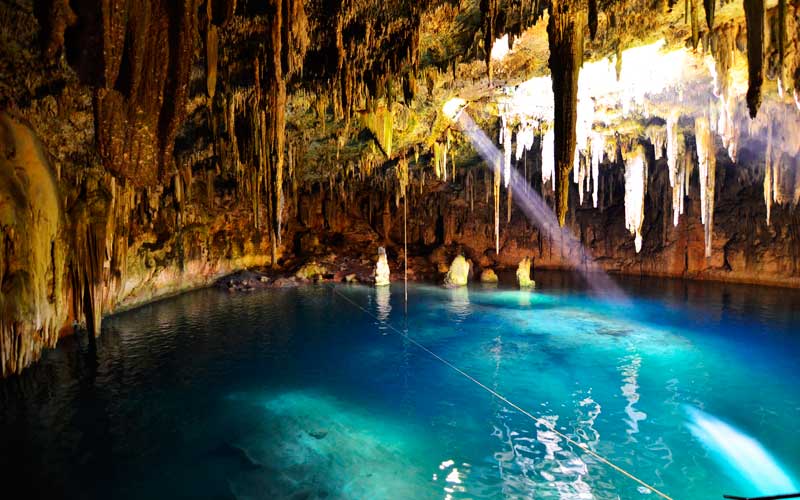 Natural light passing through the limestone ceiling at Cenote Xcanahaltun
How to get to Cenote Xcanahaltun
The simplest navigation method is to open Cenote Xcanahaltun in Google Maps before leaving Valladolid.
Download the route for offline use. Mobile signal can become weaker on the rural approach.
The last section may include narrow local roads and an unpaved or gravel entrance. Ordinary cars can normally manage the route in dry weather, but puddles and broken surfaces may develop during the rainy season.
Avoid arriving after dark.
From Valladolid
Valladolid is the best base for visiting Xcanahaltun.
The cenote is around 30 km from the city. Plan on roughly 35–45 minutes by car, depending on your starting point and the condition of the final road.
The easiest options are:
- Rental car
- Scooter
- Private driver
- Prearranged taxi
- Organized cenote tour
A taxi can work, but arrange the return before leaving Valladolid. Do not assume another taxi will be waiting at the cenote.
Read our Valladolid Travel Guide if you are deciding how many nights to stay in the city.
GuideBest Day Tours from Valladolid: Ruins, Cenotes, Wildlife, and Small TownsCompare the most useful day trips from Valladolid, including Chichén Itzá, Ek Balam, cenotes, Río Lagartos, Las Coloradas, Izamal, and smaller Yucatán towns.Open
Can you reach Xcanahaltun by public transport?
There is no straightforward tourist bus that drops visitors at the entrance.
Local transport toward Yalcobá may get you part of the way, but you may still need to walk, find a local taxi or negotiate another connection.
This creates several problems:
- Departure times may be informal
- Return transport can be uncertain
- The final road is not designed for pedestrian tourism
- You may spend more time waiting than swimming
- Combining another cenote becomes difficult
Independent public transport is possible for patient travelers with Spanish, time and flexible expectations. It is not the best option for most visitors.
Use a driver or tour if you want a predictable day.
From Mérida
Xcanahaltun is too far from Mérida to justify as a single-stop excursion.
Visit it when:
- Spending a night in Valladolid
- Traveling onward toward Cancún or the Riviera Maya
- Combining Valladolid with Ek Balam
- Building a full eastern Yucatán road trip
Travelers based only in Mérida will usually get better value from cenotes around Homún, Cuzamá, San Antonio Mulix or Chocholá.
GuideThe Best Yucatán Road Trip Ideas: 4 Incredible Day Routes from MéridaThe article presents four full‑day road‑trip routes that all start and finish in Mérida, each combining Maya ruins, cenotes, beaches, towns or haciendas. The classic route (Uxmal + Ruta Puuc + cenote + hacienda) involves about 3.5 hours of driving between 08:00 and 19:00. Stops are Hacienda Yaxcopoil (09:00‑10:00), Uxmal archaeological zone (10:30‑13:00), a lunch break at The Lodge at Uxmal or The Pickled Onion (13:15‑14:15), an optional visit to Kabah or Labná (14:30‑15:30), and swimming at Cenote Kankirixché (16:00‑17:30) before returning to Mérida (18:30‑19:00). The wildlife‑and‑coast itinerary runs from 08:00 to 18:30 with roughly 2.5 hours of driving. It includes a boat tour of Celestún’s flamingo colonies and mangroves (09:00‑11:00), beach lunch (11:15‑13:00), a short mangrove boardwalk (13:15‑14:00) and an optional cenote stop at Cuzamá, Chaksinkín or San Antonio Mulix (15:00‑17:00). The magical‑towns route (07:00‑21:00, about 4 hours driving) covers a morning walk in Valladolid (09:30‑12:00), a cenote visit at Ik Kil or Saamal (12:00‑13:30), and an afternoon in the Yellow City of Izamal (15:30‑18:00) before heading back. The off‑the‑beaten‑path trip (08:30‑18:30, ~3 hours driving) visits two Tecoh cenotes (09:00‑11:30), the working Hacienda Sotuta de Peón (12:00‑15:00) and the quieter Hacienda San Antonio Millet (15:30‑16:30). All itineraries assume a private or rented car; some cenotes require cash (100‑250 MXN) and rural roads can be rough, so an SUV is advisable. Lunches are at local restaurants, and most stops include self‑guided exploration; the Sotuta de Peón hacienda adds a guided truck ride, fiber‑processing demos and a private cenote swim. Visitors should start early to avoid heat, carry reef‑safe sunscreen, swimwear, water and snacks, and verify opening hours for archaeological sites before departing.Open
From Cancún, Playa del Carmen or Tulum
A visit is possible from the Caribbean coast, but expect a long day.
Xcanahaltun makes more sense when combined with:
A private driver gives you more control than a large bus tour. Some tours advertise “a Valladolid cenote” without naming the exact stop, so verify that Xcanahaltun is specifically included.
This is not the best option if you want a quick half-day swim from the coast.
What to combine nearby
Xcanahaltun and Cenote Palomitas
Cenote Palomitas is one of the most practical pairings because it lies in the same broad rural cenote area.
Both are cave-style cenotes, but their chambers, formations and lighting feel different. This combination suits travelers who specifically enjoy underground swimming.
Two cave cenotes are enough for most people.
GuideCenote Palomitas Guide: Cave Swimming Near ValladolidCenote Palomitas is a closed‑cave cenote located near Yalcobá, just outside Valladolid, offering a deep blue pool beneath limestone walls and a managed entrance that eases access compared with more remote rural sites. The typical admission price is about 150 MXN per person and the site is usually open from 8:00 am to 5:00 pm, though visitors should confirm the exact ticket contents—whether it includes only Palomitas, a combined entry with Cenote Agua Dulce, life jackets, lockers, showers or kayak rental—because packages can vary. Cash in pesos is required; card payment should not be expected. Reaching the cenote is most convenient by rental car, scooter, private driver or an organized tour; the drive from Valladolid takes roughly 30 minutes, with a short unpaved stretch before the parking area. Public transport is possible but involves a colectivo toward Yalcobá followed by a local taxi or walk, making it less practical. A typical visit lasts 1 to 1.5 hours, longer if you combine Palomitas with Agua Dulce or another nearby cenote. Visitors should arrive early for cooler weather and fewer swimmers, bring swimwear, towels, water shoes, a dry bag and extra cash for optional services, and use a life jacket if not comfortable in deep water. The cave’s low light makes photography challenging; a phone or camera that handles low‑light conditions works best. Families can enjoy the site if children are confident swimmers and are closely supervised on wet steps and platforms. Combining Palomitas with nearby attractions such as Ek Balam, Sac Aua or Valladolid itself creates a relaxed half‑day or full‑day itinerary, but the cenote is not advisable for travelers with very limited time or without a transport plan.Open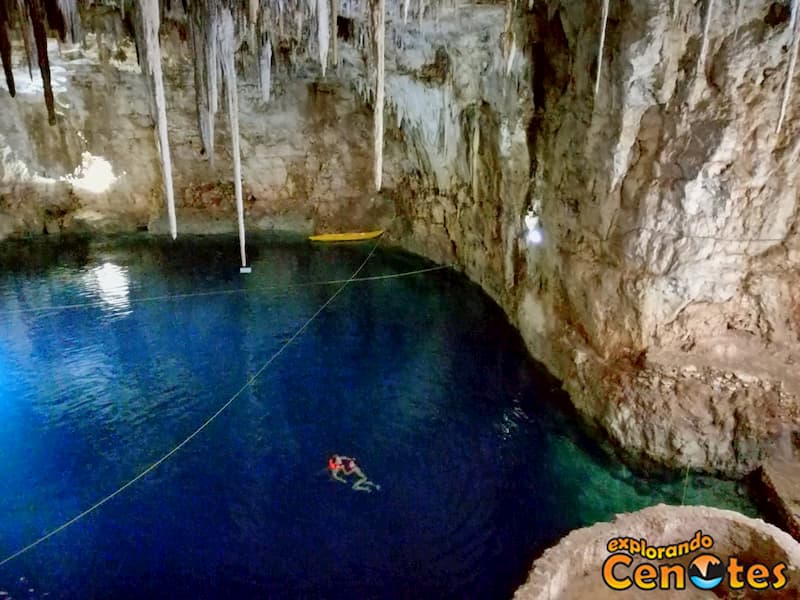
Xcanahaltun and Cenote Agua Dulce
Agua Dulce is commonly visited alongside Palomitas.
Adding all three creates a cenote-focused day. It works better for keen swimmers than for travelers who also want ruins, villages and a proper lunch.
Confirm individual and combined ticket arrangements before setting out.
Xcanahaltun and Cenote Sac Aua
Sac Aua provides more visual variety because its water surrounds a central island of rock and earth.
This is one of the stronger two-cenote combinations near Yalcobá. Visit Xcanahaltun first, then continue to Sac Aua before returning to Valladolid.
GuideCenote Sac Aua Guide: The Island Cenote Near ValladolidPractical guide to Cenote Sac Aua near Valladolid, including current visitor prices, opening hours, swimming conditions, transport and Ek Balam itinerary advice.Open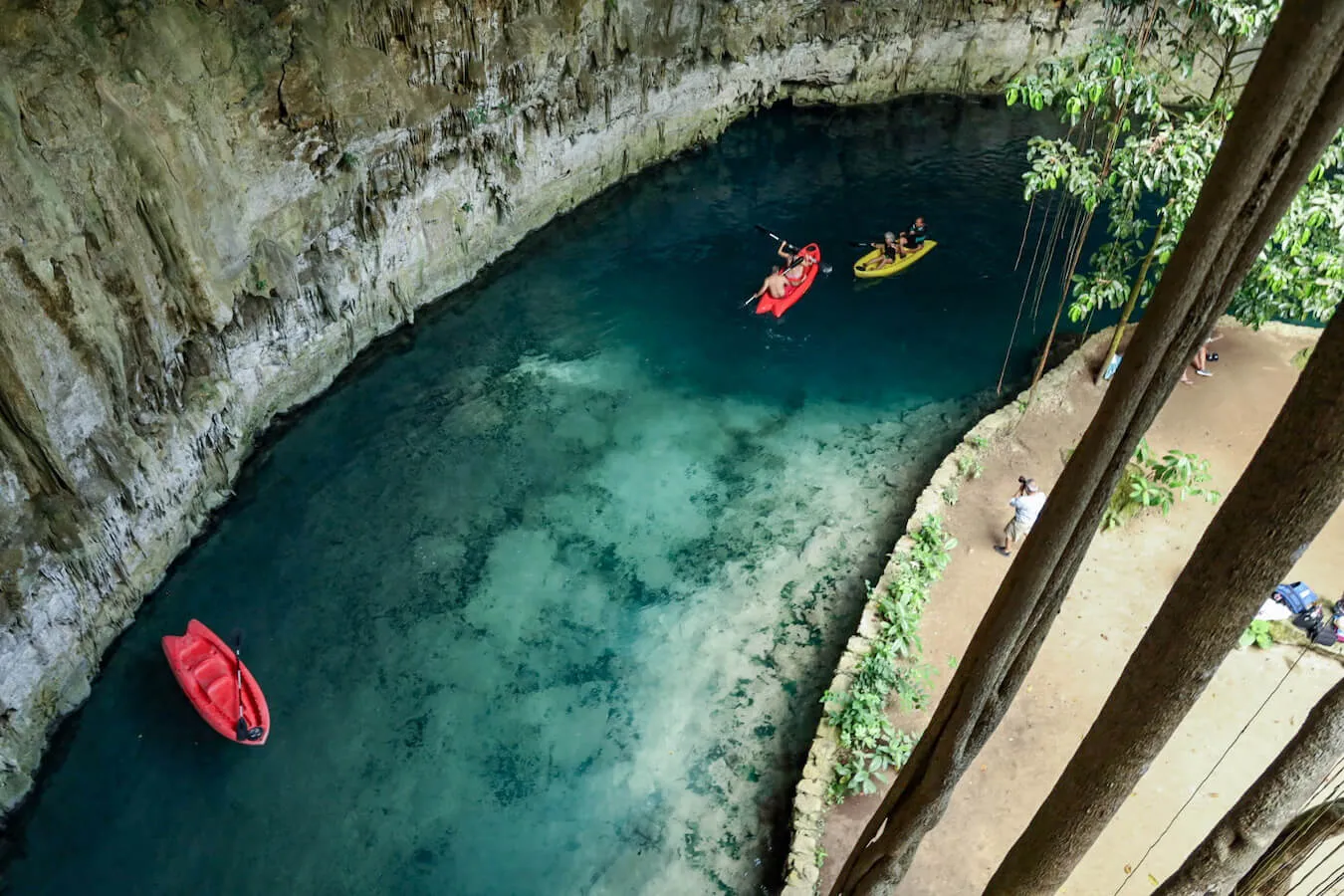
Xcanahaltun and Ek Balam
This is a balanced full-day route.
Visit Ek Balam early, before the heat becomes tiring. Have lunch in Temozón or nearby, then swim at Xcanahaltun during the warmer part of the day.
Ek Balam already has Cenote Xcanché close to the archaeological site. Choose Xcanahaltun instead when the cave formations are more important than convenience.
GuideEk Balam Guide: Climbing the Acropolis and Swimming Cenote XcanchéA complete guide to visiting Ek Balam in Yucatán: climb the Acropolis for jungle views, see the preserved stucco carvings, and cool off in Cenote Xcanché. Includes entrance fees, transport from Valladolid, and practical tips.Open
Xcanahaltun and Temozón
Temozón is known regionally for smoked longaniza and wood furniture workshops.
A simple lunch stop can break up the drive and add something beyond swimming. Keep expectations modest: this is a working Yucatecan town, not a polished tourism complex.
GuideTemozón: Smoked Meats, Wood Shops & Ek Balam BaseTemozón is a small town a short drive north of Valladolid in the Yucatán, known for its smoked pork sausages and longaniza displayed along the main street and for a concentration of woodworking and furniture showrooms, with the Ek Balam archaeological zone and the community‑run cenotes X’canché and Hubiku only minutes away. The town itself is free to visit and the shops generally operate from 9 am to 6 pm, though hours can vary. Ek Balam is open daily 8 am–5 pm (last entry around 4 pm) and charges foreign adults about $561 MXN (INAH $100 plus a $461 state fee) and Mexican nationals about $227 MXN, with free entry for many locals on Sundays. Cenote X’canché costs roughly $170 MXN and Hubiku about $100 MXN for swimming only, with a separate buffet charge if desired. Cash in Mexican pesos is required; cards are rarely accepted at the small shops. A typical visit lasts four to six hours for the meat and furniture strip plus a cenote, or a full day if Ek Balam is added. Visitors can expect to order smoked meats by weight, eat them on‑site with tortillas and salsas, browse custom cedar and hardwood furniture, explore the climbable Maya ruins with jungle views, and then cool off in either the semi‑open X’canché (reached by a 1.5 km path) or the closed‑cavern Hubiku with its buffet. The town centre is flat but sidewalks are uneven, and the cenotes have stairs. Recommended transport is a car or frequent taxis/colectivos from Valladolid (12–14 km, 15–20 min); Ek Balam is another 14 km beyond Temozón. Bring small‑bill cash, swimwear, water shoes, sun protection and a reusable bottle; ask for mixed meat platters, confirm price per kilo, keep two receipts for Ek Balam, rinse before swimming and avoid non‑biodegradable sunscreen.Open
Xcanahaltun and Chichén Itzá
This combination is possible but not especially efficient.
Chichén Itzá sits more than an hour away by road. Adding Xcanahaltun can create a long day once you include ticket queues, heat, lunch and the return journey.
For a Chichén Itzá day, a cenote closer to the archaeological zone may be easier. Choose Xcanahaltun only when you are staying in Valladolid and deliberately want a quieter cave swim afterward.
GuideComplete Guide to Chichén Itzá: Tickets, Hours, Tours, Cenotes & TipsChichén Itzá is the world‑famous Maya archaeological zone located near Pisté in the municipality of Tinum, Yucatán, and is typically accessed from Valladolid, Mérida, Cancún, Playa del Carmen or Tulum. The site is generally open daily from 08:00 to 16:00 with the last entry recorded at 15:00, although visitors should verify the exact hours before travelling. Admission is split between a federal INAH fee of MXN 105 and a state fee of MXN 592 for foreign adults (MXN 697 total) or MXN 205 for Mexican nationals (MXN 310 total); discounts may apply for children, students, seniors or Yucatán residents who present valid ID. Reaching the ruins takes about 40–45 minutes from Valladolid, 1.5–2 hours from Mérida, and 2.5–3 hours from Cancún or Playa del Carmen; travel can be done by rental car, taxi, colectivo or organized tour, with tours often including the entrance fee. A visit usually requires 2.5–4 hours for a quick overview, or 4–5 hours if the on‑site museum and a more relaxed pace are desired. Visitors are advised to arrive at opening to avoid the heat, crowds and vendor pressure that build up later in the morning. Early arrival provides cooler weather, better lighting for photos and shorter queues at El Castillo and the Sacred Cenote. Bring plenty of water, sun protection and cash in pesos; many tours bundle transport, guide services and cenote stops, so check the inclusions carefully. Staying overnight in Valladolid or Pisté makes an early start easier, while a guide is not mandatory but recommended for first‑time visitors who want contextual information.Open
Simple half-day route from Valladolid
A calm half-day can look like this:
- Leave Valladolid after an early breakfast.
- Drive directly to Xcanahaltun.
- Swim for around one hour.
- Change and have a drink or simple food if available.
- Visit Sac Aua or Palomitas.
- Return to Valladolid before the late-afternoon roads become darker.
This route is easier with a rental car or private driver.
Full-day route with Ek Balam
For a fuller eastern Yucatán day:
- Leave Valladolid around 7:30 am.
- Visit Ek Balam when it opens.
- Stop for lunch in Temozón.
- Continue to Cenote Xcanahaltun.
- Add one more cenote only if the group still has energy.
- Return to Valladolid for dinner.
Do not try to add Chichén Itzá, Ek Balam and several cenotes to the same day. One archaeological site and one or two swims are enough.
What to bring
Bring:
- Cash in Mexican pesos
- Swimsuit
- Towel
- Dry clothes
- Water shoes or sandals with grip
- Waterproof phone pouch
- Drinking water
- Snorkel mask if desired
- Small dry bag
- Offline map
- Extra cash for food, kayaks or equipment
Leave large bags in your vehicle or locker when possible. The staircase is easier when your hands are free.
Cenote rules and environmental care
Shower before entering the water.
Avoid wearing:
- Sunscreen
- Insect repellent
- Body oil
- Makeup
- Perfume
- Heavy hair products
Even products marketed as biodegradable still introduce substances into the groundwater. Use protective clothing before and after swimming rather than applying creams immediately before entering.
Do not touch stalactites or other cave formations. They develop extremely slowly and can be damaged by repeated contact.
Follow staff instructions regarding life jackets, jumping, kayak routes and photography.
Seasonal considerations
Xcanahaltun can be visited throughout the year.
Dry season
December through April normally brings easier road conditions, lower humidity and fewer afternoon storms.
This is the simplest period for a rental-car route.
Hot season
April through June can be very hot outside the cave.
The swim is refreshing, but the drive and changing areas may feel humid. Carry more drinking water than you expect to need.
Rainy season
Rain can affect the final unpaved approach.
A normal car may still be suitable, but drive slowly around standing water and deep ruts. Check conditions after heavy storms rather than assuming every rural road is passable.
Hurricane season
From June through November, monitor weather forecasts before longer drives.
A cave cenote should not be treated as shelter during severe weather.
Who should skip Cenote Xcanahaltun?
Choose another cenote if:
- You have no reliable transport
- You cannot manage steep stairs
- You need shallow water
- You are uncomfortable in caves
- You have only a few hours in Valladolid
- You are coming from Mérida solely for one swim
- Your children need a beach-style entrance
- You want polished resort facilities
- You need guaranteed adventure activities
- Heavy rain has made rural roads difficult
Xcanahaltun is rewarding, but it is not the easiest cenote for every traveler.
Private driver or tour advice
A private driver is useful when you want to combine Xcanahaltun with Ek Balam, Temozón, Sac Aua, Palomitas or Valladolid without worrying about return taxis and rural navigation.
It is particularly helpful for:
- Families
- Groups
- Older travelers
- Visitors without a rental car
- Transfer days with luggage
- Travelers coming from the Riviera Maya
- Anyone who wants two or three flexible stops
A tour is better when you want transport and timing handled completely. Confirm the exact cenotes, entry fees, meal arrangements and time allowed at each stop before booking.
For the next step, use the Plan hub to compare itineraries, transport and practical resources already available.
GuidePrivate Driver in Yucatán: Your Guide to Hiring a Chauffeur for Stress-Free TravelHiring a private driver in Yucatán offers a comfortable, flexible, and safe way to explore the region’s archaeological sites, cenotes, and colonial towns. Learn about costs, booking options, and tips for making the most of your chauffeur-driven journey.Open
Final advice
Cenote Xcanahaltun is one of the more visually impressive cave swims within reach of Valladolid, but its rural location means it should be planned rather than added casually.
Stay in Valladolid, leave early, bring cash and download the map before setting out. Allow enough time for the final road, the staircase and a slow swim through the cavern.
Pair it with one additional cenote or with Ek Balam and Temozón. Do not overload the day.
For more options, compare it with our Best Cenotes Near Valladolid guide.